Posted in Learning, Studying, Writing

Being …

This year I took on a new identity … not, I hasten to add, in a witness protection kind of way. Nothing that dramatic! … but a new identity nonetheless.

I could say that I took on a new role … but with new roles comes new identities. We can choose to define ourselves by our new roles/identities, and thus think about ourselves differently. Being an academic means particular things. Being an under-graduate student means almost the polar opposite. We may choose to act in ways that are consistent with our new role and that might lead to inconsistencies in how we portray ourselves to the world. Will I be student today, or teacher? What does it mean to be a student in an online environment where I don’t get to spend time with my teacher or my peers; when I don’t get to hear their voices or even see what they look like? It’s a disconcerting experience. On the other hand, what does it mean to be a teacher in an online environment where I don’t get to spend time with my students, when I don’t get to hear their voices or see what they look like? Experiencing that as an online student heightens my awareness of that ‘disconcerting experience’ as a teacher of online students. 

In addition to thinking about myself in a different way and considering if I will act differently to signify this new role/identity, others see me in that new role and make different kinds of connections with me, or think about me in particular ways and so have their own view of who I am (which might not bear any relation to who I am when inhabiting a different identity/role).

My university tutors do not see me as a colleague; as someone who, like them, teaches in an online environment. They see me as a student – a distant one, it has to be said: one who doesn’t appear to be very engaged, who forgets to read her unit outline, who leaves assignments till the last minute, who doesn’t follow the requirements of the task as closely as she should, who doesn’t engage in conversations online, who hasn’t made connections with other students in the online environment.

For those of you in the know, why didn’t you tell me it would be like this? 🙂 If only you’d told me to read the unit outline carefully and repeatedly, or that I’d need at least 10 hours per week per unit to do full justice to the work I needed to do, or that learning to use new software is time-consuming and requires a great deal of independent learning and commitment and energy, or that coming home from work and having to study till late is exhausting, or that trying to find information when it’s in ten different places in the online environment is one of the most frustrating parts of the whole experience (it really isn’t all that difficult to put all the information required for weekly activities in the one place), or that reading all the other students’ posts can be mind-numbing and take up all the time I’d set aside for study (and seriously, do 18 year olds really like talk in that like annoying way where they like say a lot without like saying anything at all, you know, sort of, I guess, do you get me? Despite my student status I am still a teacher and despair over the abominable use of language on public discussion boards).

Not that it’s all bad of course. In one subject (Writing Professionally – actually I don’t know if that’s the name of the subject because for some reason I haven’t looked at the unit outline properly to even know what the unit is called), the tutor gives general feedback on our ‘writing watches’ (which are assessed) and on two occasions has encouraged other students to read my work for its ‘quality and depth’ (you have no idea how embarrassed I feel writing that). We had to do three ‘writing watches’ across the course of the semester – responding in a systemically functionally linguistic way to something we’d read. I chose to respond to:

1. an article in a photography magazine

2. an essay by Richard Flanagan which appeared in The Monthly (the article was on David Walsh and MONA which I’d just been to, so it seemed fitting)

3. a blog post titled The oddest English spellings, part 20: The letter “y” from the Oxford University Press’s blog. It was interesting. Seriously!

These writing watches were practice for our exam. Yes, you heard that right – exam. I had to sit an exam.

Why didn’t someone tell me how stressful that is?! That you spend days and nights thinking about what the questions might be, what the text choices might be, what you know (or rather, don’t know) about systemic functional linguistics and how you’re going to write “pages” on it in two hours?

But I did it and wrote (typed) five pages of blather about an advertisement for Income Protection titled Confessions of a financial adviser. An interesting way to spend a day, particularly when you’re at home and the phone keeps ringing just as you think you have the modality worked out!

We also had to do weekly ‘word watches’ (which were assessed). We had to find two unfamiliar words each week and write about them: what they mean, where we’d read/heard them, their derivation, and we had to use the words in a sentence.

At first I found this difficult. I don’t want to sound like a pompous git (unlike some people I know), but in the everyday, normal, regular reading I do I don’t come across too many words which I don’t know. So I determined to try harder.

Here are my words (you, clever reader, are quite possibly aware of their meanings and already sprinkle them through your everyday conversations. I, on the other hand, did not).

  • Eupraxis (thank you David M)
  • Conation (actually, I did know what that meant because I’d written about it in a journal article published last year, but until I wrote about it I didn’t know what it meant)
  • Heuristic
  • Prevaricate (actually I wavered on this quite a bit)
  • Mendicant (it had been in the news – Tasmania is a mendicant state apparently)
  • Noetic (nothing to do with Christmas)
  • Rendering (a word from my Graphic Design unit)
  • Misandry (its opposite had been much in the news)
  • Chirographic
  • Contumacious (if my mother had known this word when I was a child I’m sure I would have heard it a lot!)
  • Whovian (my sister is a mad one of these)
  • Gonzo (I’d been to MONA and learnt this word while wandering the subterranean halls. Tim already knew it. He’d read Hunter S. Thompson apparently)
  • Metaredound (don’t ask me)
  • Analogous (I actually had heard this word, but I wanted to use it in a way I hadn’t used it before and that was in relation to colour: analogous harmony)
  • Indigent (thanks Germaine)
  • Calumniated (and again)
  • Emic
  • Etic (yes, they are related)
  • Eschatology
  • Ratiocination (I had to listen to this a number of times to get the pronunciation right. Thanks YouTube!)
  • Contingent (used in a way I didn’t understand – of all people, by my husband, in a journal article we wrote some time ago. I hadn’t told him I didn’t understand the way he used it as I didn’t want to look stupid!)
  • Hegemony (with a soft ‘j’ sound for the ‘g’)
  • Picayune
  • Ludology (nothing to do with Ludo as it turns out … although …)

So there you have it. New words to pepper through my dinner-time conversations. Feel free to use any of them, particularly in ways that are inventive and thus deeply satisfying.

I am a student and I am learning things. That’s what students do isn’t it? Isn’t that the purpose of being a student? It’s why I decided to be a student: to learn something/s. And even though I’ve said ‘the message’ countless times, it’s always different when you’re on the receiving end of it. The message is: learning can be hard. And it isn’t always fun.

But it is satisfying.

Being a student not only challenges my own identity (I have to flip between student and teacher on a regular basis and I am very conscious of not being a teacher in my student role – which is partly why I don’t engage on the discussion boards: I don’t yet have the student language down pat. I’m too caught up using teacher language and saying teacher things and I don’t want to do that as a student).

Being a student also challenges how others see me.

Some people, on first hearing that I am a university student again, thought (and said) “are you mad?” and other equally dis/en/couraging words. My new role was something they wanted to reject – it was ludicrous, or unnecessary (especially at your age), or just plain silly. I have a PhD, why would I want to be an under-grad again? That’s something young people do. I should do some serious study, not a bachelor degree in an area I potentially know a little bit about. Why, for instance, am I doing Professional Writing (that’s its official title – I thought I’d better check) when I have had a number of journal articles, book chapters and conference papers published?

I guess I feel that I can always learn more – and I did. Heaps in fact, and that’ll help my writing when next I write something for publication. 

On hearing that I am a student again, other people saw me differently. They made a different kind of connection with me. Some, because of their own identity as ‘student’ (or perhaps, student-in-the-not-too-distant past) applauded my decision – I was now one of them, a member of a community of adults who are (or were) university students. For those whom I’ve taught – who have been my own students – the connection is even closer. Their teacher/lecturer/colleague is now in the same position they recall so clearly and thus our connection is strengthened. There’s a shared understanding … and as I give advice quite freely about being a student, I also imagine there’s a little bit of mirth around my stumbling attempts at student-hood.

But I have finished the semester, completed teaching and learning surveys (and been very honest – in a professional way – as all students should be), and am eagerly awaiting my final results.

I have also determined to be a better student next semester. I have already created folders for my two new subjects (one is Production Planning; the other is Visual Storytelling), downloaded the information from the course and unit handbook, looked up information about textbooks (I don’t have to buy any), and worked out what I do when I procrastinate (I work … yes, on my study days!).

Being a student: challenging, stressful, but ultimately satisfying.

What’s your experience?

Posted in Learning, Studying, Writing

The envelope

My online students, in the days before we went online, used to talk about waiting for ‘the envelope’. Ours were yellow and students would camp at their letter boxes waiting for the big yellow envelope to arrive. Some would leave it sitting on the kitchen bench till they felt strong enough to open it; others would rip it open, eager to see their result.

My first envelope arrived in the post earlier this week and I have to say it was an odd feeling. Partly, I think because of the ways my students (now graduates) used to talk about the arrival of the envelope, and the importance it held for them. It was a validation of them as students, scholars, learners, and sometimes it was even more. It was a validation of themselves. Were they worth anything? Could they do it? Were they cut out for this thing called university? Did they have what it takes? Was university really for people like them?

Many of those students had not been on to the university campus at that stage, or had not been on to the campus often. Many of them didn’t live in the same state as the university; many hadn’t physically met their lecturers, tutors, peers. University was a disembodied experience. An experience that involved sitting at home, on their computer, by themselves, struggling to work out what the task required, having little access to anyone to seek clarification, advice, ideas. Not knowing if they were on the right track.

They did their best, not knowing if they measured up; their whole being invested in this. What if I’m not on the right track? What if I fail? Will that mean I’m a failure?

It’s high stakes.

A few days before my own envelope arrived, I had returned my own students’ assignments – though not in envelopes – and was aware of the emotions involved in receiving feedback and a grade. But I was aware of the emotions as an objective observer: as someone who knew that the students would have an emotional reaction, but not as someone who felt the emotion directly. Some of my students had not met the pass standard, and the emotions varied: some were angry, others were disappointed. Many of them spent the weekend crying. Other students had met the pass standard but had expected the same success as they’d had at college. Their emotions were similar – to them their pass (or credit) felt like a fail.

I had warned students that they might feel this range of emotions and that they might react in particular ways; I had wanted to prepare them and to let them know it is normal to feel a range of emotions … and to be quite honest, to let them know that they weren’t to email me at the height of their emotional response. The “post-assignment-blues” email is not a good one to look back on when the emotion has subsided!

All of this was raging through my head when my own envelope arrived. What if I failed … or just as bad … what if  I only passed?

So when my envelope arrived I felt part of a community – a community of those who knew the importance attached to the envelope – and for the first time I was an insider in this experience. I felt the weight of expectation and the weight of former students’ associations. It was exciting and daunting in equal measure. The assignment was to write a non-fiction piece of around 500-800 words on a topic of our choice. We had to state the purpose and the audience of our piece, and we had to submit two drafts of our writing plus the final copy. We also had to write a statement about the editing process. Suggestions for our writing included CD liner notes (I didn’t know they still existed), a review (of a book, an art work, an exhibition), a newspaper feature article.

I didn’t know how to write any of those things so I wrote a blog entry. And while I wrote about a real-life experience I wrote it a bit story-like (I used elements of narrative writing) and so was uncertain whether the tutor would accept it as non-fiction.

She did.

I enjoyed your blog immensely. It’s rare to receive an error-free assignment; you’ve obviously invested time and effort for this submission. Thank you.

A validation …

… of my capacity to correct errors.

That won’t surprise any of my own students!

I won’t be so scared when the next envelope arrives. Except I can’t remember when the next assignment is due. I really will need to read the unit outline soon!!

Posted in Learning, Studying, Writing

Postcards … an assignment

Last week was a big one for me.

I submitted my first assignment. The task was to develop a series of four promotional postcards for the town/city in which we live. We had to “photograph places or things that you find interesting”, while the postcards “are aimed to appeal to a youth/young 18-24 demographic, so please create postcards that you believe would appeal to this audience”.

Quandary #1: I’m not 18-24 – how do I know what appeals to that audience?

Solution: I asked my students. They all said “the beach”.

Quandary #2: The beach in Burnie is almost always deserted and taking a photo of an empty beach possibly wouldn’t make an appealing image for an 18-24 year old.

Solution: Go to the beach when surf lifesavers are training.

Quandary #3: Surf lifesaving championships had been held in another part of the state the weekend before, and only a small handful of people came to train on the only day I could make it to the beach.

Solution: Take a photo anyway!

Below is what I came up with. The water doesn’t look very inviting (that’s possibly my projection: I think it’s always too cold to swim in Tasmanian waters), and that could be a mark against me, but I’m willing to take that chance.

We had to include text of some sort and I wanted to keep it simple on the front and leave the explaining to the back of the postcard.

Beach Postcard

As mentioned, we not only had to design the front of the promotional postcard, we also had to design the back. Betty, our tutor, had indicated that the cards were not to be ‘touristy’ and so I decided against having a place for a stamp and a message. I wanted to use the back to contextualise the front. Here’s what I came up with:

Beach-back

Continuing with the beach and ‘come and play’ theme I also photographed the marine creatures that feature on the beach foreshore. These creatures have added extra life to the newly renovated beachfront.

Octopus

Octopus-back

While we were to take a thematic approach and ensure the four postcards were a ‘series’ I decided to have two themes. The second them is ‘make it in Burnie’. Burnie has taken on an identity as the ‘City of Makers’, and I wanted to capture this in my postcards.

Burnie is famous for making paper (although if you know Burnie you’ll be amazed at the absence of a pulp and paper mill), but it also makes other things. There’s a big Caterpillar factory (or a number of them) in the city, but also smaller companies making big machines for export to the rest of the world. Haulmax is one of those companies and while it isn’t technically in Burnie, it’s close enough to be captured within the instruction to take photographs of “your environment and/or its surroundings”. I figured that East Wynyard is a surrounding of Burnie!

Haulmax Postcard

Haulmax-back

I couldn’t discount the importance of paper to Burnie’s history and identity, so on the day before the assignment was due (I’d been in Sydney for the week before, which is why I had to leave it to the last minute!) I visited the Makers’ Workshop to see if I could find some paper.

It’s all handmade now, of course, and the papier mâché sculptures that Pam Thorne makes are amazing, but I couldn’t capture any of them in a way I liked, and, wanting to keep the images simple, I simply did this:

Postcard-paper

I thought I’d get into trouble for moving different piles of paper from their allocated shelves, but if anyone saw me they didn’t take any notice. I put them all back in their right places!

Here’s the back:

Postcard-paper-back

So, my first assignment submitted – on the day before it was due no less!

Feeling pretty happy with myself I re-read the task description.

It said “students must upload regular updates of their design/s. These regular updates are very important – they demonstrate the on-going development of your work prior to final submission. Be advised that if you simply upload work the day before it’s due (without posting any earlier entries or consulting with your lecturer) this will affect your final mark.

Whoops!

Oh well. Even if I don’t get a good mark, I still learnt a lot.

Posted in Learning, Writing

Excitement/trepidation/learning

It’s the end of the first week of semester for me as a lecturer, and almost the beginning of semester for me as a student.

A range of emotions course through me when I allow myself to think about being a student: excitement (yay, I’m going to be learning about writing), and trepidation (I’m going to be learning about writing, and I’ll have to write, and I don’t like writing … except that I do, just not journal articles and conference papers). I read a little from my textbook on writing and realise that I’m doing it all wrong.

I don’t give myself enough time, I expect it to be perfect as I type it, I am impatient for the right words and want them to be the first words that emerge rather than the fifth or seventeenth. I want the ideas to tumble out of me as soon as I sit down to write, and that they will tumble in a logical order. I want insightful, inventive, wow-that’s-an-interesting/humorous/creative/original-way-of-saying-that, phrases and thoughts to roll directly from my imagination to my fingers without the need for agonising over each word, each idea, each choice I know I need to make.

I want it to be easy.

I expect it to be easy.

And then I realise/remember/am reminded that writing is a skill, a process, something to practice and develop, something to take time over, something to learn. And learning is a process – I told my students that last week during Orientation – it takes time and energy and commitment and can be frustrating and challenging and emotional and downright painful. Whoever said learning is fun needs to be sat down and given a good talking to! It isn’t fun. It’s hard. And it’s work. (But obviously worth doing.)

So, I’m feeling in two minds at the moment: me the teacher/me the learner.

As the teacher, I wrote a unit outline for my students, re-worked the learning outcomes, designed the assessment tasks, wrote introductions to each section of the textbook I put together from other people’s works, articulated my teaching philosophy, made my expectations clear, designed my online unit in a particular way (a way that is clear to understand, clear to work through, clear to follow).

Or so I thought.

As a learner, reading a unit outline that someone else has written puts a different slant on the idea of clear. I know what’s in my head (most of the time) and so my unit outline is clear to me. I read it and know what I mean. But I don’t yet know what is in my lecturers’ heads and so I read the unit outlines for the two units in which I’m enrolled and things are not immediately clear to me.

Questions buzz like wasps: where is; what is meant by; when do I; who will; where do I find; how can I; when should I; who should I; how does; why …?

They’re the questions of anxiety which can quickly morph into frustration if the answers don’t come immediately.

There are other kinds of questions though. Questions of excitement and exploration: I wonder how; I wonder who; I wonder when; I wonder what …?

Maybe I should start asking those questions. That would require me to step back, take a few deep breaths, know that I don’t have to do everything (all the readings, all the assignments, all the learning) in my first week.  I can give myself permission to learn rather than to worry; I can take my time knowing that learning will happen if I relax a little, ease the tension, free up some space in my mind from the anxiety and allow the curiosity and excitement I know is there to overtake the fear and trepidation.

There are plenty of things I don’t know in relation to the units I’m studying – but that’s why I’m studying: to find out. To learn. To be in that place of not knowing and know that it’s okay to be there. To know that over time, and with commitment and application, I will know.

Over time

Note to self: learning is a process.

Let the process begin!

Posted in Learning, Writing

Final flower/story challenge day

[Day 7 of seven]

Well, we made it to the end of the week and there have been some terrific stories. Thanks to all those who were brave enough to put themselves out there and write stories, and then post them! Please, if you feel the desire, and you haven’t yet added your contribution, feel free to add your story to any of the days’ challenges. 

Tim asked if I’d write stories too … and I said that I’d post them at the end of the week. Well, that’s today, so here are my contributions.

******

Day One

She emerges from the quiet of the exam room into the gloom of late evening. The silence from inside lingers, deepening her mood of contemplative forgetfulness. Her steps slow despite the urgency to be home. The smell of decay whispers to her. With a jolt she remembers, laughs, tears streaming.

Day Two

She is overwhelmed by it. Ornate, golden, speaking of riches in earlier times. Whispers of those who have gone before float through the centuries and her ears buzz with proclamations, judgements, sermons, debates, messages from afar.  This place stops her breath and, laughing at her clichéd self, she shoots again.

Day Three

She sways inside the open front door, denying his news, rocking as she used to as a young mother. The floor provides a sanctuary she never imagined she’d need. She feels more, and much, much less, than she ever imagined she could.

At the end, just one shot.

Gone.

My only one.

It was the end, and the end, and the end.

Her anguish swirls around the empty hills.

Day Four

She clutches them so tightly they tremble in her fist. Mum says, don’t hold them so tight, you’ll make the petals poo, the leaves leak,and the teacher will think you’re a freaky flower geek. A heartbeat, and they collapse under the weight of shared giggles.

Day Five

She laughed her head off, her knees dancing up a storm. It took the floor right out from under her and she fell, head over heels. He had cast a spell, knocked her socks off, turned her to jelly, blew her mind. She didn’t mind. She was hit by cupid’s arrow and willingly gave him her heart.

Day Six

She stood, holding her head at an unfamiliar angle, trying desperately to keep it on. The ceremony was much more solemn and more formal than she had anticipated and as if on cue giggles rose in her throat. She coughed to stop them bursting forth and walked slowly forward. Soon it would be her turn to climb the stairs, hand her card over, walk across the stage, doff, shake, keep walking. A moment to savour.

*******

Thanks again for your responses and interest.

Posted in Writing

Flower/story challenge – Day 6

[Day 6 of seven]

Is it really day 6, or do I have my days confused? That’s highly likely you know!

*******

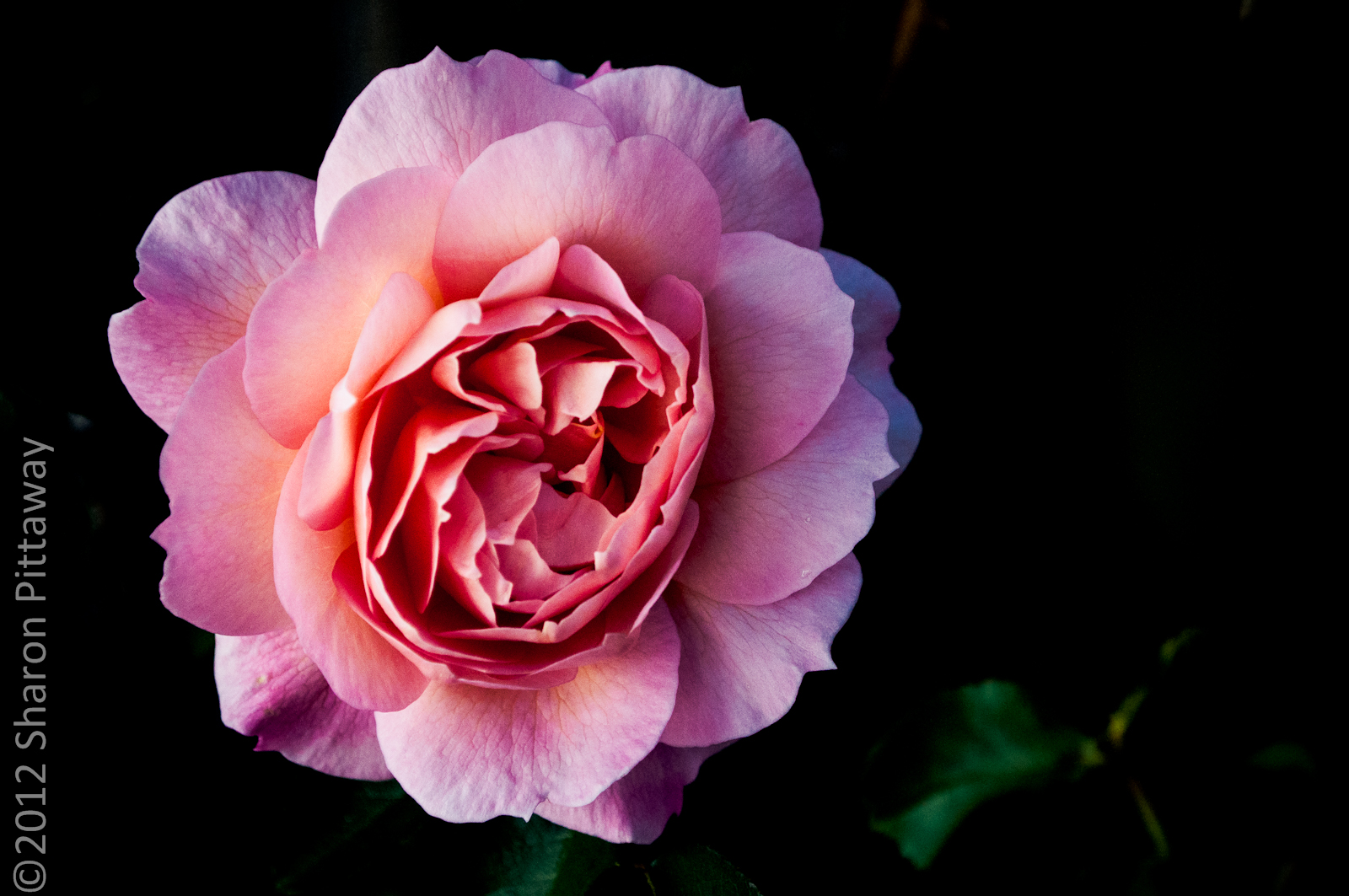
Today’s flower shot comes from my backyard. When we moved into the house three years ago, I was delighted to discover a lovely pink rose growing beside the clothes line, squashed into the fence by a rhododendron bush.

I have better photos of this particular rose bush, but I quite like the light on this one, so it will do for today’s stimulus.

Today, the challenge is to use the word ‘rose’ in the story somewhere. It doesn’t have to be referring to the flower, it could be something along the lines of ‘Jim rose from the chair … ‘, or ‘The bread rose gently …’ or ‘Rose wandered lonely as a breadcrumb through the aisles of a deserted theatre.’

It’s entirely up to you how you use the word in your 60-80 word story!

I look forward to your unbridled creativity.

Backyard Rose
Posted in Learning, Writing

Flower/story challenge – Day 5

[Day 5 of seven]

Great to see so many taking up the challenge, and sticking with it. I’m thoroughly enjoying reading all the stories and learning about the way people express themselves in this way. I have to admit that I also enjoy posing challenges for you, my valued reader. I’m afraid that I can’t stop being a teacher, and so I will continue to challenge – in an intellectual and creative way.

******

Today’s challenge is a simple one. This flower, called a Red Hot Poker, is actually orange. Can you write a story that purports to be about one thing (a colour, an expression, a gesture, a room, an experience) but is actually about something else?

I’ll give you up to 100 words as that might allow you more scope to develop something that will better reflect today’s boundaries. You don’t have to post your first draft – I know that Stephanie is working on her stories without yet posting (but I’m confident that she will) – so feel free to edit, re-work, re-shape.

Enjoy!

Is this the colour pokers get when they’re red hot?
Posted in Writing

Flower/story challenge – Four

[Day 4 of seven]

In the UK those in power are playing, yet again, with the education system. Over the past year or so they have introduced something called an EBac (English Baccalaureate) which means that students must study English, Maths, 2 Sciences, either modern or ancient history or geography, and either a modern or ancient language.

To many that will come as welcome news and there have been and will continue to be comments along the lines of “To be honest I wonder what schools who have a problem with this think their job actually is. Would we tolerate hospitals which don’t try to make patients better? Why should schools get a free ride” and “British parents are more concerned with their children receiving praise. If anything they are more likely to complain that their little darlings are being worked too hard”.

It’s interesting that one of the commentators likens schools to hospitals (places people go when they are ill or have serious health problems that require specialist treatment and/or surgery). Is school really that kind of place?

Anyway, one of the subject areas not listed in the EBac is the Arts … no drama, no visual art, no music, no dance.  For some children that will come as a devastating blow. The area in which they have skill and capacity and interest and talent will no longer be recognised as subjects appropriate for school.

It begs the question – what is the purpose of school?  More than that, it seems that in the UK and the US there is a push for a particular type of school that privileges one kind of student over another – that privileges the already advantaged over the already disadvantaged – the type of school that costs less money, is largely funded by parents – never mind the Universal Declaration of Human Rights – Article 26:

  • Everyone has the right to education. Education shall be free, at least in the elementary and fundamental stages. Elementary education shall be compulsory. Technical and professional education shall be made generally available and higher education shall be equally accessible to all on the basis of merit.
  • Education shall be directed to the full development of the human personality and to the strengthening of respect for human rights and fundamental freedoms. It shall promote understanding, tolerance and friendship among all nations, racial or religious groups, and shall further the activities of the United Nations for the maintenance of peace.
  • Parents have a prior right to choose the kind of education that shall be given to their children.

No Arts – where is the scope for the full development of the human personality?

Parents choose. What happens when parents, like I was when I had young children, like my own children are now, have limited incomes and so cannot afford schools that can offer education that is more interested in developing the child’s potential than moving up a notch or two on a league table?

So, no Arts in the UK.

Where is the place for exploring creativity (and I don’t mean artistic creativity here, I mean the full gamut of creative thought and creative possibility – the creativity a scientist needs to be able to think beyond the known; the creativity an engineer needs to build the as yet unbuildable; the creativity a dancer needs to move us through the way he uses his body) … where is the place for fully developing human personality? Yes, we can know facts and therefore do well at Trivia nights at the local RS, but shouldn’t education move beyond that? Is knowing facts enough? It’s a start, and it’s important, but is that all education can offer us?

So, to today’s challenge.

I started this story writing challenge by talking about creativity requiring boundaries. The flower is one boundary – its colour, stance, gesture, age, vibrancy (or lack thereof), the size and number of the petals … all these things might suggest something to you which you can work from. There’s also its position within the frame – is it looking outwards, upwards, downwards? How much space is around it and what might that suggest?

I have also provided boundaries in relation to specific details – the year (which might trigger memories of what happened in that year, as it did for Debbie; or for Tim it was a trigger for finding out what music was being played in that year and using that in the story), the characters, an atmosphere suggested by a particular time of day. All these things act as boundaries and gently move you in a particular direction with your story writing, while allowing for huge diversity.

Then there’s your own knowledge and use of language – I was particularly struck by the alliteration of ‘light lances through leaves’ in Mum/Dad’s story; and Tim’s old man whose face was a ‘roadmap to regret’.

So today’s challenge is about using language creatively … to show rather than tell. We see the old man’s lined face through the description, rather than being told that the man is old. To conjure images through alliteration, or to add humour through exaggeration. Plus, must have a link, however subtle, to education, learning, or schooling.

Today’s 60 word story is bounded by your expressive capability.  Have fun!

1950s style
Posted in Writing

Flower/story challenge. Day 3

[Day 3 of seven]

Yesterday I mentioned three characteristics of short stories: character, plot, setting. There is a fourth characteristic: theme – that is, what the story is about.

Today’s challenge focuses on theme.

The setting is rural Australia in 1946 as the world settles down after a few years of turmoil.

The characters are in their 40s, married to each other, with one child.

The theme is forgiveness.

Too many boundaries for a 60-70 word story? See how you go!

Posted in Learning, Writing

Flower/story challenge

[Day 2 of seven]

Before I start today’s blog I want to say how impressed I am with the stories that emerged from yesterday’s flower-story challenge. They were diverse, succinct, used the boundaries cleverly, and showed imagination and thoughtfulness. Thanks to all those who created a story, I really enjoyed reading them. 

******

Character.

Plot.

Setting.

These are the three main characteristics of a story. Many authors will develop characters as the starting point of their novels (and some will go to great lengths to learn as much as they can about their characters), some authors will write plot-driven stories (many authors who write for boys will begin with plot – the action of the story). Fewer authors will start with setting, but some do so to great effect – think Nadia Wheatley and Jeannie Baker.

The challenge today, if you choose to accept it,  is to write a 50-word story with one of those characteristics in mind. Which one will you use as a starting point?

Here’s your flower stimulus … have fun!

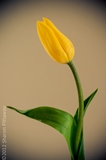
Standing proud