Posted in Learning, Studying, Writing

The envelope

My online students, in the days before we went online, used to talk about waiting for ‘the envelope’. Ours were yellow and students would camp at their letter boxes waiting for the big yellow envelope to arrive. Some would leave it sitting on the kitchen bench till they felt strong enough to open it; others would rip it open, eager to see their result.

My first envelope arrived in the post earlier this week and I have to say it was an odd feeling. Partly, I think because of the ways my students (now graduates) used to talk about the arrival of the envelope, and the importance it held for them. It was a validation of them as students, scholars, learners, and sometimes it was even more. It was a validation of themselves. Were they worth anything? Could they do it? Were they cut out for this thing called university? Did they have what it takes? Was university really for people like them?

Many of those students had not been on to the university campus at that stage, or had not been on to the campus often. Many of them didn’t live in the same state as the university; many hadn’t physically met their lecturers, tutors, peers. University was a disembodied experience. An experience that involved sitting at home, on their computer, by themselves, struggling to work out what the task required, having little access to anyone to seek clarification, advice, ideas. Not knowing if they were on the right track.

They did their best, not knowing if they measured up; their whole being invested in this. What if I’m not on the right track? What if I fail? Will that mean I’m a failure?

It’s high stakes.

A few days before my own envelope arrived, I had returned my own students’ assignments – though not in envelopes – and was aware of the emotions involved in receiving feedback and a grade. But I was aware of the emotions as an objective observer: as someone who knew that the students would have an emotional reaction, but not as someone who felt the emotion directly. Some of my students had not met the pass standard, and the emotions varied: some were angry, others were disappointed. Many of them spent the weekend crying. Other students had met the pass standard but had expected the same success as they’d had at college. Their emotions were similar – to them their pass (or credit) felt like a fail.

I had warned students that they might feel this range of emotions and that they might react in particular ways; I had wanted to prepare them and to let them know it is normal to feel a range of emotions … and to be quite honest, to let them know that they weren’t to email me at the height of their emotional response. The “post-assignment-blues” email is not a good one to look back on when the emotion has subsided!

All of this was raging through my head when my own envelope arrived. What if I failed … or just as bad … what if  I only passed?

So when my envelope arrived I felt part of a community – a community of those who knew the importance attached to the envelope – and for the first time I was an insider in this experience. I felt the weight of expectation and the weight of former students’ associations. It was exciting and daunting in equal measure. The assignment was to write a non-fiction piece of around 500-800 words on a topic of our choice. We had to state the purpose and the audience of our piece, and we had to submit two drafts of our writing plus the final copy. We also had to write a statement about the editing process. Suggestions for our writing included CD liner notes (I didn’t know they still existed), a review (of a book, an art work, an exhibition), a newspaper feature article.

I didn’t know how to write any of those things so I wrote a blog entry. And while I wrote about a real-life experience I wrote it a bit story-like (I used elements of narrative writing) and so was uncertain whether the tutor would accept it as non-fiction.

She did.

I enjoyed your blog immensely. It’s rare to receive an error-free assignment; you’ve obviously invested time and effort for this submission. Thank you.

A validation …

… of my capacity to correct errors.

That won’t surprise any of my own students!

I won’t be so scared when the next envelope arrives. Except I can’t remember when the next assignment is due. I really will need to read the unit outline soon!!

Posted in Learning, Writing

Flower/story challenge

[Day 2 of seven]

Before I start today’s blog I want to say how impressed I am with the stories that emerged from yesterday’s flower-story challenge. They were diverse, succinct, used the boundaries cleverly, and showed imagination and thoughtfulness. Thanks to all those who created a story, I really enjoyed reading them. 

******

Character.

Plot.

Setting.

These are the three main characteristics of a story. Many authors will develop characters as the starting point of their novels (and some will go to great lengths to learn as much as they can about their characters), some authors will write plot-driven stories (many authors who write for boys will begin with plot – the action of the story). Fewer authors will start with setting, but some do so to great effect – think Nadia Wheatley and Jeannie Baker.

The challenge today, if you choose to accept it,  is to write a 50-word story with one of those characteristics in mind. Which one will you use as a starting point?

Here’s your flower stimulus … have fun!

Standing proud


Posted in Learning

Lesson #6

1992. Wynyard, Tasmania. A brochure from the Faculty of Education at the University of Tasmania sat on the counter at the radio station. Two words spoke to me as soon as I picked it up: English/Drama. Before that moment I couldn’t have articulated my passion for either of them. They didn’t fit in the world in which I lived; a world of domesticity on the one hand, and male-dominated sports on the other. Football, soccer, boys basketball, cricket.

But the brochure did more than cause a realisation in me that here were two areas of interest to me. When I read that it was possible to study English Literature and Theatre a rumbling began deep within me.  Over the next few weeks as I pondered whether it was possible, the rumbling became louder until it was a roar in my head. I discovered that it wasn’t possible to not do it. To not enrol. To pass up this opportunity.

Opportunities that allow us to begin, to change direction in our lives, to choose the direction in which we head may not present themselves on a regular basis. They certainly hadn’t for me. I had had no choice in the move from NSW to Queensland, or in the decision to move from Queensland to Tasmania. They were life changing decisions, they changed the direction of my life, but I was not in control of those decisions.

But here was an opportunity to take control, to make a decision. I knew instinctively what my choice was going to be, but my decision also impacted on others. It was a life-changing decision, and it wasn’t only my life that would be changed. It meant yet another move to yet another new place, yet another move away from family – this time my own children. It meant sacrifice – theirs and mine – again.

It meant making a decision that was ultimately selfish. It was a decision that was all about me.

****

1993. Launceston, Tasmania. I made the move, began again, and changed my life.

And I learnt.

I learnt that making life-changing decisions means your life changes and you can’t predict the ripple effects those changes have.

I learnt that making life-changing decisions requires courage and resilience and a willingness to sacrifice.

Any new beginning, no matter how big or small, requires us to adapt, to hang on, to allow it to happen (and we never fully realise what ‘it’ is when we first start out).

A beginning is not a moment in time; while it begins with one step it requires more than the first step. Beginnings take time and energy and commitment and desire. We have to want to begin and we have to commit to the messiness that often accompanies a beginning, the messiness of the steps contained within the beginning.

Beginnings lead to new identities. We try them on, test them out, sometimes deny those identities because they don’t fit comfortably with the view we have of ourselves. We often can only see ourselves with the old identity on … wife/mother not student; teacher aide not pre-service teacher. Others see the shiny new identity, but denial is strong. Sometimes we only see that new identity when we’re about to lose it.

Beginnings lead somewhere. They inevitably lead to endings. Beginning a university degree leads to ending a university degree. We might not be able to see that ending when we first begin. It might seem out of reach at the beginning, but the end of that particular beginning means a new beginning.

Beginnings mean journeys. It’s a journey we’re not wholly in control of … the pathway may seem clear when we’re looking at the satellite image, but when we zoom in a little we see a connecting maze of laneways, dead-ends, cul-de-sacs, open spaces. Changing the view to street view means we see the detail up close – letter boxes, flowering shrubs, front yards, driveways. We can get lost in the minutia when we only see through street view and it seems to take an age to move from one block to another. We see the complexity of the journey in a whole new light, and we need spaces/time/semester breaks to step back and re-look from the distance of the satellite.

Big beginnings contain many smaller ones. Beginning school as a five year sets the child on a journey through education that will take many years, but within that big beginning are many other beginnings: beginning a new grade, beginning with a new teacher, with new students, making new friends, learning new rules and expectations, learning new skills that lead to other beginnings – learning that squiggly lines on a page can be interpreted and can lead us into new worlds, new ideas, new imaginings.

****

2013. Burnie, Tasmania. Another beginning.


Posted in Learning, Writing

Lesson #3

2004. Launceston, Tasmania. Lecturing to third year students I share with them an idea:

As a teacher

your job is to generate thinking

not control it.

I don’t know if it’s a truth (are there any of those left?) but it’s something I firmly believe. I hold that idea as a central tenant of my teaching. It’s important to me, part of who I am as a teacher. Part of my teacher identity.

****

 2012. Burnie, Tasmania. A first year student evaluation: Sharon wants us to think what she thinks.

I am caught by surprise. Shocked. Disappointed. Silenced. Immobilised. I can’t move on/get past it/let it go.

I want to, but it’s like a pebble that I can’t dislodge. Sharon wants us to think what she thinks.

I shake my head, and silently protest, deny it.

Has my position changed in the eight years since I taught the third years?

If it has, why wasn’t I aware of it? If it hasn’t, why aren’t students aware of it?

****

Today. Burnie, Tasmania. I’m puzzled. I have a situation and I’m not sure how to deal with it. It speaks to thinking and learning and power and control and authority and … and … and who I am and who I profess to be and student perceptions and clarity and lack of clarity and what I can/could/should do.

****

I learn through conversation: sharing ideas,talking them out, hearing an idea spoken aloud so that I can determine whether it’s an idea worth pursuing or if it needs to be tweaked or tossed aside. Through conversation I hear others’ ideas and determine how they might fit within my worldview or why they might not. I engage in conversation to understand, to learn.

I learn through questions: asking them and answering them. When I ask a question I want to know what the person I’m asking thinks, feels, values, believes. I want to hear their response. I ask to challenge my own thinking. I am interested in different perspectives, different ways of understanding an idea/concept/theory/practice, different values, different beliefs. I ask questions to understand and learn.

I learn through writing. I come to understand myself-others-the world-ideas-thoughts-traits-distinctions-dichotomies-polarities through writing. I use language deliberately. I think about the words I write with and the meanings of those words and the way one word/one idea/one thought fits with another. I think about cadence and rhythm and connection and clarity. I write to understand and as I write, I learn.

I think.speak.question.write.realise.

I don’t have answers. I have ideas.

That’s my realisation. Today. Right now. This moment.

****

Ideas can be challenged, adapted, re-formed, tossed aside, melded with others, stretched, explored, evaluated, weighed, talked about, shared. They can enrich and empower.

****

The puzzle: I am an academic. For some students that means I have authority. For some students it means I have answers. I contribute to the discussion online and some students think it’s a truth: definite, complete, authoritative. I float an idea. I suggest, propose, offer. There is conundrum inherent in my contribution. I write authoritatively, I am in control of my ideas, my words, my expression. I am an academic. I should know and therefore I should tell.

Should I?

I don’t have answers. I have ideas.

Ideas can enrich and empower. They can be shared, talked about, weighed, evaluated, explored, stretched, melded with others, tossed aside, re-formed, adapted, challenged. Even my ideas. Yes, even my ideas.

I want students to do their own thinking. I want them to think about the complexities within the books they’re reading in Children’s Literature, to make connections to what’s going on in the world around them, to be aware of the world around them, to see other people’s realities, to have ideas and share them and get to the crux of the story/character/plot/reality writ large on the page.

I share my ideas … not my answers.

Ideas can be challenged.

Even mine.


Posted in Writing

Writing Challenge (Day Four)

Tim starts reading and says you’re a dag. And smiles.

He finishes reading and says you’re so clever. And I smile.

Daggily clever? Cleverly daggy? Daggy and clever?

Voice.

When I ask students to write a reflection or a statement of philosophy about teaching, I want to hear their voice.  I dealt with a student this week who had found someone else’s philosophy statement on a blog and pasted it into her assignment. It wasn’t her voice. It was an easy pick-up. It happens way too often. I’m happily reading along and suddenly it is a truth universally acknowledged, that a single man in possession of a good fortune must be in want of a wife pops into the middle of the sentence. My ears prick up. Hang on, I say inside my head, that’s not Student A, that’s Jane Austen.

I keep reading and lo and behold it seems increasingly likely that I really will undertake the expedition that has been preoccupying my imagination now for some days and I recognise the very distinct voice of Stevens. It seems strange that his voice would appear in the midst of a student assignment on the fundamentals of communication in the classroom. I pause, I puzzle, I shake my head to clear it, only to read on and discover that I remain transfixed by Stevens’ voice.

Stevens’ voice comes about through long sentences and parenthetical comments: An expedition, I should say, which I will undertake alone, in the comfort of Mr Farraday’s Ford; an expedition which, as I foresee it, will take me through much of the finest countryside of England to the West Country, and may keep me away from Darlington Hall for as much as five or six days. It’s a voice that takes me instantly into the complexity of the character and slows me down. I move to the couch to be more comfortable because this is one of my favourite books, but I read on only to discover that many years later, as he faced the firing squad, Colonel Aureliano Buendia was to remember that distant afternoon when his father took him to discover ice. I am transported into the magically real world Gabriel Garcia Marquez paints in One hundred years of solitude.

I am confused. Student A (let’s call her Anna and in that way flesh her out a little) is writing about communication in the classroom, but her voice is lost in the other voices that keep intruding on her paper. I would go so far as to say that Anna has not found or established her own voice yet. She has let herself be distracted by other readings, others’ thoughts, others’ voices. She has not done her own thinking (which, let’s face it, is difficult); rather she has relied on my mother is, like, a totally confirmed A-list [expletive riddled passage deleted] *** hole cretin [expletive riddled passage deleted] ***head of the highest order. Fact. In fact, I, of this moment, officially declare my entire doubt of the fact that she is in fact my actual real mother.

My head is spinning, I flick backwards and forwards through Anna’s paper wondering where that voice came from. There’s no acknowledgement of her source, but it really doesn’t sound like Anna.  I do a Google search and find that it is the voice of Dora from Dawn French’s A tiny bit marvellous. Possibly not the best source Anna could find for her paper, but I suppose that all happy families are alike but an unhappy family is unhappy after its own fashion.

Tolstoy? Wow. 

Voice. Use your own. I know, believe me I know, it can be hard to develop your own, but your audience wants to hear First the colours. Then the humans. 

No, Marcus Zusack, now is not the time to intrude. I’m trying to establish my voice. A distinct voice. A voice that emerges from the snow in the mountains was melting and Bunny had been dead for several weeks … excuse me, Donna Tartt, please don’t do that. I’m trying to write in my own voice. A voice that is uniquely mine, a voice that is worth being heard, that emerges from this is Albion Gidley Singer at the pen, a man with a weakness for a good fact.

Kate Grenville, seriously, this is so not the time. I cannot finish on someone else’s words. I have to finish with my own because the war had ended as wars sometimes do, unexpectedly.

****

Tomorrow, the conclusion.

Posted in Learning

This is what I predicted … and more

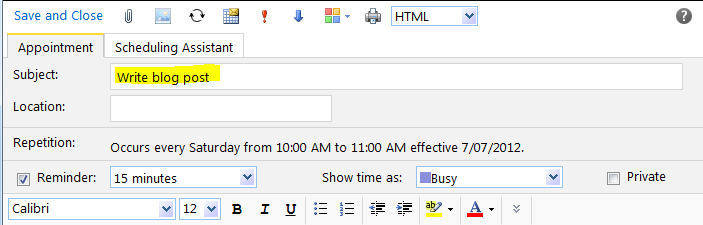
It’s another way of saying “I told you so”.  In my very first blog post I wrote the following: “I could do something nerdy and schedule a time in my calendar to write a blog entry each week, but I doubt I’ll do that”. 

I didn’t schedule time and I didn’t write a blog post each week.

But I’m going to try to write one now.  Here goes …

In two weeks’ time my Children’s Literature unit will be live for students to access.  I have spent hours on the assessment tasks, agonising over the wording, trying to work out the practicalities, thinking about the tasks from the students’ perspective.  Are the tasks too prescriptive?  Do they allow enough space for students to be creative in their response/s? Do they provide enough scope for students to demonstrate their understanding?  Is there room for independent thought and action and learning?

It’s hard to determine how students perceive assessment tasks: are they just hoops to jump through in gaining a qualification to teach?   What more might they be?

Oh, sad question.  Cynical even, and short-sighted. What do students understand about the purpose/s of assessment tasks though? Perhaps I should ask them.

I’m getting off-track.

I’m teaching Children’s Literature and one of the assessment tasks requires students to create a blog and post to it each week.  I thought I’d see how it feels.  Students have to write 500 words for each entry and each entry has a specific focus.  The focus for the first entry is ‘what is children’s literature?’.  I won’t answer that question, but I will address what I think is important about a unit such as this.

Reading to children and encouraging a love of books is vitally important for children’s development, curiosity, understanding of the world, pleasure in language, and oral language development (Lukens, 2007, p. xxiii).  It is interesting as a mother to watch my own children’s development: some of my children have engaged readily in reading and being read to, while others have had very little interest.  My eldest son, who is in his early 30s now, has only recently taken to reading.  He had found biographies to be much more engaging than any other form of literature and has read more books in the last twelve months than in the previous 31 years.  My mother is the same: she would much rather a biography (or autobiography) than a novel.

My second son will read just about anything.  He’s always had an interest in language and as a child loved playing with words and sounds. I have a video of him at three trying to read a CJ Dennis poem about the Triantiwontigongolope.

There’s a very funny insect that you do not often spy,
And it isn’t quite a spider, and it isn’t quite a fly;
It is something like a beetle, and a little like a bee,
But nothing like a wooly grub that climbs upon a tree.
Its name is quite a hard one, but you’ll learn it soon, I hope.
So try:
Tri-
Tri-anti-wonti-
Triantiwontigongolope.

My grandmother on my father’s side loved language too and could remember verses of poetry well into her 90s.  It’s a real joy to give to children – the love of language – and children’s literature, good quality children’s literature, read in an engaging way will bring hours of pleasure.

My favourite at the moment is Nick Bland’s The very cranky bear.  It starts: “In the jingle jangle jungle on a cold and rainy day … ” and already, just with those few words, you get the delightful rhythm established and you know you’re in for a real treat!  The illustrations are gorgeous and the look on the bear’s face when he’s all dressed up is priceless.    It’s a book designed to be read aloud and I know that children will ask for it again and again.

So that’s one advantage of studying a unit such as this: you get exposed to a range of children’s books that you can take into the classroom and read to children.  Another advantage is that you get to do a lot of reading.  When that reading is primarily children’s books it’s neither difficult nor arduous.  The problem is knowing when to stop.  And knowing that you can’t buy every children’s book you come across.  I have to tell myself that constantly.  My book pile is growing and growing and I’m fast running out of space on my bookshelves.

So, exposure to lots of quality books, time for lots of reading … and the third advantage of this unit is the opportunity it provides to talk about books and features of books.  One of the great things about reading is the experience of sharing what you’re reading with others.  Through talking about your reading you can come to a better understanding of the text features or the characters or the themes or the key messages (depending on the book you’re reading of course).

That’s enough for now.  Maybe I will do this each week.