Posted in Learning, Life

On success …

I’ve been reading a lot this week about the ways young people define success; I’ve also been reading about the aspirations of adolescent girls.

I’ve therefore been thinking quite a bit about aspirations and success.

What is success? Well, according to the year 7 students in Wendy’s study it’s a lot to do with having a goal and achieving it (it’s also, according to them, about fame and wealth). Wendy is another success story, but I’ll leave that for another day.

And aspirations? For the year 10 girls in Cherie’s study, there was a sense of uncertainty, a lack of clarity around their aspirations for the future. They had ideas/fantasies, but no concrete goals they were actively planning to achieve. There were so many options for them, that they found it difficult to project themselves one year or 10 years into the future and choose which of those options felt right for them. The girls had difficulty visualising life as anything but what it is now.

I empathise with that view. Do you? Can you imagine yourself 10 years older: what you’ll look like, what you’ll be doing, where you’ll be living, what kind of relationship you might be in (particularly if you aren’t in one now), where you might have travelled to? Could you have done that when you were 15 or 16?

I certainly couldn’t. I never imagined I’d be a university lecturer, for instance. I can’t believe I’ve been one for so long that I’m eligible for long service leave! It wasn’t something I had as a goal. Being a lecturer wasn’t something I strived for, or planned for, or worked towards attaining. It wasn’t on my to-do list. My life just led there. It’s just what happened.

For those of you who are planners, that might seem unnatural, not the proper way of doing things, it might even seem wrong. For those of you who have known me for the longest time (and I’m talking almost 40 years here. Yes, Michelle, it’s been that long) you might think I made decisions that inevitably led me to that destination – but if I did it was never with that destination consciously in mind. I didn’t at any point say “I have aspirations to be a lecturer”. It simply wouldn’t have occurred to me to aspire to that kind of role.

I don’t generally set goals. I hate the question “where do you see yourself in ten years’ time?” No, not hate. Loathe. I loathe that question. I don’t know where I’ll be in ten years’ time, but ten years ago I didn’t know I’d:

* be married (to the most fabulous man I know)
* be living in Burnie (and loving living here)
* have (almost) six more grandchildren than I did at the time
* have my doctorate
* be employed full-time as a lecturer
* have had the opportunity to be a Course Coordinator (and in so doing help change some lives)
* have had the privilege of being the Director of Student Engagement (and help to change a few more)
* have travelled to Paris (twice), been to Germany to visit Elke (twice), spent a week in Venice with Sarah and Ben, caught the train around France and Italy by myself, or been proposed to on the London Eye
* have seen Macbeth at the Globe Theatre in London, Les Mis on the West End, or Loch Ness
* be a student again, this time studying Media Communication.

And more … much more. I wouldn’t have thought of some of those things ten years ago, let alone planned to achieve them if they’d been goals – and look how much I would have missed out on. So for me, that’s a clear justification for not living your life according to five or ten year plans. I know others will see it differently, and I’m not saying they’re wrong, I’m just saying that I don’t live my life that way.

So … and I’m getting to the point now … imagine how surprised I was in November last year when I set myself a goal. Just one mind you, but it was a big one. It was one I wasn’t convinced at the time I could achieve, but I set it nonetheless. I couldn’t “see” myself into the future to see how I would look or feel if I achieved this goal, but that didn’t stop me from setting it.

And it didn’t stop me from working towards it.

You see, I’d become increasingly unhappy with my … physical self/weight/appearance/being treated by strangers as stupid just because I was fat. I wrote the following earlier this year as part of an assignment for university:

Lizzie* was fat. Morbidly obese, according to the chart in her doctor’s office. She’d
been that way for years, apart from the time, five years ago, when she lost 12 kilos.
Since then she’d managed to put on 20. Or more.

Lizzie knew that she was fat; she could feel it. When she laughed, her whole body
wobbled; Lizzie didn’t like that, so she stopped laughing. Her knees creaked under
her weight: with each stair she climbed or descended Lizzie was accompanied by a
painful musical chorus. Lizzie’s eyes grew squinty and her best friend commented,
rather rudely Lizzie thought, that she must be turning Japanese. Lizzie’s mummy-apron
grew bigger by the day. Her arms, her thighs, her wrists, her elbows … fat.

Fatness oozed from her shoes with every step.

In her fatness Lizzie was lumpy, unlovely, lost. Far beyond chubby or plump, Lizzie
was fleshy, hefty, corpulent.

And, unhappy.

*The name was changed to protect  … well, me.

So, yes I set myself a weight loss goal. By October 12, 2013 I wanted to weigh a lot (lot) less.

Daniel, son number 2, was getting married to Cathy in Byron Bay. I knew there were whales that went past Byron and I didn’t want to be one of them.

It was a goal I was determined to make.

******

I didn’t make it.

But I was close. Really, really close.

I came home from Byron even more determined to reach the goal I had set myself in November last year.

On Monday last week I was 800g away from it.

By the Wednesday I was 400g away.

On Monday this week, I was 600g away. Ouch! That really hurt.

On Wednesday I was 100g away. It was so close … but not quite there. I wanted to see the actual number I’d been striving for on the scales, not settle with ‘close enough’.

You can imagine my trepidation on Friday (yesterday) when I stood next to the scales with my health coach standing beside – prodding me to get on them.

What if I’d put on weight? What if … ah, this was no time for what ifs. I just got on.

Result? I’d blitzed it! I hadn’t just gone down by the 100g I needed to make my goal; I’d dropped 900g and was well on the way to achieving the next (much, much smaller) weight loss goal I’d already decided on.

So, here I am. Forty-nine weeks after having set my goal. Still full of determination and resolve but 35.5kgs lighter.

Yes, dear reader, you read that correctly: 35.5kgs.

In one way I’m horribly embarrassed that there was that much of me to lose, but that really doesn’t stop me feeling proud of myself for losing it.

It was an aspiration. To weigh less, to not look like a whale at Daniel’s wedding, to not embarrass him in front of Cathy’s family (which I hadn’t met).

I had a goal: a particular weight I wanted to be at a certain time (which meant losing 34.7kgs in just less than a year).

I had a plan: an eating and exercise one.

I was determined. Through this process I’ve been re-introduced to my determination. It’s pretty strong!

I worked hard and didn’t let anything deter me.

I didn’t stop when I didn’t make it, or when it got hard, or when the weight  wouldn’t move, when my body wouldn’t move, when my knee groaned harder than it had ever groaned before, when others around me ate cake or musk sticks or spearmint leaves or Turkish Delight (thanks Rochelle and Emma), or even toast and vegemite (thanks Mum, but no thanks).

I was determined. I was initially determined to do it for Daniel, but then it got to the point where I was doing it for myself. And my determination didn’t waver.

And I made it. Two weeks late, but hey, I’m not going to quibble.

I set a goal. I worked hard to achieve it. I made it.

If this is what success feels like … I like it!! I might not have fame or wealth, but this feeling of satisfaction more than makes up for that.

******

If I was brave enough I’d put up before and after shots.

You’ll notice from their absence that I’m not yet that brave!

******

I have to acknowledge Tim, my wonderful husband, for his unfailing, constant support, encouragement, and belief in me. You’re the best and I love you to bits!  

Thanks Helen and Robyn and Carolyn. You are the best encouragers! You always noticed and let me know that you noticed and that meant a lot to me.

Thanks to Warren and Ben for your quiet support and pride in me. You’re both like Dad/Grandad … you don’t say much in words, but your actions speak loudly.

Thanks to Rochelle for being my exercise buddy for a short time. It helped push me just that bit harder. I don’t do ‘love pats’ at boxing anymore thanks to you!

Finally, thanks to Carolyn and Delicia and Eve. Your support has been amazing. I couldn’t have done it without you.
Posted in Learning, Life

Living and re-living

Do you ever think “I’ve been here before”? I don’t mean that you lived in a different era in a different form (that you’ve re-incarnated from a cockroach into a human) but that you’ve lived an experience that now, at some slight remove, you’re living again. Re-living.

Maybe at the start of a new semester, when you read the unit outline at the end of Week 1 and realise that you’ve missed the deadline by two days for one part of your first assessment task. Or vacuuming the floor when it felt like only yesterday that you tried to get that same spot out of the carpet? Or reading the start of a book you didn’t think you’d read only to find that it’s so familiar that you know, at some point in the past, you’ve sat in the same spot, legs curled up under you, puppy pushed in beside you, the winter sun streaming through the windows … that you’ve been there before?

Life can be like that.

Years ago, you packed a bag, walked out the door, changed your life.

And then, twenty years later it happens again. Bags are packed, doors close, lives change.

Only this time it’s not your bag or your door or your life. But close enough to get a sense that you’ve been here before.

It comes as no surprise to find that life doesn’t happen in a straight line.  There are turns, and deviations, and unexpected detours that lead you down paths that are overgrown with lack of wear and just a tiny bit spooky, but interesting if you have a spirit of adventure and just a touch (or more) of courage – which you don’t realise you have until you’ve travelled that path and have the benefit of reflection and hindsight.

And there are seeming circles … you tread a path, and then without any encouragement or persuasion, your daughter treads a similar path.

The lines you once heard, she’s hearing (she’ll come to her senses – just give her time and she’ll be back). The fingers that wagged at you, now wag at her. The system that seemed stacked against you, now seems stacked against her. The sense of dislocation you felt, she’s now feeling. The questions you asked yourself, she’s also asking.

There’s living, and then there’s re-living.

Circles.

Different actors. Different lives. But so, so familiar.

Age gives me an advantage. I can see from a distance – having made it to the end of that dark and gloomy path she’s now treading. I know that it’ll  get lighter the further along she goes. That there are more options than she first thought, more warmth from others than she initially envisaged when everyone (or so it seems) was turned against her, more resilience and strength than she ever imagined was there, lurking within.

Living

and re-living.

Life.

Posted in Uncategorized

Manners and public discourse

While I have had a Twitter account for just over a year now, I have not, until recently, given it much attention. Nor have I given much attention to my LinkedIn account. Over the past two weeks, for a reason I have yet to understand, I have taken to checking my Twitter and LinkedIn accounts on a very regular basis. I read through the tweets and articles that arrive during the night while eating rhubarb and ricotta for breakfast, and then I check again at lunch time and regularly throughout the evening. My daughters would call “nerd alert” if they could see who I follow (ABC News 24; The Guardian; BBC World News; Oxford University Press, etc) but that’s okay. Nerds are usually quite harmless and I don’t mind being counted amongst their number.

But that’s not the reason for this post. The point isn’t to tell you that I’ve become somewhat addicted to Twitter and LinkedIn, and to the information, ideas, perspectives, thinking, opinions, moments of humour and sometimes outrage to which I am now exposed.

The point is to try to make sense, for myself as much as anyone, of some of the things I’ve read in recent times.

One of the tweets that came through on Friday was news of a message to members of the Australian Army by Lt. General David Morrison, AO who was responding to reports of unacceptable behaviour.

I also read tweets about the questions put to the Prime Minister, Julia Gillard, by (former) Perth radio presenter, Howard Sattler.

The two things became linked in my mind, and also called to mind the list of things others have said about and to Prime Minister Gillard over the last two and a half years.

One of the things that Lt. General Morrison said in his message to members of the Australian Army (and let’s face it, to the rest of us given that it’s on YouTube for all to see) is that “every one of us is responsible for the culture and reputation of our Army”. What if we were to replace Army with “school” or “workplace, houses of Parliament, radio station or home”? Would what he said still apply? Are we responsible for the culture and reputation of where we work and live?

As an aside, he also said: “the standard you walk past is the standard you accept”. One thing I find interesting is that this hasn’t already been said loudly and clearly by an editor of a newspaper, a news director in a radio station, a senior executive of a TV station, a leader in the community … 

But I digress.

I stumbled across Angry is a Habit while reading articles on LinkedIn. It is a short blog post about habits. We have habits of behaviour, but Godin (the author of the post) suggests that our emotions can become habitual too.

I thought about this in relation to the words used by some in the media and wondered if the emotions behind their words are habitual ways of being. Why the need to pour hate and loathing and anger into the world? Is it just a habit? Do we, the consumers of these words, buy the emotion as well? Is it a package deal? When we read/hear/watch the angry, hate-filled words that we wouldn’t say to our boss, principal, Dean of the Faculty, chair of the Parents and Friends committee, head of the local arts organisation, do we buy the emotion too so that we get just as angry and hate-filled at whichever politician is being scorned, ridiculed, put down? Do the words cause us to feel particular things? Does hate and anger therefore spread through our communities in the same way that videos go viral on the internet?

From LinkedIn I also read Three words that will transform your career. In this article author Bruce Kasanoff claims that to improve our quality of life we just need to think “help this person” every time we encounter another person: “When you walk into Starbucks for coffee, think help this person about the barista who serves you. Instead of being frustrated that he isn’t moving fast enough, see if you can make him smile. Better yet, tell him to keep the change.” Kasanoff claims that this will “change your demeanour, your thought process, and the entire interaction.”

It is a similar sentiment to one put forward by David Foster Wallace in his now-famous speech to a group of university graduates in the US in 2005. While Bret Easton Ellis (author of American Psycho amongst other works) considers Foster Wallace “the most tedious, overrated, tortured, pretentious writer of my generation“, others have been taken with Wallace’s notion of choice … we can choose to behave in certain ways, we can choose to see the world in particular ways, we can choose to look beyond the surface and (although he didn’t use these words) we can choose empathy. We can choose to live beyond our “default setting” (of being annoyed and frustrated by, for instance, the slowness of airplane passengers when putting their bags in the overhead lockers; of being annoyed and frustrated that even when someone is eighth in the queue for the ATM they still don’t have their purse out of their handbag when they “suddenly” find themselves first in the queue, which has now grown to 23 tongue-clicking, foot-tapping withdrawers of money). We can choose to think/live/behave/feel differently.

So what have I learnt from all this reading? What sense am I making from these seemingly unrelated tweets, articles, speeches, thoughts? It has something to do with manners and respectful behaviour … but it also goes beyond that.

For me, one thing is clear: We can change our habitual ways of thinking and acting. To do this, we first need to become aware of how our thoughts impact our behaviour, speech, interactions, emotions. We need to consider our habits of thought and emotion and then to do something about them if we find ourselves thinking/feeling/acting negatively/rudely/in an ill-mannered way on a regular basis.

Through a change in thinking we can transform others’ lives and in the process transform our own as well.

We can stop walking past what we know (deep down) we don’t accept. We can speak up for respect, care, kindness, professionalism and manners. We don’t have to accept the hate and anger of radio shock-jocks and political commentators (of whatever persuasion). We don’t have to accept their hate-filled, angry, vitriolic rantings, and their disrespectful questioning, and their words which claim that we are all somehow implicated in their tawdry games (we continue to listen, to watch, to read, to buy, to comment and thus give them credibility or at the very least our time).

We can choose to think for ourselves, read critically, and ask questions of the texts produced and served to us on a regular basis. We can live by habit, or we can choose to live consciously, being explicitly aware of the world around us and how we are being shaped by the views/words/actions of others (yes, even of me in this blog post), and the ways our views/words/actions shape others.

If we are teachers, then we need to be even more aware of that influence.

None of this is new of course. Educator Wayne Sawyer, in an editorial he wrote in English in Australia in 2005, noted that “our current students face a relentless barrage of shockjocks, media barons, advertising and corporate greed masquerading as common sense” (p. 4). Sawyer called on teachers to ensure that critical literacy was an integral component of their teaching. But in order to do that, teachers too must be aware of how their views are being shaped by the same shock-jocks and media barons that shape our students’ thoughts. And more than that, we need to know how to deconstruct the messages they (and we) consume and know how to teach students to unpack them.

We can choose … that’s what I’ve learnt. We can choose.

Posted in Learning, Studying, Writing

Being …

This year I took on a new identity … not, I hasten to add, in a witness protection kind of way. Nothing that dramatic! … but a new identity nonetheless.

I could say that I took on a new role … but with new roles comes new identities. We can choose to define ourselves by our new roles/identities, and thus think about ourselves differently. Being an academic means particular things. Being an under-graduate student means almost the polar opposite. We may choose to act in ways that are consistent with our new role and that might lead to inconsistencies in how we portray ourselves to the world. Will I be student today, or teacher? What does it mean to be a student in an online environment where I don’t get to spend time with my teacher or my peers; when I don’t get to hear their voices or even see what they look like? It’s a disconcerting experience. On the other hand, what does it mean to be a teacher in an online environment where I don’t get to spend time with my students, when I don’t get to hear their voices or see what they look like? Experiencing that as an online student heightens my awareness of that ‘disconcerting experience’ as a teacher of online students. 

In addition to thinking about myself in a different way and considering if I will act differently to signify this new role/identity, others see me in that new role and make different kinds of connections with me, or think about me in particular ways and so have their own view of who I am (which might not bear any relation to who I am when inhabiting a different identity/role).

My university tutors do not see me as a colleague; as someone who, like them, teaches in an online environment. They see me as a student – a distant one, it has to be said: one who doesn’t appear to be very engaged, who forgets to read her unit outline, who leaves assignments till the last minute, who doesn’t follow the requirements of the task as closely as she should, who doesn’t engage in conversations online, who hasn’t made connections with other students in the online environment.

For those of you in the know, why didn’t you tell me it would be like this? 🙂 If only you’d told me to read the unit outline carefully and repeatedly, or that I’d need at least 10 hours per week per unit to do full justice to the work I needed to do, or that learning to use new software is time-consuming and requires a great deal of independent learning and commitment and energy, or that coming home from work and having to study till late is exhausting, or that trying to find information when it’s in ten different places in the online environment is one of the most frustrating parts of the whole experience (it really isn’t all that difficult to put all the information required for weekly activities in the one place), or that reading all the other students’ posts can be mind-numbing and take up all the time I’d set aside for study (and seriously, do 18 year olds really like talk in that like annoying way where they like say a lot without like saying anything at all, you know, sort of, I guess, do you get me? Despite my student status I am still a teacher and despair over the abominable use of language on public discussion boards).

Not that it’s all bad of course. In one subject (Writing Professionally – actually I don’t know if that’s the name of the subject because for some reason I haven’t looked at the unit outline properly to even know what the unit is called), the tutor gives general feedback on our ‘writing watches’ (which are assessed) and on two occasions has encouraged other students to read my work for its ‘quality and depth’ (you have no idea how embarrassed I feel writing that). We had to do three ‘writing watches’ across the course of the semester – responding in a systemically functionally linguistic way to something we’d read. I chose to respond to:

1. an article in a photography magazine

2. an essay by Richard Flanagan which appeared in The Monthly (the article was on David Walsh and MONA which I’d just been to, so it seemed fitting)

3. a blog post titled The oddest English spellings, part 20: The letter “y” from the Oxford University Press’s blog. It was interesting. Seriously!

These writing watches were practice for our exam. Yes, you heard that right – exam. I had to sit an exam.

Why didn’t someone tell me how stressful that is?! That you spend days and nights thinking about what the questions might be, what the text choices might be, what you know (or rather, don’t know) about systemic functional linguistics and how you’re going to write “pages” on it in two hours?

But I did it and wrote (typed) five pages of blather about an advertisement for Income Protection titled Confessions of a financial adviser. An interesting way to spend a day, particularly when you’re at home and the phone keeps ringing just as you think you have the modality worked out!

We also had to do weekly ‘word watches’ (which were assessed). We had to find two unfamiliar words each week and write about them: what they mean, where we’d read/heard them, their derivation, and we had to use the words in a sentence.

At first I found this difficult. I don’t want to sound like a pompous git (unlike some people I know), but in the everyday, normal, regular reading I do I don’t come across too many words which I don’t know. So I determined to try harder.

Here are my words (you, clever reader, are quite possibly aware of their meanings and already sprinkle them through your everyday conversations. I, on the other hand, did not).

  • Eupraxis (thank you David M)
  • Conation (actually, I did know what that meant because I’d written about it in a journal article published last year, but until I wrote about it I didn’t know what it meant)
  • Heuristic
  • Prevaricate (actually I wavered on this quite a bit)
  • Mendicant (it had been in the news – Tasmania is a mendicant state apparently)
  • Noetic (nothing to do with Christmas)
  • Rendering (a word from my Graphic Design unit)
  • Misandry (its opposite had been much in the news)
  • Chirographic
  • Contumacious (if my mother had known this word when I was a child I’m sure I would have heard it a lot!)
  • Whovian (my sister is a mad one of these)
  • Gonzo (I’d been to MONA and learnt this word while wandering the subterranean halls. Tim already knew it. He’d read Hunter S. Thompson apparently)
  • Metaredound (don’t ask me)
  • Analogous (I actually had heard this word, but I wanted to use it in a way I hadn’t used it before and that was in relation to colour: analogous harmony)
  • Indigent (thanks Germaine)
  • Calumniated (and again)
  • Emic
  • Etic (yes, they are related)
  • Eschatology
  • Ratiocination (I had to listen to this a number of times to get the pronunciation right. Thanks YouTube!)
  • Contingent (used in a way I didn’t understand – of all people, by my husband, in a journal article we wrote some time ago. I hadn’t told him I didn’t understand the way he used it as I didn’t want to look stupid!)
  • Hegemony (with a soft ‘j’ sound for the ‘g’)
  • Picayune
  • Ludology (nothing to do with Ludo as it turns out … although …)

So there you have it. New words to pepper through my dinner-time conversations. Feel free to use any of them, particularly in ways that are inventive and thus deeply satisfying.

I am a student and I am learning things. That’s what students do isn’t it? Isn’t that the purpose of being a student? It’s why I decided to be a student: to learn something/s. And even though I’ve said ‘the message’ countless times, it’s always different when you’re on the receiving end of it. The message is: learning can be hard. And it isn’t always fun.

But it is satisfying.

Being a student not only challenges my own identity (I have to flip between student and teacher on a regular basis and I am very conscious of not being a teacher in my student role – which is partly why I don’t engage on the discussion boards: I don’t yet have the student language down pat. I’m too caught up using teacher language and saying teacher things and I don’t want to do that as a student).

Being a student also challenges how others see me.

Some people, on first hearing that I am a university student again, thought (and said) “are you mad?” and other equally dis/en/couraging words. My new role was something they wanted to reject – it was ludicrous, or unnecessary (especially at your age), or just plain silly. I have a PhD, why would I want to be an under-grad again? That’s something young people do. I should do some serious study, not a bachelor degree in an area I potentially know a little bit about. Why, for instance, am I doing Professional Writing (that’s its official title – I thought I’d better check) when I have had a number of journal articles, book chapters and conference papers published?

I guess I feel that I can always learn more – and I did. Heaps in fact, and that’ll help my writing when next I write something for publication. 

On hearing that I am a student again, other people saw me differently. They made a different kind of connection with me. Some, because of their own identity as ‘student’ (or perhaps, student-in-the-not-too-distant past) applauded my decision – I was now one of them, a member of a community of adults who are (or were) university students. For those whom I’ve taught – who have been my own students – the connection is even closer. Their teacher/lecturer/colleague is now in the same position they recall so clearly and thus our connection is strengthened. There’s a shared understanding … and as I give advice quite freely about being a student, I also imagine there’s a little bit of mirth around my stumbling attempts at student-hood.

But I have finished the semester, completed teaching and learning surveys (and been very honest – in a professional way – as all students should be), and am eagerly awaiting my final results.

I have also determined to be a better student next semester. I have already created folders for my two new subjects (one is Production Planning; the other is Visual Storytelling), downloaded the information from the course and unit handbook, looked up information about textbooks (I don’t have to buy any), and worked out what I do when I procrastinate (I work … yes, on my study days!).

Being a student: challenging, stressful, but ultimately satisfying.

What’s your experience?

Posted in Learning, Studying, Writing

Postcards … an assignment

Last week was a big one for me.

I submitted my first assignment. The task was to develop a series of four promotional postcards for the town/city in which we live. We had to “photograph places or things that you find interesting”, while the postcards “are aimed to appeal to a youth/young 18-24 demographic, so please create postcards that you believe would appeal to this audience”.

Quandary #1: I’m not 18-24 – how do I know what appeals to that audience?

Solution: I asked my students. They all said “the beach”.

Quandary #2: The beach in Burnie is almost always deserted and taking a photo of an empty beach possibly wouldn’t make an appealing image for an 18-24 year old.

Solution: Go to the beach when surf lifesavers are training.

Quandary #3: Surf lifesaving championships had been held in another part of the state the weekend before, and only a small handful of people came to train on the only day I could make it to the beach.

Solution: Take a photo anyway!

Below is what I came up with. The water doesn’t look very inviting (that’s possibly my projection: I think it’s always too cold to swim in Tasmanian waters), and that could be a mark against me, but I’m willing to take that chance.

We had to include text of some sort and I wanted to keep it simple on the front and leave the explaining to the back of the postcard.

Beach Postcard

As mentioned, we not only had to design the front of the promotional postcard, we also had to design the back. Betty, our tutor, had indicated that the cards were not to be ‘touristy’ and so I decided against having a place for a stamp and a message. I wanted to use the back to contextualise the front. Here’s what I came up with:

Beach-back

Continuing with the beach and ‘come and play’ theme I also photographed the marine creatures that feature on the beach foreshore. These creatures have added extra life to the newly renovated beachfront.

Octopus

Octopus-back

While we were to take a thematic approach and ensure the four postcards were a ‘series’ I decided to have two themes. The second them is ‘make it in Burnie’. Burnie has taken on an identity as the ‘City of Makers’, and I wanted to capture this in my postcards.

Burnie is famous for making paper (although if you know Burnie you’ll be amazed at the absence of a pulp and paper mill), but it also makes other things. There’s a big Caterpillar factory (or a number of them) in the city, but also smaller companies making big machines for export to the rest of the world. Haulmax is one of those companies and while it isn’t technically in Burnie, it’s close enough to be captured within the instruction to take photographs of “your environment and/or its surroundings”. I figured that East Wynyard is a surrounding of Burnie!

Haulmax Postcard

Haulmax-back

I couldn’t discount the importance of paper to Burnie’s history and identity, so on the day before the assignment was due (I’d been in Sydney for the week before, which is why I had to leave it to the last minute!) I visited the Makers’ Workshop to see if I could find some paper.

It’s all handmade now, of course, and the papier mâché sculptures that Pam Thorne makes are amazing, but I couldn’t capture any of them in a way I liked, and, wanting to keep the images simple, I simply did this:

Postcard-paper

I thought I’d get into trouble for moving different piles of paper from their allocated shelves, but if anyone saw me they didn’t take any notice. I put them all back in their right places!

Here’s the back:

Postcard-paper-back

So, my first assignment submitted – on the day before it was due no less!

Feeling pretty happy with myself I re-read the task description.

It said “students must upload regular updates of their design/s. These regular updates are very important – they demonstrate the on-going development of your work prior to final submission. Be advised that if you simply upload work the day before it’s due (without posting any earlier entries or consulting with your lecturer) this will affect your final mark.

Whoops!

Oh well. Even if I don’t get a good mark, I still learnt a lot.

Posted in Learning, Writing

Flower/story challenge – Day 5

[Day 5 of seven]

Great to see so many taking up the challenge, and sticking with it. I’m thoroughly enjoying reading all the stories and learning about the way people express themselves in this way. I have to admit that I also enjoy posing challenges for you, my valued reader. I’m afraid that I can’t stop being a teacher, and so I will continue to challenge – in an intellectual and creative way.

******

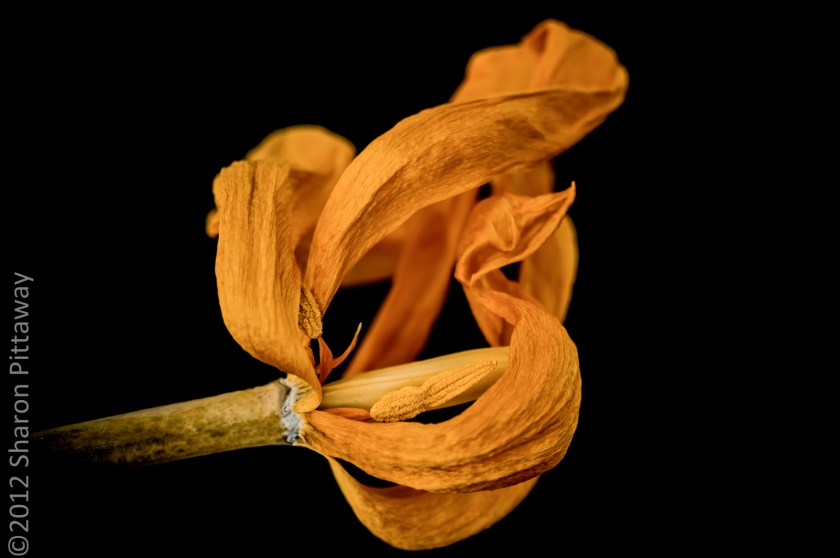
Today’s challenge is a simple one. This flower, called a Red Hot Poker, is actually orange. Can you write a story that purports to be about one thing (a colour, an expression, a gesture, a room, an experience) but is actually about something else?

I’ll give you up to 100 words as that might allow you more scope to develop something that will better reflect today’s boundaries. You don’t have to post your first draft – I know that Stephanie is working on her stories without yet posting (but I’m confident that she will) – so feel free to edit, re-work, re-shape.

Enjoy!

Is this the colour pokers get when they’re red hot?
Posted in Learning, Travel

One final post about my trip

Things I learnt while in France, Italy and Germany. 

1. The money is called Euros, not dollars.

2. When crossing the road, look left then right then left again.

3. Despite how it might appear, passengers do not drive cars in Europe.

4. Go for five or ten dollar notes when it takes a while for the amount you just heard to register.

5. They’re called Euros, Sharon, not dollars.

6. Oh. Right. Sure.

7. Take small notes; 50s and higher are frowned upon in most places.

8. Wine is often cheaper than water. Drink wine.

8. Wear comfortable shoes, even if they look daggy.

9. When getting into a taxi do not try to get into the driver’s side. Taxi drivers don’t like it much.

10. The bus will come from the left. Don’t waste your time looking in the other direction.

11. Get into the passenger seat carefully – there is no steering wheel to hang on to on that side.

12. Don’t expect cars to stop just because you’re on a pedestrian crossing.

13. Scooters are able to swerve around you; cars, not so much.

14. Look left Sharon! Then when you get into the middle of the road, look right.

15. Two dollar coins are bigger than one dollar coins.

16. They’re called Euros, Sharon. It’s really not that hard.

17. Don’t take photos in supermarkets.

18. Travel first class on the trains when you can.

19. Latte means milk. Don’t order one if you want coffee.

20. In France yes is oui, in Italy it’s si, in Germany it’s jah.

21. Tea comes black.

22. Don’t get anxious, even if you get lost. Just enjoy the wander/wonder.

23. Take a coat if you’re going to Germany in autumn.

24. Learn how to say bandaids in French, Italian and German.

25. Spending a penny can cost up to a euro fifty.

26. Ha, I got it right!

27. Take a packet of tissues in your bag for the times when the WC is free.

28. Be prepared to walk your feet off. Visit as many things as you can.

29. Be prepared to be overwhelmed. Enjoy the feeling.

30. Take photos of other people when you don’t have your own close by.

This slideshow requires JavaScript.

Posted in Learning, Writing

Lesson #7 (The final lesson)

Today. Burnie, Tasmania. This is the final lesson, the final post about what I’ve learnt over the years. It has been a difficult challenge (Jill, I feel that you’re getting your own back) and I struggled with each post. Every morning I’d sit here, fingers poised on the keys, wondering what to type. I’d make a start, read it, delete it. I’ve just done that five/eleven/fifteen times already with this post.  These words may not even make it to the final post.

What have I learnt? When I ask that question my only response is: I don’t know. I honestly don’t know. I sometimes wonder if I’ve learnt anything at all.

The whisper of an idea, elusive and ephemeral, slips through my mind and is gone. A story hovers nearby, but not near enough to grasp. A learning glistens, tantalisingly close.

****

1977. Bomaderry, NSW. I am a dead woman in Thornton Wilder’s Our Town and am so engrossed in the play, sitting on my chair in the cemetery, that I forget my line. Whoops.

1995. Launceston, Tasmania. Music blares from the speakers outside the door of A024. The classic tune, Funky Town, by Lipps Inc, spreads an energy through the audience, while also keeping them guessing.

It’s third year uni and Ashley and I decide to pair up for our final drama class. The task is to choose a playwright, and perform excerpts from some of his/her well-known plays. We choose The Chairs and  Rhinoceros, two plays by Eugene Ionesco, a Romanian/French absurdist playwright. Desperate, last minute rehearsals see the move from absurdist to absurd and from there it wasn’t much of a leap to funky, hence Lipps Inc setting the scene for us.

Our performance is imaginatively titled The funky side of Ionesco. I pretend not to see the lecturer wince. Ashley and I are more absurd than absurdist, doing Ionesco’s work no favours, but somehow it works. The funk/disco theme continues throughout, pulsing through the tiny auditorium at odd moments as the chairs fill the tiny performance space. Not necessarily rehearsed moments, mind you, but it adds to our brand of absurdity. We finish, look at the audience, and leave to the gentle strains of Wild Cherry.

The audience responds in a wildly enthusiastic manner. Even the lecturer looks impressed.

****

What have I learnt then? I feel like I should be sitting on a porch in my rocking chair, with my knitting on my knee for this bit!

I’ve learnt that sometimes we have to take a risk, we have to think beyond the boundaries that might ordinarily confine us. Forgetting my line in Our Town just meant that someone else said it – the play didn’t stop, the world didn’t end, one of the cast members picked it up and the show went on.

Thinking creatively about Ionesco’s work and being in the moment while we were performing gave an edge to our performance that may not have been there if we were highly polished after hours and hours of rehearsal. Adding that edge might have been possible if we’d been great actors, but we weren’t. Our desperation acted like a piece of apple cutting through the flavour of strong cheese … not something we would have thought consciously about if we’d been more prepared.

****

As I reflect on the stories I’ve told over this past week I notice a consistent theme: there are times in life when we need to spread our arms, hold our breaths and always trust our cape.

****

Thanks to Jill for the challenge, thanks to all those who have tuned in to read my daily posts, and thanks to those who have commented either here or on Facebook. I’ll leave you in peace now, until I begin my new challenge next week (no more posts this week). My next challenge is travelling through France and Italy.

Posted in Learning

Lesson #6

1992. Wynyard, Tasmania. A brochure from the Faculty of Education at the University of Tasmania sat on the counter at the radio station. Two words spoke to me as soon as I picked it up: English/Drama. Before that moment I couldn’t have articulated my passion for either of them. They didn’t fit in the world in which I lived; a world of domesticity on the one hand, and male-dominated sports on the other. Football, soccer, boys basketball, cricket.

But the brochure did more than cause a realisation in me that here were two areas of interest to me. When I read that it was possible to study English Literature and Theatre a rumbling began deep within me.  Over the next few weeks as I pondered whether it was possible, the rumbling became louder until it was a roar in my head. I discovered that it wasn’t possible to not do it. To not enrol. To pass up this opportunity.

Opportunities that allow us to begin, to change direction in our lives, to choose the direction in which we head may not present themselves on a regular basis. They certainly hadn’t for me. I had had no choice in the move from NSW to Queensland, or in the decision to move from Queensland to Tasmania. They were life changing decisions, they changed the direction of my life, but I was not in control of those decisions.

But here was an opportunity to take control, to make a decision. I knew instinctively what my choice was going to be, but my decision also impacted on others. It was a life-changing decision, and it wasn’t only my life that would be changed. It meant yet another move to yet another new place, yet another move away from family – this time my own children. It meant sacrifice – theirs and mine – again.

It meant making a decision that was ultimately selfish. It was a decision that was all about me.

****

1993. Launceston, Tasmania. I made the move, began again, and changed my life.

And I learnt.

I learnt that making life-changing decisions means your life changes and you can’t predict the ripple effects those changes have.

I learnt that making life-changing decisions requires courage and resilience and a willingness to sacrifice.

Any new beginning, no matter how big or small, requires us to adapt, to hang on, to allow it to happen (and we never fully realise what ‘it’ is when we first start out).

A beginning is not a moment in time; while it begins with one step it requires more than the first step. Beginnings take time and energy and commitment and desire. We have to want to begin and we have to commit to the messiness that often accompanies a beginning, the messiness of the steps contained within the beginning.

Beginnings lead to new identities. We try them on, test them out, sometimes deny those identities because they don’t fit comfortably with the view we have of ourselves. We often can only see ourselves with the old identity on … wife/mother not student; teacher aide not pre-service teacher. Others see the shiny new identity, but denial is strong. Sometimes we only see that new identity when we’re about to lose it.

Beginnings lead somewhere. They inevitably lead to endings. Beginning a university degree leads to ending a university degree. We might not be able to see that ending when we first begin. It might seem out of reach at the beginning, but the end of that particular beginning means a new beginning.

Beginnings mean journeys. It’s a journey we’re not wholly in control of … the pathway may seem clear when we’re looking at the satellite image, but when we zoom in a little we see a connecting maze of laneways, dead-ends, cul-de-sacs, open spaces. Changing the view to street view means we see the detail up close – letter boxes, flowering shrubs, front yards, driveways. We can get lost in the minutia when we only see through street view and it seems to take an age to move from one block to another. We see the complexity of the journey in a whole new light, and we need spaces/time/semester breaks to step back and re-look from the distance of the satellite.

Big beginnings contain many smaller ones. Beginning school as a five year sets the child on a journey through education that will take many years, but within that big beginning are many other beginnings: beginning a new grade, beginning with a new teacher, with new students, making new friends, learning new rules and expectations, learning new skills that lead to other beginnings – learning that squiggly lines on a page can be interpreted and can lead us into new worlds, new ideas, new imaginings.

****

2013. Burnie, Tasmania. Another beginning.


Posted in Learning, Travel

Lesson #5

1984. Brisbane, Qld. An overnight train ride from Sydney to Murwillumbah, then a two hour drive to Brisbane.

A hotel room. Just one.

This was our new home until we found a house to live in.

Two weeks later. We found a house. It was empty, the carpet was green and leaves were scattered across the lounge room floor.

An empty house. No beds, no fridge, no table, no chairs. (The truck with our furniture was travelling at a snail’s pace from the south coast of NSW).

There was nothing in the house, except me and three children.

Their father went to work each morning, and that left me, a five year old, a three year old and a four month old to play hide and seek in an empty house.

One week later. It was hot and the cheese melted, so we bought a fridge.

The box added to the places we could hide in, in our daily games of hide and seek.

One week later. The truck finally arrived and the house filled up.

****

It was another beginning.

Our lives are full of beginnings: some are low key – we begin a new book and we have to get used to the tone, the author’s style, the language choices the author has made, the characters. If the transition to this new book and all it contains is relatively easy, we keep reading. If something jars – the number of times a character stumbles as she walks into a room, for instance, or we read that the male character cocks his head seventeen times in two pages – we put it down.

Some beginnings are more substantial: a new relationship, enrolling in a university course, moving from Kinder to Grade 1, moving interstate.

****

1986. Ringarooma, Tasmania. A flight from Brisbane to Launceston, then a two hour drive to Ringarooma. It was cold, the road was unlike roads we were used to. Narrow, windy, hilly, pot-holed.

Clouds clung to the hills; it was damp and grey. August. Winter. We’d thought winter in Brisbane was cold, but this was something else.

A farmhouse … a big one, a cold one. No heating except an open fire in the kitchen. There was nothing in this big, cold house, except me and four children.

Their father went to work each morning, and that left me, a seven year old, a five year old, a two year old and a five month old to play hide and seek in a big, cold, empty farmhouse.

****

Another beginning. This time away from family and friends, away from the warmth, away from civilisation even. We lived in a sheep farm out of town, (and it wasn’t even a big town).

How we manage the beginnings we have in our lives depends on our strength and our resilience. It depends on our expectations and how we cope with difference and change and it depends on the understanding of others.

****

The farmer’s wife brought scones for morning tea. She’d used bi-carb soda instead of flour, but it was a lovely gesture.