Posted in Writing

Flower/story challenge – Day 6

[Day 6 of seven]

Is it really day 6, or do I have my days confused? That’s highly likely you know!

*******

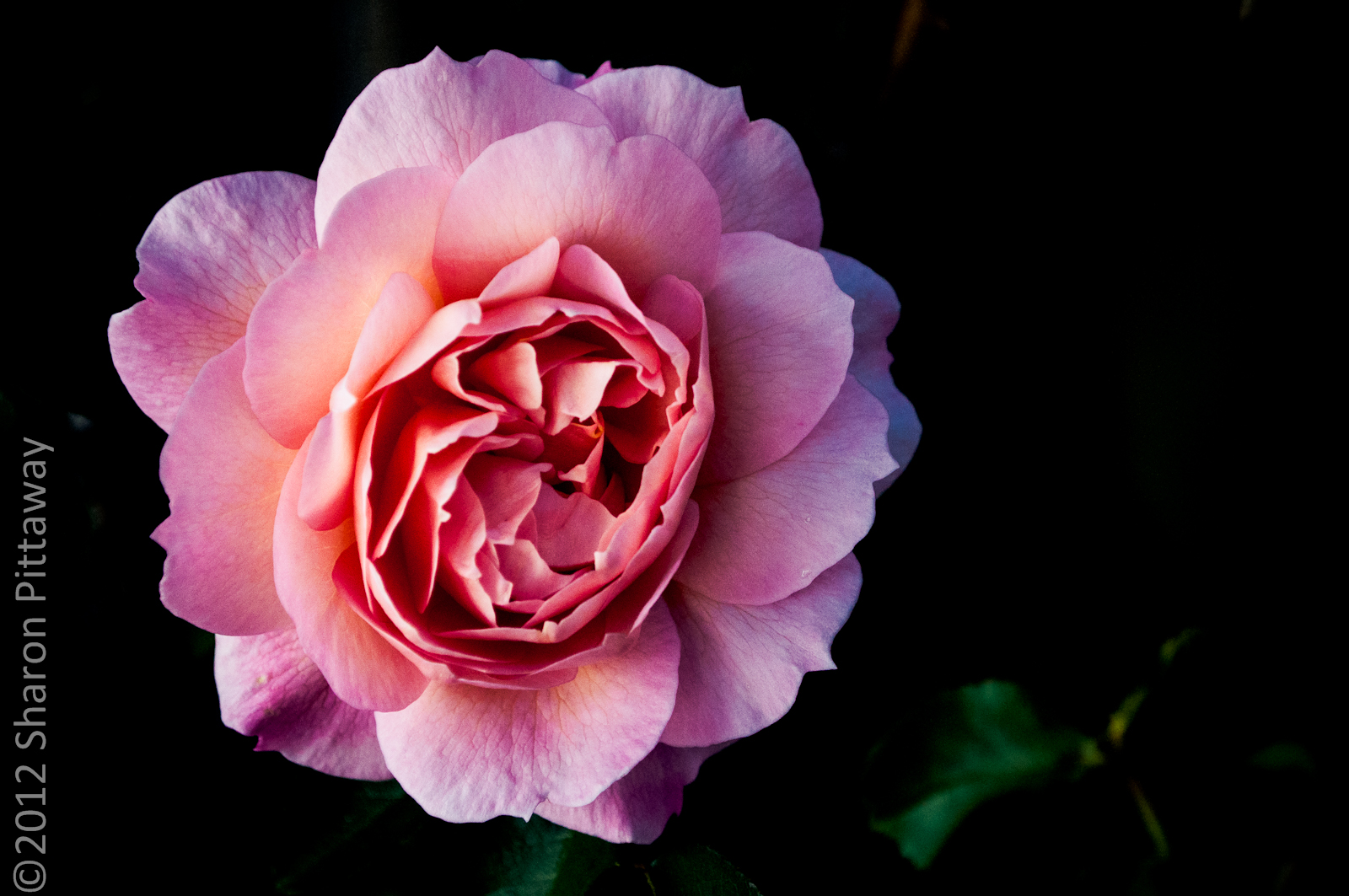
Today’s flower shot comes from my backyard. When we moved into the house three years ago, I was delighted to discover a lovely pink rose growing beside the clothes line, squashed into the fence by a rhododendron bush.

I have better photos of this particular rose bush, but I quite like the light on this one, so it will do for today’s stimulus.

Today, the challenge is to use the word ‘rose’ in the story somewhere. It doesn’t have to be referring to the flower, it could be something along the lines of ‘Jim rose from the chair … ‘, or ‘The bread rose gently …’ or ‘Rose wandered lonely as a breadcrumb through the aisles of a deserted theatre.’

It’s entirely up to you how you use the word in your 60-80 word story!

I look forward to your unbridled creativity.

Backyard Rose
Posted in Learning, Writing

Flower/story challenge – Day 5

[Day 5 of seven]

Great to see so many taking up the challenge, and sticking with it. I’m thoroughly enjoying reading all the stories and learning about the way people express themselves in this way. I have to admit that I also enjoy posing challenges for you, my valued reader. I’m afraid that I can’t stop being a teacher, and so I will continue to challenge – in an intellectual and creative way.

******

Today’s challenge is a simple one. This flower, called a Red Hot Poker, is actually orange. Can you write a story that purports to be about one thing (a colour, an expression, a gesture, a room, an experience) but is actually about something else?

I’ll give you up to 100 words as that might allow you more scope to develop something that will better reflect today’s boundaries. You don’t have to post your first draft – I know that Stephanie is working on her stories without yet posting (but I’m confident that she will) – so feel free to edit, re-work, re-shape.

Enjoy!

Is this the colour pokers get when they’re red hot?
Posted in Learning, Writing

Lesson #7 (The final lesson)

Today. Burnie, Tasmania. This is the final lesson, the final post about what I’ve learnt over the years. It has been a difficult challenge (Jill, I feel that you’re getting your own back) and I struggled with each post. Every morning I’d sit here, fingers poised on the keys, wondering what to type. I’d make a start, read it, delete it. I’ve just done that five/eleven/fifteen times already with this post.  These words may not even make it to the final post.

What have I learnt? When I ask that question my only response is: I don’t know. I honestly don’t know. I sometimes wonder if I’ve learnt anything at all.

The whisper of an idea, elusive and ephemeral, slips through my mind and is gone. A story hovers nearby, but not near enough to grasp. A learning glistens, tantalisingly close.

****

1977. Bomaderry, NSW. I am a dead woman in Thornton Wilder’s Our Town and am so engrossed in the play, sitting on my chair in the cemetery, that I forget my line. Whoops.

1995. Launceston, Tasmania. Music blares from the speakers outside the door of A024. The classic tune, Funky Town, by Lipps Inc, spreads an energy through the audience, while also keeping them guessing.

It’s third year uni and Ashley and I decide to pair up for our final drama class. The task is to choose a playwright, and perform excerpts from some of his/her well-known plays. We choose The Chairs and  Rhinoceros, two plays by Eugene Ionesco, a Romanian/French absurdist playwright. Desperate, last minute rehearsals see the move from absurdist to absurd and from there it wasn’t much of a leap to funky, hence Lipps Inc setting the scene for us.

Our performance is imaginatively titled The funky side of Ionesco. I pretend not to see the lecturer wince. Ashley and I are more absurd than absurdist, doing Ionesco’s work no favours, but somehow it works. The funk/disco theme continues throughout, pulsing through the tiny auditorium at odd moments as the chairs fill the tiny performance space. Not necessarily rehearsed moments, mind you, but it adds to our brand of absurdity. We finish, look at the audience, and leave to the gentle strains of Wild Cherry.

The audience responds in a wildly enthusiastic manner. Even the lecturer looks impressed.

****

What have I learnt then? I feel like I should be sitting on a porch in my rocking chair, with my knitting on my knee for this bit!

I’ve learnt that sometimes we have to take a risk, we have to think beyond the boundaries that might ordinarily confine us. Forgetting my line in Our Town just meant that someone else said it – the play didn’t stop, the world didn’t end, one of the cast members picked it up and the show went on.

Thinking creatively about Ionesco’s work and being in the moment while we were performing gave an edge to our performance that may not have been there if we were highly polished after hours and hours of rehearsal. Adding that edge might have been possible if we’d been great actors, but we weren’t. Our desperation acted like a piece of apple cutting through the flavour of strong cheese … not something we would have thought consciously about if we’d been more prepared.

****

As I reflect on the stories I’ve told over this past week I notice a consistent theme: there are times in life when we need to spread our arms, hold our breaths and always trust our cape.

****

Thanks to Jill for the challenge, thanks to all those who have tuned in to read my daily posts, and thanks to those who have commented either here or on Facebook. I’ll leave you in peace now, until I begin my new challenge next week (no more posts this week). My next challenge is travelling through France and Italy.

Posted in Learning

Lesson #6

1992. Wynyard, Tasmania. A brochure from the Faculty of Education at the University of Tasmania sat on the counter at the radio station. Two words spoke to me as soon as I picked it up: English/Drama. Before that moment I couldn’t have articulated my passion for either of them. They didn’t fit in the world in which I lived; a world of domesticity on the one hand, and male-dominated sports on the other. Football, soccer, boys basketball, cricket.

But the brochure did more than cause a realisation in me that here were two areas of interest to me. When I read that it was possible to study English Literature and Theatre a rumbling began deep within me.  Over the next few weeks as I pondered whether it was possible, the rumbling became louder until it was a roar in my head. I discovered that it wasn’t possible to not do it. To not enrol. To pass up this opportunity.

Opportunities that allow us to begin, to change direction in our lives, to choose the direction in which we head may not present themselves on a regular basis. They certainly hadn’t for me. I had had no choice in the move from NSW to Queensland, or in the decision to move from Queensland to Tasmania. They were life changing decisions, they changed the direction of my life, but I was not in control of those decisions.

But here was an opportunity to take control, to make a decision. I knew instinctively what my choice was going to be, but my decision also impacted on others. It was a life-changing decision, and it wasn’t only my life that would be changed. It meant yet another move to yet another new place, yet another move away from family – this time my own children. It meant sacrifice – theirs and mine – again.

It meant making a decision that was ultimately selfish. It was a decision that was all about me.

****

1993. Launceston, Tasmania. I made the move, began again, and changed my life.

And I learnt.

I learnt that making life-changing decisions means your life changes and you can’t predict the ripple effects those changes have.

I learnt that making life-changing decisions requires courage and resilience and a willingness to sacrifice.

Any new beginning, no matter how big or small, requires us to adapt, to hang on, to allow it to happen (and we never fully realise what ‘it’ is when we first start out).

A beginning is not a moment in time; while it begins with one step it requires more than the first step. Beginnings take time and energy and commitment and desire. We have to want to begin and we have to commit to the messiness that often accompanies a beginning, the messiness of the steps contained within the beginning.

Beginnings lead to new identities. We try them on, test them out, sometimes deny those identities because they don’t fit comfortably with the view we have of ourselves. We often can only see ourselves with the old identity on … wife/mother not student; teacher aide not pre-service teacher. Others see the shiny new identity, but denial is strong. Sometimes we only see that new identity when we’re about to lose it.

Beginnings lead somewhere. They inevitably lead to endings. Beginning a university degree leads to ending a university degree. We might not be able to see that ending when we first begin. It might seem out of reach at the beginning, but the end of that particular beginning means a new beginning.

Beginnings mean journeys. It’s a journey we’re not wholly in control of … the pathway may seem clear when we’re looking at the satellite image, but when we zoom in a little we see a connecting maze of laneways, dead-ends, cul-de-sacs, open spaces. Changing the view to street view means we see the detail up close – letter boxes, flowering shrubs, front yards, driveways. We can get lost in the minutia when we only see through street view and it seems to take an age to move from one block to another. We see the complexity of the journey in a whole new light, and we need spaces/time/semester breaks to step back and re-look from the distance of the satellite.

Big beginnings contain many smaller ones. Beginning school as a five year sets the child on a journey through education that will take many years, but within that big beginning are many other beginnings: beginning a new grade, beginning with a new teacher, with new students, making new friends, learning new rules and expectations, learning new skills that lead to other beginnings – learning that squiggly lines on a page can be interpreted and can lead us into new worlds, new ideas, new imaginings.

****

2013. Burnie, Tasmania. Another beginning.


Posted in Learning, Writing

Lesson #3

2004. Launceston, Tasmania. Lecturing to third year students I share with them an idea:

As a teacher

your job is to generate thinking

not control it.

I don’t know if it’s a truth (are there any of those left?) but it’s something I firmly believe. I hold that idea as a central tenant of my teaching. It’s important to me, part of who I am as a teacher. Part of my teacher identity.

****

 2012. Burnie, Tasmania. A first year student evaluation: Sharon wants us to think what she thinks.

I am caught by surprise. Shocked. Disappointed. Silenced. Immobilised. I can’t move on/get past it/let it go.

I want to, but it’s like a pebble that I can’t dislodge. Sharon wants us to think what she thinks.

I shake my head, and silently protest, deny it.

Has my position changed in the eight years since I taught the third years?

If it has, why wasn’t I aware of it? If it hasn’t, why aren’t students aware of it?

****

Today. Burnie, Tasmania. I’m puzzled. I have a situation and I’m not sure how to deal with it. It speaks to thinking and learning and power and control and authority and … and … and who I am and who I profess to be and student perceptions and clarity and lack of clarity and what I can/could/should do.

****

I learn through conversation: sharing ideas,talking them out, hearing an idea spoken aloud so that I can determine whether it’s an idea worth pursuing or if it needs to be tweaked or tossed aside. Through conversation I hear others’ ideas and determine how they might fit within my worldview or why they might not. I engage in conversation to understand, to learn.

I learn through questions: asking them and answering them. When I ask a question I want to know what the person I’m asking thinks, feels, values, believes. I want to hear their response. I ask to challenge my own thinking. I am interested in different perspectives, different ways of understanding an idea/concept/theory/practice, different values, different beliefs. I ask questions to understand and learn.

I learn through writing. I come to understand myself-others-the world-ideas-thoughts-traits-distinctions-dichotomies-polarities through writing. I use language deliberately. I think about the words I write with and the meanings of those words and the way one word/one idea/one thought fits with another. I think about cadence and rhythm and connection and clarity. I write to understand and as I write, I learn.

I think.speak.question.write.realise.

I don’t have answers. I have ideas.

That’s my realisation. Today. Right now. This moment.

****

Ideas can be challenged, adapted, re-formed, tossed aside, melded with others, stretched, explored, evaluated, weighed, talked about, shared. They can enrich and empower.

****

The puzzle: I am an academic. For some students that means I have authority. For some students it means I have answers. I contribute to the discussion online and some students think it’s a truth: definite, complete, authoritative. I float an idea. I suggest, propose, offer. There is conundrum inherent in my contribution. I write authoritatively, I am in control of my ideas, my words, my expression. I am an academic. I should know and therefore I should tell.

Should I?

I don’t have answers. I have ideas.

Ideas can enrich and empower. They can be shared, talked about, weighed, evaluated, explored, stretched, melded with others, tossed aside, re-formed, adapted, challenged. Even my ideas. Yes, even my ideas.

I want students to do their own thinking. I want them to think about the complexities within the books they’re reading in Children’s Literature, to make connections to what’s going on in the world around them, to be aware of the world around them, to see other people’s realities, to have ideas and share them and get to the crux of the story/character/plot/reality writ large on the page.

I share my ideas … not my answers.

Ideas can be challenged.

Even mine.
 

Posted in Learning, Writing

Writing challenge (Day seven) – Free choice

My mind is a blunt pencil.

Sharp pencils draw clear, precise lines. Lines of elegance and sophistication. Lines that are clean and crisp and sharp.

Sharp pencils generate delicate images/imagination/thought that evoke feelings of beauty and energy. Sharp pencils show subtleties, cadences and rhythms. They flit across the page, dancing from one well-drawn idea to another, making connections, drawing distinctions, bringing forth meaning.

Sharp pencils rest lightly and touch softly. They allow the delicate rendering of shadows and light, and their precision creates a final image in which it is possible to see individual lines/ideas/understandings while also seeing broader/deeper/richer meanings.

My mind is a blunt pencil.

Blunt pencils plod onto the paper, stepping heavily, trudging, stumbling, clumsily treading from one idea to another. There is no clarity with a blunt pencil, no grace, no lightness, no sophistication. The lines lack crispness and distinction and the final image is fuzzy and ill-defined. Blunt pencils don’t allow for fine detail, or for precision, or subtleties. There is no sophistication with a blunt pencil, no flitting, no dancing.

My mind is a blunt pencil.

There is no self-denigration here. Just self-awareness. No self-pity. Merely enlightenment.

When I read good writing, when I listen to others speak their ideas, when I hear clear thinking expressed crisply, when I see delicacy and subtlety in thoughts and ideas and words and images, I recognise that I am not like that. What is different about their knowledge, their ideas, their words, their thinking, their intellect?

They are sharp.

And I am not.

It bothers me sometimes. Not all the time, but sometimes. I am having a conversation with a colleague on a late night walk through an industrial wasteland in Melbourne and I say something that I realise later is blunt thinking, blunt expression, blunt intellect. I feel embarrassed for myself: for my lack of sophistication, my lack of intellectual adornment, my lack of knowledge, subtlety and delicacy.

I am writing a chapter and have only roughly drawn, fuzzy ideas to wade through, ideas that aren’t thought through to the end. I don’t make connections/distinctions/meanings easily or lightly. I don’t use sophisticated language that dances across the page. My ideas tread heavily; no tripping the light fantastic here.

I read others’ writing and it’s poetic and finely wrought. Individual strands of thought meander gently and smoothly across the page. I am entranced. I am reminded of why I fell in love all those years ago.

Sharp pencils draw clear, precise lines. Lines of elegance and sophistication. Lines that are clean/crisp/sharp.

A blunt pencil.

*****

This is the final piece in the write a post about writing every day this week challenge.

I have been set a new challenge by Jill: How about spending the next blogging week writing each day about something you have learned, not from teachers or lecturers but those things you learn when you least expect to learn something and from someone or something you didn’t/wouldn’t expect to learn from.

I’ll put my (blunt) mind to it 🙂

Posted in Learning, Writing

Writing challenge (Day Six)

Um

Well um

No, I’m sorry, I can’t do this. I can’t think of anything to say.

She sits down in a fog of embarrassment and dismay and silence.

Or the inverse.

Yeah well like my name is like Kimkourtneykhloe and I’m like 14 well almost like I will be next month and I’m sick excited because me mum, mum said that she’ll take me to like Devonport for the day and I’ve never been there before and I hear it’s a exciting place and I just can’t wait because I might get to buy like a new like clothes yeah. What else? Yeah well like I live with mum and six brothers and four sisters and seven dogs and five chickens and yesterday I got a new like kitten she’s called Kendallkylie because mum reckons that name’s really like cool and she said that if she had another kid it would be called that but we told her that she can’t have another kid because like me dad’s not here he’s having a stretch mum calls it and it only seems to happen when he’s around – or Uncle Max – but he’s in prison too, so that won’t happen which is good because there’s not enough room in the bed for us all anymore so yeah that’s it.

Three seconds start to finish.

People hear our voice when we have something to say. Or when we think we have something to say. For some of us, if we have nothing to say we say nothing. Our voice won’t be heard. I think mothers are responsible. If you can’t say something nice, don’t say anything. I don’t know if you’re like me in this regard, but over the years I’ve tended to substitute many words for ‘nice’: Intelligent. Funny. Inspirational. Witty. Imaginative. Clever. Interesting. Astute. Insightful.

I’m silent a lot!

I was unhappy with yesterday’s post.

I asked Tim what he thought. (I ask him that every day and he says the same thing: Yeah, it’s good with the rising inflection that gives me a little bit of encouragement but not too much.) Yesterday he said, I liked the picture of the kids jumping off the bridge.

I like an honest man, I honestly do, but yesterday I secretly wished he’d listened to my mother. A. Thousand. More. Times!!

I was unhappy with yesterday’s post because I felt that I had nothing to say. I had nothing intelligent, funny, inspirational, witty, imaginative, clever, interesting, astute, insightful to say ….

I had no point to make, no advice to give, no wisdom to share. My words came haltingly, it took three times as long to write as my posts generally do, and in the end I clicked the ‘publish’ button quite reluctantly. I felt like a student who knows the deadline is NOW but needs one more day to figure out their argument, to push the fog away so that their point becomes clear. And then a strange thing happens. It’s not one more day you need, because within an hour of the submit/publish button being clicked, it all becomes clear in your head.

It’s too late. It’s submitted and you know your reader/marker will be saying to him/herself I can see what you’re trying to say, but it would be better if you just said it. 

Finding your voice is hard if you have nothing to say: if you don’t understand the topic, if you don’t have a view on it, if you are unclear about the point you want to argue, if you don’t have an angle. Writing a blog post, or writing an assignment will feel like torture, each sentence wrung out a word at a time. Ideas will scurry to the darkest corners of your mind and hide under boxes labelled one hit wonders of the 80s, or tram stops from South Yarra to the city, or high school teachers I’d like to see today so that I can say see, I did make something of myself.

We tell students to plan their assignments. I tell students to plan their assignments. But I can’t write like that. I can’t plan. I do however, need an angle. My voice will be weak, will desert me, if I don’t have a hook: that first idea, the approach I’m going to take. My first sentence is the most important one for me. It shapes my whole post; when I was an undergraduate the first sentence shaped each assignment. Until I had my first sentence I couldn’t write.

My first sentence sets the scene, gives me ideas that grow as I write. Once I have the first sentence (the initial idea, the angle, the perspective) then I can write. From then I write by writing not by planning. I understand through writing – I write to understand.

When I know I have something to say – something intelligent, funny, inspirational, witty, imaginative, clever, interesting, astute, insightful – then my voice will emerge.

How does it work for you?

*****

Tomorrow is day seven of the writing challenge. The final day. Free choice says Tim. Yikes! That’s a challenge.

But I’m up for a challenge.

Do you have one for me?

Posted in Learning, Writing

Writing challenge (Day Five)

Since when has there been seven days in a week? I ask rather indignantly.

Tim just looks at me in that way he does: head on one side, hands by his side, eyes saying can you hear yourself?

Apparently, according to Tim, there are seven days in a week, not five. I thought today was the last day, the final day of my writing challenge … but no. As a week is seven days in length, your writing challenge will continue for another two days.  But I cannot guarantee that there won’t be another challenge when this one is done.

The man has a warped sense of reality.

That’s my conclusion.

I’ve drawn other conclusions over the years: he is a gifted teacher; a beard suits him; his photography should be shared; he’s the right husband for me.

Conclusions are what we do when we wrap things up: people, arguments, criminal cases, university assignments. We look at the evidence and come to a conclusion. 

I have jumped from a few things over the years including:

Cudgen Creek Bridge, Kingscliff NSW
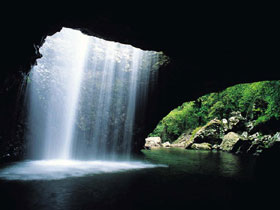
Natural Arch (or Natural Bridge), Qld

and my conclusion is that you should keep your arms firmly by your sides as you hit the water!

My other conclusion is that, unlike the water under the bridges, conclusions are not things to be jumped to.

I also had a learning the last time I jumped through the hole at Natural Arch/Bridge: the older you are, the longer the drop feels. I was in my 30s the last time I jumped and it’s going to remain the last jump. They don’t let you jump anymore though – there’s a fence there to stop people doing it. Dad and I didn’t see the fence as we climbed through it all those years ago. Mum was cross, but then mums often are.

We need conclusions in our writing and in our teaching. When students are tasked with writing an essay, they must write a conclusion. When we teach a lesson/tutorial we need a conclusion. When we give a lecture we must conclude.

Psychologist Robert Sternberg concludes that if a teacher only teaches in one way, then they conclude that the kids who can’t learn well that way don’t have the ability, when, in fact, it may be that the way the teacher is teaching is not a particularly good match to the way those kids learn.

I wonder how many teachers would agree with that conclusion? It means that the teacher cannot blame the student for not learning, but must reflect on their own teaching practices to see if they need to make any changes. I wonder if it’s the same for those of us who teach in universities?

Interesting.

In Life of Pi Yann Martel makes the point that it is important to conclude things properly. Only then can you let go. Otherwise you are left with words you should have said but never did, and your heart is heavy with remorse.

That kind of conclusion is not quite the same as writing a conclusion to a journal article, or a chapter, or an essay. But it is still important to not leave things unsaid, or there might be remorse when the assignment/chapter is returned: if only I’d taken a bit more time. Sometimes the best thing to do is to put your writing away for a few days and then come back to it with a fresh mind and fresh eyes.

Tim wrote the conclusion to our chapter yesterday. I’m going to put it away for a few days so that I approach it with fresh eyes and a fresh mind (can you hear Tim saying but you didn’t write it?). Still, my eyes need to be fresh.

Actually, that’s not the real reason.

The sun is shining. My conclusion: it’s a great day for a bushwalk!

******

Tomorrow, finding your voice. Where did it go?

Posted in Writing

Writing Challenge (Day Four)

Tim starts reading and says you’re a dag. And smiles.

He finishes reading and says you’re so clever. And I smile.

Daggily clever? Cleverly daggy? Daggy and clever?

Voice.

When I ask students to write a reflection or a statement of philosophy about teaching, I want to hear their voice.  I dealt with a student this week who had found someone else’s philosophy statement on a blog and pasted it into her assignment. It wasn’t her voice. It was an easy pick-up. It happens way too often. I’m happily reading along and suddenly it is a truth universally acknowledged, that a single man in possession of a good fortune must be in want of a wife pops into the middle of the sentence. My ears prick up. Hang on, I say inside my head, that’s not Student A, that’s Jane Austen.

I keep reading and lo and behold it seems increasingly likely that I really will undertake the expedition that has been preoccupying my imagination now for some days and I recognise the very distinct voice of Stevens. It seems strange that his voice would appear in the midst of a student assignment on the fundamentals of communication in the classroom. I pause, I puzzle, I shake my head to clear it, only to read on and discover that I remain transfixed by Stevens’ voice.

Stevens’ voice comes about through long sentences and parenthetical comments: An expedition, I should say, which I will undertake alone, in the comfort of Mr Farraday’s Ford; an expedition which, as I foresee it, will take me through much of the finest countryside of England to the West Country, and may keep me away from Darlington Hall for as much as five or six days. It’s a voice that takes me instantly into the complexity of the character and slows me down. I move to the couch to be more comfortable because this is one of my favourite books, but I read on only to discover that many years later, as he faced the firing squad, Colonel Aureliano Buendia was to remember that distant afternoon when his father took him to discover ice. I am transported into the magically real world Gabriel Garcia Marquez paints in One hundred years of solitude.

I am confused. Student A (let’s call her Anna and in that way flesh her out a little) is writing about communication in the classroom, but her voice is lost in the other voices that keep intruding on her paper. I would go so far as to say that Anna has not found or established her own voice yet. She has let herself be distracted by other readings, others’ thoughts, others’ voices. She has not done her own thinking (which, let’s face it, is difficult); rather she has relied on my mother is, like, a totally confirmed A-list [expletive riddled passage deleted] *** hole cretin [expletive riddled passage deleted] ***head of the highest order. Fact. In fact, I, of this moment, officially declare my entire doubt of the fact that she is in fact my actual real mother.

My head is spinning, I flick backwards and forwards through Anna’s paper wondering where that voice came from. There’s no acknowledgement of her source, but it really doesn’t sound like Anna.  I do a Google search and find that it is the voice of Dora from Dawn French’s A tiny bit marvellous. Possibly not the best source Anna could find for her paper, but I suppose that all happy families are alike but an unhappy family is unhappy after its own fashion.

Tolstoy? Wow. 

Voice. Use your own. I know, believe me I know, it can be hard to develop your own, but your audience wants to hear First the colours. Then the humans. 

No, Marcus Zusack, now is not the time to intrude. I’m trying to establish my voice. A distinct voice. A voice that emerges from the snow in the mountains was melting and Bunny had been dead for several weeks … excuse me, Donna Tartt, please don’t do that. I’m trying to write in my own voice. A voice that is uniquely mine, a voice that is worth being heard, that emerges from this is Albion Gidley Singer at the pen, a man with a weakness for a good fact.

Kate Grenville, seriously, this is so not the time. I cannot finish on someone else’s words. I have to finish with my own because the war had ended as wars sometimes do, unexpectedly.

****

Tomorrow, the conclusion.