Posted in Life, Photography

Faces of Breakfast

Eleanor is plagued by a dream of herself that she has not yet managed to actualise.

It visits her most mornings, while the kettle boils, the version of herself she keeps coming back to, the one who moves through the streets with a camera at the ready, collecting quiet moments. That woman is captivated by the way light touches faces and the stories a face tells. She lives in a house smelling faintly of cedar and tea, with shelves of photography books she browses intermittently. Her portraits don’t hang on her own walls, but they do hang on other people’s – portraits others have described as intimate and assured and quietly transcendant.

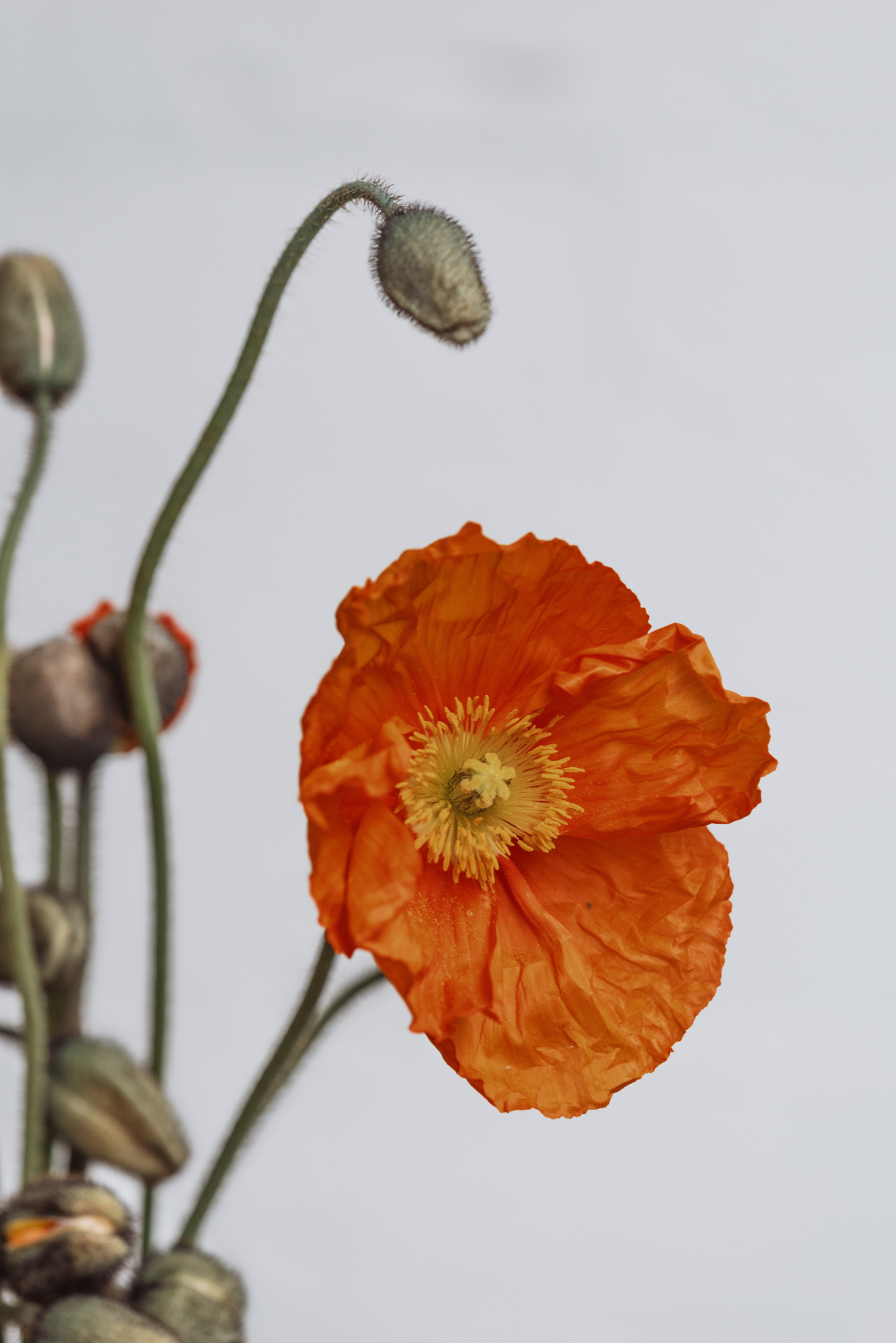
Eleanor, on the other hand, mostly photographs flowers these days though she’s not exactly sure why. She thinks it’s something to do with their fragility, their complexity – how each flower seems to have a personality of its own. Photographing them feels like a small experiment in seeing differently: shifting focus, playing with light, adjusting angles until some kind of story emerges. At home, she works deliberately, arranging light and background, the process almost meditative. In gardens, she responds to what’s there – wind, shadow, a sudden burst of colour. She’s exhibited her work a few times – small shows where people have bought pieces and said kind things – and members of her U3A photography group often tell her she has a real eye. She thanks them, smiles, but inside she thinks they’re just being kind … or polite … or wrong.

She finds, in a box of prints tucked under the bed, photographs she took six years ago while she was going through cancer treatment. That time still lives in her skin, the memory of so many hands touching her, adjusting her, ensuring her position is just right. It had made her uneasy, and that unease became the focus of a project – hands as both comfort and intrusion. In one image, Sonia, the model, stands in a shaft of late afternoon light, her body half-covered by her own hands, the gesture both protective and exposing. Eleanor studies the image for a long time – the narrow beam of light, the rawness in the posture, the quiet, potent vulnerability of it. This, she thinks, is the kind of work she wants to return to.

She reaches for the book of portraits she printed when she’d finished her Faces of Melbourne project and flicks through it. She remembers where each shot was taken, her subjects’ names, and the stories the older women told as she photographed them. She was deliberate about her practice – the light, the framing, the angle – she’d known what she was doing. Looking through those pages again, she feels the quiet certainty of that work, the joy it gave her, yet something in her still resists believing it was assured.

Eleanor hears the scrape of a chair behind her and looks up. Her grandson has wandered in from the garden, a piece of toast in one hand, his current favourite dinosaur in the other.

‘Who’s that?’ he asks, pointing to a photo in the open book.

‘That’s Josette,’ Eleanor says. ‘She was walking through Myer when I saw her.’

‘Did she tell you stories?’

‘She sure did,’ she says. ‘Stories about her son who grew up and got married – and she showed me pictures of him too.’

He studies the page, eyes wide. ‘Who’s that? I think she’s pretty.’

‘That’s Bella. Her name means beautiful. And that’s Brabh. He was my first face of Melbourne. I was standing at the traffic lights and I saw him across the road. His face was so interesting I just had to take his photo.’

He looks up at her. ‘You should take my photo too. Every morning when I come here. You could make a book about me – Garry’s Faces of Breakfast.’

She laughs, surprised by the small flicker of excitement that rises in her chest. ‘Maybe I could,’ she says.

At 7:10 the next morning, Garry arrives, sleep still in his eyes, hair sticking up, a dinosaur in each hand. She gets him a bowl of Coco Pops and sits with him at the table. The light from the window falls across his face. Eleanor lifts her camera, adjusts the focus, and presses the shutter.

The image on the camera screen is a little soft, a little crooked. His spoon is halfway to his mouth, milk dripping onto the table.

She makes tea, sits across from him, and listens to a story about a dinosaur that can fly and also do karate. She nods solemnly. “Sounds plausible.”

Later, she opens her laptop and creates a folder: Breakfasts with Garry. She’ll add one photo a day until he gets bored, or until she does.

While she doesn’t feel actualised … or even assured … she does feel like someone who knows how to begin.

And that, frankly, is more than she expected.


I have used the same first line as my previous story While the kettle boils. I wanted to see if I could take it in a different direction.

Posted in Flowers, Photography, Writing

On recognising your style

When I was first given a camera, sometime around 2007, I had no idea how it worked or what I would photograph. But I did know something about light from my time at university and so I experimented. A halogen lamp. An oven tray wrapped in aluminium foil. Windows with lace curtains. I bought flowers from the local florist – single stems arranged in whatever came to hand (a vase, a jar, a glass) – and set them up in areas of the lounge room. And then I played with the light … and learnt how to use the camera.

One wall of the lounge room was painted green, and it became my backdrop. The flowers stood out against it, classical and beautiful. I started to take the camera further afield – to the botanical gardens in Hobart, City Park in Launceston, the rhododendron gardens in Burnie. I photographed red hot pokers and made them redder, the daffodils that popped up unexpectedly under the rose bush in the backyard, and the insides of camellias.

Over time, I started photographing people – people I passed in the Bourke Street mall, those lingering near the steps of H&M listening to the buskers, those waiting at the lights on King Street, or outside Flinders St station. Sometimes I asked permission, sometimes I simply asked by lifting my camera, but always there was a burst of courage required in the approach. Most said yes. Some said no. I learned not to take refusals personally. And not to ask women of a particular age – they always said no. I loved the small exchanges: the older women who wanted to chat, the stories shared in passing, the faces that lingered in my memory – Jiggy, Brabh, Junior, Lisa, Samyrah, Belle, George. I gathered these portraits into a book, Faces of Melbourne – and printed one copy only. It’s one of my favourites.

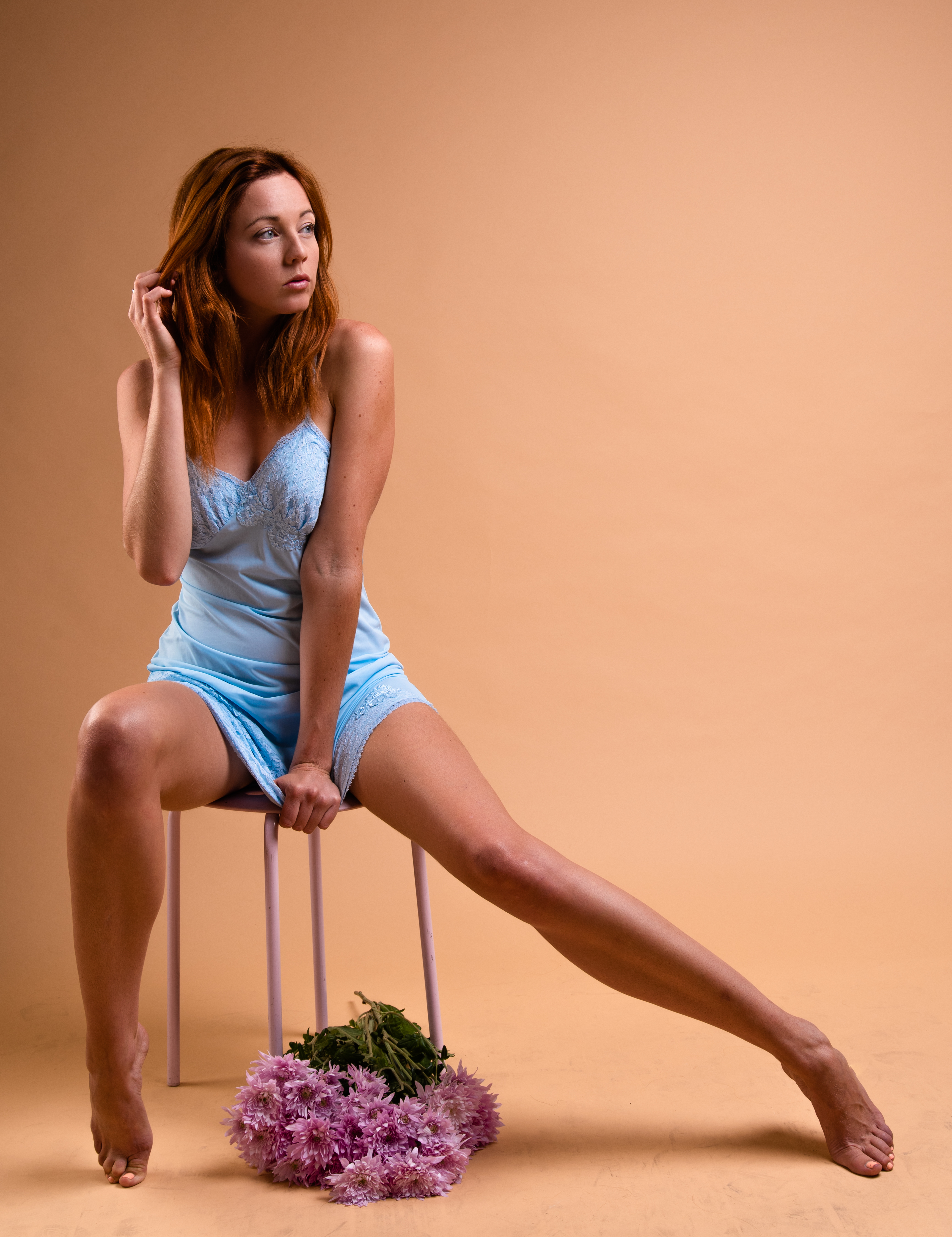
My practice developed. I hired studios, booked models, attended workshops. I learned posing mostly from the models themselves, and more about lighting from every shoot – how to use a beauty dish, umbrella, softbox, and how to make the most of window light. As the gear expanded so did my knowledge. I’d moved a long way from the days of the halogen lamp and the oven tray wrapped in foil.

One house we lived in had a white brick wall to use as a backdrop, two storeys high and east-facing. It was a space filled with light, and the tulips, hydrangeas, sunflowers, and poppies looked luminous against it.

Then life got in the way …

Eventually, another move, another house. I had a ‘studio’ in this new house, and I painted the walls a neutral colour to use as a backdrop. I kept out some of the lighting gear, thinking I’d get around to using it. But two years passed with only a handful of photographs, none of which excited me. They were just the same, but worse technically. I set up the lights, but couldn’t create anything new. Photography no longer satisfied me in the way it had and I began to wonder if I had anything left to say.

I thought the issue might have been one of space and explored the idea of building a studio in the backyard. But in a moment of clarity, I realised that I hadn’t learnt to use the light in this new house. Shortly after, at a photography workshop in Ballarat, Kris, the facilitator, spoke about recognising your own style – how good it was when someone recognises one of your images as yours because it has a certain style. That struck me and the two ideas became a spark.

I looked around the house again – so many windows, so much light. Different walls, each with its own character/colour/shadows. I realised that what I’d thought was sameness was actually my style, something I’d been building since 2007.

I felt excited again. I made so many different choices, and remembered what a photography teacher had once told me: photography is problem-solving. Given all the problems I was solving (how to hold the reflector in just the right position, how much to open or close the shutters, what to hold the flower with, how close or far away from the background to put the flower), I felt the truth of it. I also knew that the solutions could be simple: a halogen lamp and an oven tray wrapped in foil, a window and a square of black card, a green wall and shutters to shape the light.

And so each morning I reach for my camera and some flowers, and go in search of the light. I fall into a rhythm – one which absorbs and excites me. I feels my style re-emerging, and with it, the outline of a new self.

An early image (circa 2007)

The white wall as backdrop


Street portraits


Working with models


Finding the light – September 2025

Posted in Life, Mid-life blogger, Photography, Portraits, Writing

3 questions and an F word

As regular readers know, I have an older sister. Not much older, just over a year, but older is older, right? Deb, my slightly older sister, is a blogger over at Deb’s World and the other day she wrote a post, which led me to writing one in the same format. It felt strange and strangely uncomfortable because it isn’t the kind of writing I generally do, but I did it anyway, because … well, because boundary pushing is sometimes a good thing to do.

So here I am, about to start writing another post copying another format she sometimes uses – the 3 questions and an F word of the title of this post.

The three questions are:

  1. What’s made you happy (I’m not sure if that’s ever, or this week, but I’ll work that out as I write).
  2. What’s made you sad (ditto)
  3. What’s made a difference (again, I could go back to her post and check out what this is supposed to mean, or I could do what I’m going to do and that is make up my own mind about it. It’s my blog after all!)
  4. The fourth thing is to find an F word that has some meaning to me (possibly mis-remembering this bit of the prompt … but, my blog and all that).

Deb has all the details on her most recent post: Friday Feels: 3 questions and an F word. Not sure what the Friday Feels bit is about, but it’s Friday, so I’ll go with that.

So, what’s made me happy?

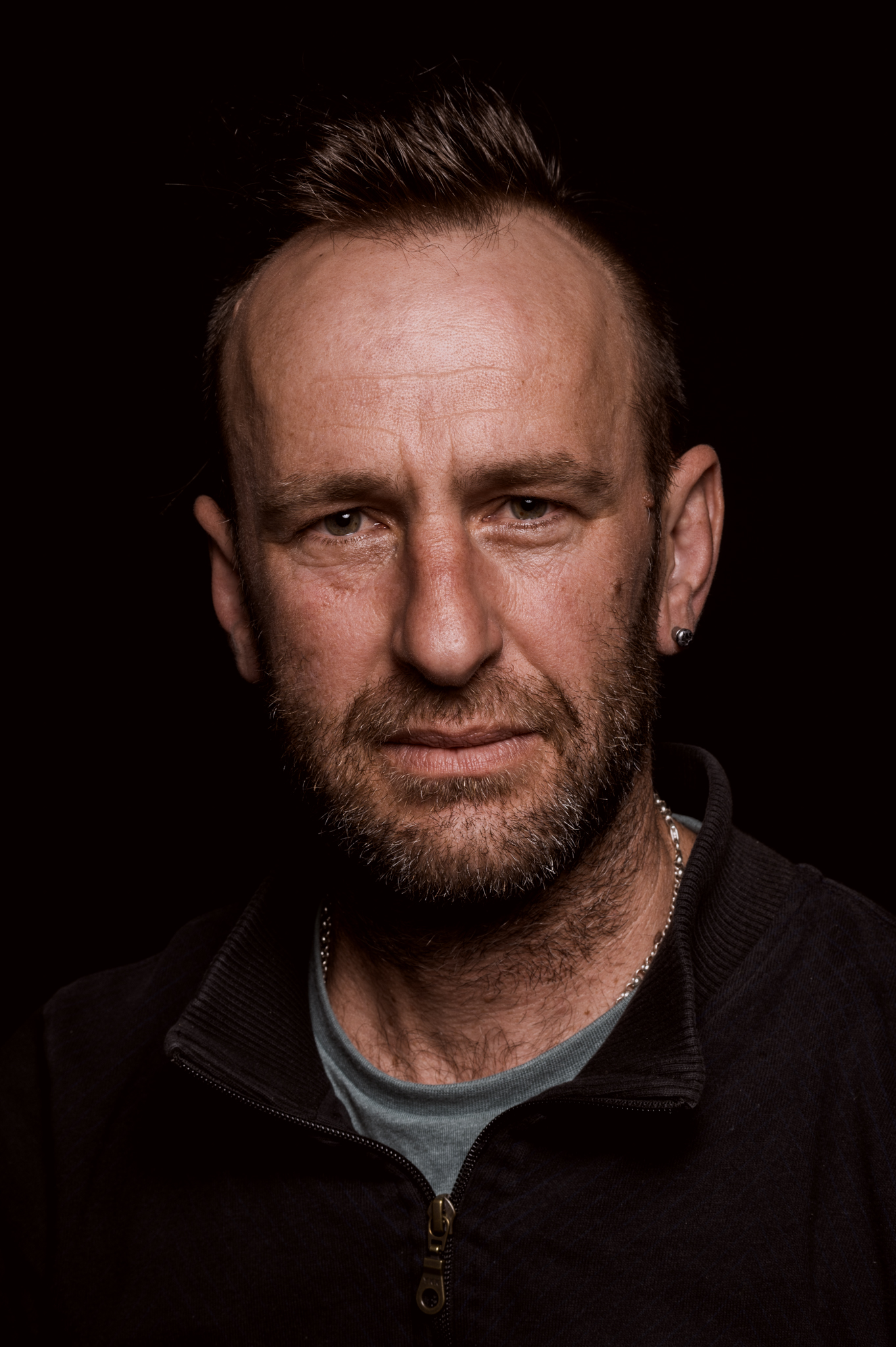
Family. My eldest son came to stay and we drove a few hours to spend a few days with my mother and sister and it was fabulous to be together. We laughed, and we cried, and we watched my granddaughter’s footy grandfinal on the telly and heard her mother yelling from Tasmania. One of the best bits was getting my photography studio properly sorted and getting to try out the new lighting set up on my son (who did all the sorting).

In this shot we used the beauty dish as the lighting source.

And what’s made me sad?

Goodbyes. Not, I hasten to add, that I’ve had to say any permanent goodbyes of late, but there’s always a twinge of sadness when we have to say ‘see ya’.

What’s made a difference?

Wallpaper and paint. We bought a house just over a year ago and have been taking our time in working out how we want it to look. We had the loungeroom painted earlier in the year. Clouded Sky. That’s the name of the paint colour. A few months ago, we added some wallpaper to the family room, and yesterday we had the little sitting room painted. Bean Counter. That’s the name of the paint colour. It’s made such a difference!

An F-word

Face-mask. I had never used a face-mask before the weekend, but Deb said we needed a ‘glow up’ and so bought us both one to apply. It was slimy and cold and felt disgusting for the fifteen minutes it was on my face. I was distinctly uncomfortable and I think Deb was slightly disappointed that it wasn’t the relaxing experience she had imagined it would be.

After peeling the slimy wet thing from my face and gingerly rubbing the leftover gloop in with my fingertips, I have to admit that my face was glowing. It has continued to glow in the days since. So much so, that I’m considering doing it again sometime in the next 60 years.

So there you have it: 3 questions and an f-word. And no mention of my newly published book Enacting a pedagogy of kindness, available now from the Routledge site (as well as loads of other sites that sell good books). I did well not to mention that, didn’t I?

Posted in Family, Life

Blessed

We’re home now from two weeks of family, warmth, generosity, laughs, fun, connections, looking out for, talking, playing, keeping calm, being distracted, trying not to worry.

I feel blessed that we could spend a week in Tasmania and then a week in NSW/Queensland, popping home to Melbourne for a few hours in between to repack our bags, process some photos, and orient ourselves to the next phase of our adventure.

Our week in Tasmania was a week of blue sky, clean air, far horizons, wide open spaces and golden light at the end of each day.

Gold at the end of the day

It was Christmas Day on Boxing Day, giving and receiving, unwrapping and gratitude, watching out for leeches in the lawn, totem tennis and bocce with the littlies, small motorbikes for the bigger kids, and bigger bikes for the biggest ones. It was going to bed early, sleeping late, following the sun around Ben’s kitchen table in the mornings, and eating endless Christmas leftovers. 

It was babysitting so my eldest daughter and her husband could celebrate their wedding anniversary without children, babysitting so my eldest son and his partner had a chance to spend some time together cheering on the Perth Scorchers, taking two of my grandsons to visit my youngest daughter and her husband and seeing the various cousins playing happily together, spending time with my second son and his wife who are preparing to welcome my youngest grandson (their first child) into the world, and celebrating another grandson’s fifth birthday.

Playing happily

It was photos, candid and not so, silly and even more so, fingers behind heads, other fingers being held under control, waving and not waving, looking and not looking, jumping and running and in the frame and not in the frame. It was chaos and patience. It was herding cats. 

Me and eight of my grandchildren!

It was a trip from Melbourne to Devonport on the Spirit of Tasmania on Christmas Eve and an even calmer return trip on New Year’s Eve with Sakye, our eight year old granddaughter in tow.

We were blessed to take Sakye to Murwillumbah to spend some time with other family. This second week was staying a few days with my mother, and Sakye seeing photos of her great-great-great grandparents, and much younger versions of many of the now older generations. It was hot, sticky days and taking Sakye to the pool I’d swum in when I’d spent summer holidays in Murwillumbah. It was gliding and duck diving and trying our hardest to sit on the bottom and breathing out through our noses when we were under water and when we did handstands. It was lame attempts at diving and then better attempts. It was watching other kids and trying out what they did. It was being convinced by the idea of a milkshake that it was time to go to the Austral cafe where her great-grandfather used to head as a 13 year old when he’d been paid for his paper round and could finally afford a milkshake and thinking it weird that Granny (great-grandmother) was drinking a lime spider. 

It was walking past the house her great-great grandparents had lived in and me telling her stories of the holidays I’d spent there as a child and of Nan and Pop who were kind and gentle and good. It was going to Wet n Wild with her cousins Hunter and Lily, and learning that Sakye and Lily have similar spirits: they’re feisty and sassy and strong.

It was heading to Redcliffe to spend a few days in the house next to my brother’s and Sakye spending time with his grandchildren – eight year old Chaylarna and six year old Johnny, cousins once removed – swimming and scooting and playing at the park, lazing about in the hammock, playing endless games of ‘what am I?’ and Mario Kart. It was being reminded of summers 20 years ago when, for a number of years, my brother and I spent time at our parents’ place with my daughter/s and his children and how they’d clicked and now our grandchildren are doing the same and it’s fabulous. I call the new crop of eight year olds their mothers’ names and they give me a look and I am reminded that they’re not children but grandchildren.

It was spending another day with grandchildren Hunter and Lily and their parents, my youngest son and his wife, playing UNO and Sequence and Quarto and What am I? and Mario Kart and watching videos on YouTube while adults talked in quiet voices and serious faces and then playing at the park and telling lame jokes and laughing and not fighting, not even once, and being called your mother’s name and thinking your grandmother is losing her marbles and eating fish and chips and there being cousins and cousins-once-removed and it was like being surrounded by friends but them all being related.

It was all new and all interesting and connections to Sakye’s own environment had to be made: do they have chickens in Queensland Grandma? Do they have horses in Queensland? Why do you have to work out ‘our’ time and ‘their’ time? Why do I have to go back to bed when it’s light outside? (Because it’s 4:40 in the morning and that’s way too early to be getting up!)

And then with more days in the heat it was sleeping in and sweating and not complaining and swimming at the beach and scooting and the skate park and more lazing in the hammock.

And then it was a day at Australia Zoo where we saw and patted all kinds of animals: kangaroos and koalas and a snake we patted and others we saw: rhinoceros which isn’t a unicorn Grandma even though there’s a horn on its head, and giraffes, and lemurs and alligators and crocodiles and a jabiru and a stork called Strike that wouldn’t get out of the way when Murray the crocodile was on the prowl. And there was Bindi and Robert Irwin and a man in the screen in the Crocoseum called Steve and there was Crikey! and enthusiasm and energy and leaping out of boats and out of cars and excitement and passion. And we stayed till the zoo closed because there was so much to see and we didn’t sleep in the car on the way back because there was a lot to talk about and digest.

At the zoo

Over the two weeks it was all five of my children, most of my (many) grandchildren, and my mother, brother, niece, great-niece, great-nephew, an uncle and aunt, and a cousin, her husband and their two children. It was a lot of people – all of them related to me in some way or other.

And now we’re home and there are no children and no grandchildren and no mother and no brother. It’s quiet and in the quiet I feel how blessed I am to have had these two weeks of family and of not quiet.

And now we’re home it’s keeping busy and being scared and trying for distraction and not to think about it and not to worry. It’s quiet and Enya calming my mind and it’s strength and positivity and knowing it’s going to be okay.

Herding cats

Posted in Learning, Life

Because you are my Dad

Monday 22 January 2018

Dad lies completely still apart from the rise and fall of his chest, his breathing regular though shallow: a quick breath in, a just-as-quick breath out, count to four, another breath in. On the odd occasion his body misses a breath my heart races and I watch closely for the rise and fall of his chest.

Music wafts gently around the room Dad’s called home for the past 18 months and despite the scurry of nurses outside in the corridor there’s a sense of peace and calm here in this room.

I never imagined keeping watch over my dying father, but here I am, sitting on the hospital bed the nurses brought in and placed next to his, thinking about what I know and who I am because Noel Pittaway has been my Dad.

I know the importance of spit-clean shoes – polished and buffed till they shine. People notice shoes, Sharon, he’d say as I’d present them to him for inspection. Make sure they’re clean.

I know how to spell by breaking words into pieces and sounding them out.

I know that it annoys Mum when we do that (you’re just like your father, she says in that tone she has that indicates she thinks we’re clever but a bit show-offy.)

I know to eat my vegetables first before even touching anything else on my plate.

I know it’s best to eat cauliflower and cheese sauce while it’s hot.

I know how to swim because Dad insisted I stand in the shallow end of the Nowra pool and while all the other kids got to muck around I stood there and practiced my strokes and my breathing. I was never a fast swimmer but I had a nice style (just like your father, Mum used to say in that tone she has that speaks of admiration).

I have an eclectic musical taste because Dad had an ever-expanding record collection that ranged from Rachmaninov to Ray Charles via Ravi Shankar.

I know how to be comfortable with silence; that I don’t have to fill it with words and that in the silence there’s still warmth and togetherness.

I know that reading fiction opens up worlds I would never have been able to imagine on my own. Some of those worlds were beyond the comprehension of my 11,12,13-year-old self, but I discovered that being stretched imaginatively is important and immensely beneficial to a teenager’s developing mind and spirit.

I know the thrill of the rollercoaster, big slippery dips and rides that spin and whirl and fling you upside down and inside out and the added thrill of experiencing that with your granddaughter. Again and again and again.

I know it’s wrong for a girl to swear.

I know how to snorkel. And not to be afraid of the ocean. And the delight of walking on the squeaky white sand of Jervis Bay.

I know that travel is an adventure to be indulged in whenever possible and part of that adventure is the spontaneity of a detour or an unplanned destination or heading down a one-way street the wrong way.

I know that creative expression is an important part of life, whether that expression is theatrical, literary, artistic, musical or photographic – and the importance of taking the lens cap off.

I know what love for your wife(husband) looks like because of the depth of love Dad has for Mum … and I know that romance is not dead.

I know that people are deeply complex and that an external quiet doesn’t necessarily mean an internal quiet.

I know that laugh-yourself-silly fun is contagious and being surrounded by your grandchildren and great grandchildren is joyous and delightful in ways that can’t be described in words …

and that when you’re in your 60s and you think you can still somersault off the 1 metre board at the Murbah pool and get up there only to find you’ve bitten off more than you can chew, that a poolside cheer squad led by your grandchildren will push the fear down and turn you into a hero as you run along the board and somersault effortlessly into the diving pool.

I know that the rougher the sea the more you enjoy the ride. Just hang on tight and ride the swell.

And I know that while the taste of beetroot is a flavour they serve in hell, Dagwood Dogs are a tiny taste of heaven.

I know that what your dad teaches you can be hard to learn and that you can fight against it (and him) and that what you learn might not have been the intended lesson, but I also know that Dad has influenced my life enormously and I am who I am in big measure because my Dad is Noel Pittaway.

The movement of Dad’s body … the rise and fall of his chest … stops in the afternoon of Thursday 25 January … but the movement of his life and his legacy have transcended his body and spread through his children, grandchildren and great-grandchildren … it’s a legacy that moves invisibly yet steadily across and through the generations.

On February 14, 2016 Dad and I flew over Antarctica. It had been a life-long ambition of his. Here we are ready for our 14-hour adventure.

*Many thanks and huge appreciation to Alison Cosker for providing feedback on this post. It has been strengthened because of her input.