Posted in Learning, Life, Travel

An extraordinary experience

The day has finally arrived. I’m off to the castle. It’s a little bit exciting and a whole lot scary.

Tim asks ‘are you excited?’

‘I actually don’t know if I can do this’

‘Of course you can’, he said. ‘You’ve got this’.

I head downstairs for breakfast and try to identify other conference participants. WhatsApp is pinging away – people still arriving, COVID tests to organise, where is Starbucks at Berlin airport, who’s in the hotel restaurant for breakfast, anyone want to go for a walk before we catch the bus?

I don’t respond to any of them, even though I was having breakfast in the hotel restaurant at the time and then heading out for a walk before the long bus trip. I am full of anxiety.

One of the things that amazes me about being in Europe is that you can be on a bus driving through Germany and next minute you’re in Poland. No flashy signs, no big announcements … just a whole different country. There are bigger signs saying ‘Welcome to New South Wales’ than there are announcing ‘You’re now in Poland’. The language changed on the town names and that was the only indication I had that we weren’t in Germany anymore.

After a five hour bus ride we arrive at the castle.

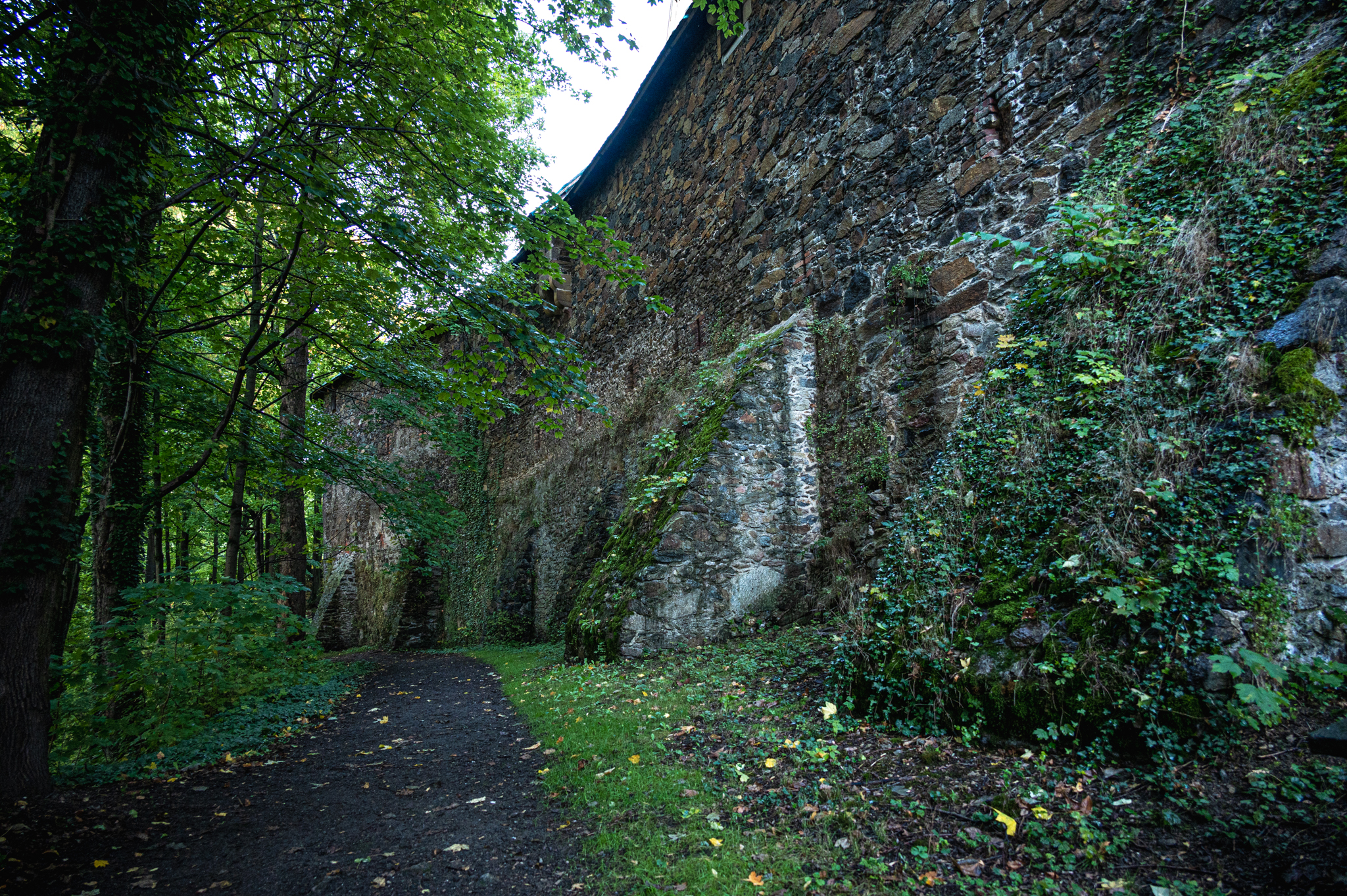
This 13th century castle was all I imagined it to be

We arrived around 5pm, were shown to our (shared) rooms and told to meet in the Knights’ Hall in ten minutes. My roomies (Kim and Claudia) and I chose beds, found a space for our bags, checked out the (huge) bathroom and headed back downstairs.

Claus, one of the conference directors, addressed us and said some pretty important things:

  1. ‘I gotta go’ – if anything became too much, we just had to say those three words and leave the session. No explanations, no judgement, no feeling bad about leaving.
  2. ‘Love of missing out’ – it’s much more usual to talk about a fear of missing out (more commonly known as FOMO), but in this instance there was so much going on we couldn’t do it all. We were encouraged to be comfortable knowing we would miss some things.
  3. ‘It is now 6:14. In 9 minutes you will be back here wearing shoes suited for outside and something to keep you warm […] It is now 6:42, and we are precisely on time’. Things would happen at precisely the right time.

There were elements of ceremony and ritual built into each experience. On that first evening when we had something warm on and shoes suited to the outside, we went through the courtyard, past one of the spirits who told us to be silent, through another door that felt more like a portal, to stand silently in a semi-circle in the forest, just outside the castle walls. It was a powerful moment – standing silently with a group of stangers, listening to the beat of a drum, the darkness closing in around us.

Elements of ritual and ceremony on our first night

The power of shared moments, combined with ritual and ceremony, continued across the next four days.


This ‘conference’, on experience design – attended by folk singers, magicians, escape room designers, CEOs, marketers, immersive theatre directors, actors, artists, experience designers, economists, food scenographers, lawyers, visual artists, academics, composers – was unlike anything I’d been to before. This one walked the talk. We didn’t learn ‘about’ experience design – we ‘experienced’ experience design.

We had the castle complex to ourselves, which meant we could go anywhere – from the torture chamber to the tower – and were free to explore the passages behind any number of bookshelves in the dining room and the library. We wore black robes (much like academic gowns), were sorted into houses according to the colour of the ribbon on our lanyard (no sorting hat!) and had house captains who were our ‘go-to’ people. I was in the purple house; Divine and Katya were my house captains. Spirits slipped amongst us whispering clues to puzzles or reminded us that there was fire twirling in the courtyard later that evening, or an event happening in the tavern. A team of chefs, fermenters and foragers had spent a month in the castle before our arrival sourcing and creating ingredients for all our meals. No meat products and no alcohol were allowed. Photographers, videographers, and visual artists roamed the castle capturing the experience in a variety of ways. Teams of others laid down clues to puzzles, treasure maps, potions, wisdom cards to be collected, reminders to check in with others, reflective tasks to complete. It was immersive, challenging, at times confronting, and I loved every minute of it.

The library was designated as a silent place to eat – no eye contact, no talking. On the third night it was also designated cutlery free. Acelyna made it look so elegant but with what was on the menu that night (noodles) I wasn’t about to try it. Eating in the dining room, on the other hand, was social and over the four days was the place for many rich and diverse conversations.

Each morning I’d get up early, trying not to wake my roommates, grab my camera and wander around the castle. The mornings were cool and crisp and it was a lovely way to start the day. I often felt like I had the whole place to myself.

If you get the opportunity to spend a week in a castle in Poland, I can highly recommend it.

Posted in Life, Travel

Day #8: Mont Saint Michel

Jeudi 28 Decembre 2017

A guest post by Tim Moss

Much of the trip had seemed a little impossible at the planning stage. Convince Sharon to trek half way around the world, at a time when maximum temperatures were likely to only just edge into positive numbers? Impossible. Travel through so many countries, in such a short space of time, and still feel like we had a sense of each place? Impossible. Get up at 5am, make our way across an unknown city (Paris), find a completely new train station and navigate to our early train, just to journey for several hours at high speeds, to see a lump of land in the middle of the ocean? Yep, you guessed it; impossible.

And yet there we were, rugged up (as usual), Sharon with more layers than your average filo pastry, boarding the train to Mont-Saint-Michel. I didn’t have a strong idea about what to expect, but I was enjoying the adventure. And the first-class train carriage. My early advice about travelling in Europe is to always travel by trains if you have the time, and to always travel first-class if you have the money. It’s the only way to go…

The train pulled away smoothly from the station right on time, and the first half hour was spent zipping through a series of tunnels (I think? It was pretty dark outside, but these were definitely darker), each more ear-popping than the last. And then, whoosh, out into the countryside, past green-edged paddocks, tiny barns and houses with earthy coloured thatched roofs, a rather exorbitant number of powerlines, and so on, all punctuated regularly by a new ear-popping sound, that of the similarly svelte bullet trains going in the other direction. Sharon jumped a little each time, through the whole trip. At one point I looked at the speed indicator – 317 kilometres per hour. Yep, impossible, but there we were, in a smooth, air-conditioned bubble.

I’m a little hazy on the rest of this part of the trip, mostly because I might have napped a little to make up for the early start I suspect! But the hours passed impossibly quickly, and with just a short hop on a shuttle bus, there we were, at Le Mont.

When you get to Mont-Saint-Michel, you have a choice – you can hop on a shuttle bus (which is somewhat convincingly panelled to look like a wooden carriage, except for the diesel fumes and lack of a horse at the front end), you can ride a horse-drawn carriage (although the horses appeared to have slept in on the day we visited), or you can walk the 45 minutes to the island. Despite Sharon’s ongoing knee pain, we decided to act like pilgrims and make the journey on foot. I’m so glad we did. You walk along a nondescript gravel path for about 15 minutes, with very informative (I assume) panels about grasslands and birds and stuff, and then the path opens up, and there in front of you is the most impossible thing of all, Le Mont-Saint-Michel.

Frankly it’s a little hard to describe it, but just imagine your average tidal wetland. It’s flat, there’s some water but because the tide is out there’s not much of it, and a few small rocks creating something of a border or boundary for that puddly water residue, and then some muddy flatland that seems to go on forever. And then, rising out of this completely ordinary landscape (believe me, I’ve tried for several minutes here to make it interesting), is a rock. And on that rock is a wall. And behind the wall there are turrets, ramparts, buildings, flags, lights, seagulls, people, and rising above it all, seemingly perched on just a tiny triangle of land, impossibly small, is the abbey, which is everything except tiny and impossibly small. It’s quite an impression, and easy to forget where and when you are.

Once we’d picked ourselves up from the ground after being bowled over by this incredible view, we finished our pilgrimage and made our way in… Somehow we managed to find the back way to the abbey, past groups of people washing their feet after exploring the wetlands outside the walls as people have done for centuries, past armed men entrusted with keeping order as armed men have done on Le Mont for centuries (hopefully we didn’t look too rowdy), past dozens of tiny doors that seemed to lead to sheer cliff faces, or to tiny rooms with no clear purpose, up stone steps worn to smiles by generation after generation of tired feet, and miraculously to the front door of the abbey.

At this point, I’ll just share some general impressions, as the overall experience was quite profound and worth experiencing first-hand… There are still monks in the abbey. They live, work, and share their modest lives there, surrounded by swarms of tourists but somehow still able to live lives of peace, tranquility, and worship. And they have extraordinary singing voices, if (like us) you should happen to find yourself wandering through the main chapel as mass is taking place. Those voices and the whistling winds have been finding harmonies for an impossibly long time, and I feel extraordinarily fortunate that we arrived there at that moment so purely by chance. The abbey itself is almost impossibly complex, to the point where those trying to interpret the layout now are simply unable to describe why some rooms exist; there are chapels, refectories, crypts, a scriptorium, rooms with great wheels turned by the feet of prisoners held in the abbey when it was a prison, cloisters, gardens, great halls for receiving dignitaries and kings, and then there are other rooms, spaces that link these purposeful rooms, spaces with fireplaces large enough to hold entire trees, and spaces that… well, do something. It’s like a home improvement reality show has been running for centuries – “I reckon we could add another well here to really spice things up a bit”, and somewhere along the way, the reasons for that work were lost.

But this is perhaps an injustice, as the spaces that we can explain are extraordinary, and the design shows a level of sophistication and insight into not only the engineering required to build a remarkable space, but also the ways space can be shaped to create an emotional response (like the tall, slender windows in the refectory, that bathed the room in light but are invisible as you enter the room). This is an abbey of drama, prestige, intrigue, history, story, and time. And it is still unfolding, still being told…

As our shuttle bus groaned away from the kerb on our return journey, rain had started falling in earnest. A kind of light mist began to curl around Mont-Saint-Michel, softening the lines, reducing clarity, wrapping it up again, ready for tomorrow’s pilgrims, tomorrow’s tiny marks in the impossible pages of its time.