Posted in Learning

What happens when …

What happens when we don’t understand something?

What happens when we don’t get how to do something?

What happens when we are faced with something new?

What do you do?  How do you react?

What do I do?  Am I ever faced with something I don’t understand?  Or with something I don’t know how to do, or with something new?

Yes, of course.

Until I was 15 I had never driven a car.  But I learnt how to do that. A 1962 Hillman Minx that you had to start with a crank handle when it decided not to work.

Before I was 16 I had never had a baby.  But I learnt how to do that.  I eventually had five of them.

Before I was 17 I had never been married.  I learnt how to do that too, and the second time around I’m learning even more.

Before I was 25 I had never been on radio.  I took to that like a duck to water.  I learnt how to open the microphone and speak.  I learnt how to record sponsorship announcements, and would you believe it, I learnt how to edit tape – yes, tape.  Physically cutting the tape to delete the bits when I’d giggled instead of saying whatever was on the script.  I learnt how to record interviews and edit them using digital recording and editing equipment, I learnt how to tell when Peter Cundell was pulling my leg, I learnt that when you’re on ABC Radio and you do a live broadcast some people want your autograph (weird, I know).

Before I was 29 I had never been to university.  My first class – 9am Monday – was acting.  Then Tech Theatre, then Drama, Voice and Speech, Movement (at 8am on Tuesdays), Theatre, English Literature, Education.  26 contact hours a week.  Rehearsals after class and on weekends, lines to learn, props to find, costumes to search for, lights to hang on ceilings way way up high.  Fresnels and barn doors and gels and a lighting board that looked like it had come off the flight deck of a space craft.  Working in groups to choreograph a dance piece that signifies connectedness, performing in front of a paying audience, calling a show, stage managing. Poems to understand, The Summer of the 17th Doll to write about, Wilde, Shaw, Ibsen, Buzo, Williamson, Hero and Leander, An absolutely ordinary rainbow – a beautiful poem by Les Murray:

The word goes round Repins,
the murmur goes round Lorenzinis,
at Tattersalls, men look up from sheets of numbers,
the Stock Exchange scribblers forget the chalk in their hands
and men with bread in their pockets leave the Greek Club:
There’s a fellow crying in Martin Place. They can’t stop him.

And on the poem goes … until …

Evading believers, he hurries off down Pitt Street. (Les Murray, 1969)

Not to mention learning about Piaget and Vygotsky and grammar and teaching English and teaching Drama and pedagogy and curriculum and referencing and writing academically and caring for students, and having high expectations of them, and not saying (never saying) ‘good girl’ or ‘great work’ because those phrases are meaningless.

I learnt all that, and more, at university.

There was so much to learn; so so so much to learn.

Everything was new.  And much of it was difficult.

Email came in while I was at university.  We had to email our lecturers our assignments.  We were told that we had to name our assignments properly otherwise the lecturer would receive 15 assignments all titled Assignment 1 and he wouldn’t be able to tell which belonged to whom.

The Internet came in while I was at university.  Computer labs popped up all over the place.  Girls would gather in the computer lab and ‘chat’ with each other … online.  I could never work out why they didn’t go to the caf and chat.   Students in my class were nervous about computers.  Some had never used one before; they thought they might break it.

The internet was new, finding information using the internet was new; finding ways around the internet was new.

And for many it was difficult.  New meant difficult.

In 1732 Dr Thomas Fuller said: All things are difficult before they are easy.

What happens when you don’t understand something?

What happens when you don’t get how to do something?

What happens when you are faced with something new?

How do you make the difficult thing, the new thing, easy?

Sharon
Posted in Learning

Was that teaching?

I just read a book to some students. They were in Hobart, Launceston, Victoria, other parts of Tasmania. I was in Burnie. We were connecting, even though we weren’t in the same room together. It was a ‘class’ and we were in a virtual classroom rather than a physical one. They had things going on in the background. Liliana even had her husband log on while she was driving home from work so she wouldn’t waste time when she arrived home getting into the virtual classroom. We were in a ‘class’ but I couldn’t see the students and they could only see part of me – my head if I stayed seated – and while I couldn’t hear their words I could see them typing and read their thoughts.

Was I teaching?

Were they learning?

I read Shel Silverstein’s The giving tree.  They were silent, apart from Wendy who asked if anyone else was teary.  I don’t know if the story had an impact on them, if it made them think.  I couldn’t see the expressions on their faces, or their messages their bodies were giving.  I read it late in the ‘lesson’ and left no time for discussion.  Will they discuss it later with others?  Will it make them think about the power of a story next time they read a book?  Will they think symbolism or metaphor when they encounter a book laden with those elements?  Will they delight in drawings, in simplicity, in language when they read to their own children or to the children of others?  Or when they read for themselves?

I want to know so much.  I want the reading to have been meaningful, to have touched a chord, to have caused students to think and more importantly to feel.

The power of books and language and thought and ideas and creativity.  Did they get that power?

I sit.  Musing.

Posted in Learning

Supporting student learning

I went to Melbourne on the weekend.  Partly to see my husband off – he flew out to San Diego for a few days – but also to meet some new students and catch up with older ones (that is, students who have been studying for some time).

I enjoy meeting new students and catching up with older ones.  And they like it too.  Studying, as these students do, online, can feel very isolating.  Even though there are a gazillion ways to connect with others, it seems that we are socialised into thinking that formal education happens in rooms where people gather and converse – or at least listen.  When you’re at home, and the washing machine is whirring madly in the laundry and the three year old is quiet so you know he’s up to something, and the dog just won’t stop barking, and the neighbour is mowing his lawn as slowly as he possibly can, it’s hard to feel like a uni student.  Particularly when you never ‘go’ to uni.  Uni is on your computer.  You listen to a lecture, read some readings, respond to some questions.  Does it even feel like learning?  Where’s the active discussion, the debates around a particular stance on an issue, questioning others about their views?  Where’s the catching up for a cuppa after class or sitting in the sun and talking about your understanding of the assignment task?

It isn’t the same when you’re online.  When online happens at home, in the same space as the domestic chores, on the same table that is cleared at meal times so the family can eat together, on the same computer that your high school aged daughter needs to do her homework.  You might not hear the voices of your classmates, or even the voice of your tutor.  You read information on the screen and then go away to think about it, to determine how that information fits with your existing values and beliefs, or why it might not.  You walk the dog and the three year falls asleep in the pram. You write a response, throw something out into the ether, wondering/hoping that someone will take notice, will read it, will respond.  You want to feel validated and as if your voice has been heard, or at least you want to know that someone has read your thoughts.

Going to Melbourne helps students feel a little less isolated.  They meet others in person, they hear other students’ voices, they see how they’re dressed and their mannerisms.  They see me speaking, rather than just hearing me speaking.  They develop a sense of connection with each other, with teaching staff, with the Faculty.  They become more engaged.  They know we care.

Supporting student learning is about empowerment.  Teaching is about empowerment.  Empowerment needs to be supported and valued – by staff and students.

If you’re a student and an opportunity presents itself to you to meet with others, please make the most of it.  Encourage others to do the same.  Building a community of learners takes time and effort and commitment and energy.  It’s worth doing.

Posted in Learning

This is what I predicted … and more

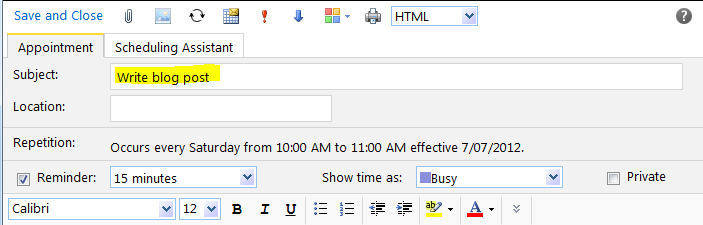
It’s another way of saying “I told you so”.  In my very first blog post I wrote the following: “I could do something nerdy and schedule a time in my calendar to write a blog entry each week, but I doubt I’ll do that”. 

I didn’t schedule time and I didn’t write a blog post each week.

But I’m going to try to write one now.  Here goes …

In two weeks’ time my Children’s Literature unit will be live for students to access.  I have spent hours on the assessment tasks, agonising over the wording, trying to work out the practicalities, thinking about the tasks from the students’ perspective.  Are the tasks too prescriptive?  Do they allow enough space for students to be creative in their response/s? Do they provide enough scope for students to demonstrate their understanding?  Is there room for independent thought and action and learning?

It’s hard to determine how students perceive assessment tasks: are they just hoops to jump through in gaining a qualification to teach?   What more might they be?

Oh, sad question.  Cynical even, and short-sighted. What do students understand about the purpose/s of assessment tasks though? Perhaps I should ask them.

I’m getting off-track.

I’m teaching Children’s Literature and one of the assessment tasks requires students to create a blog and post to it each week.  I thought I’d see how it feels.  Students have to write 500 words for each entry and each entry has a specific focus.  The focus for the first entry is ‘what is children’s literature?’.  I won’t answer that question, but I will address what I think is important about a unit such as this.

Reading to children and encouraging a love of books is vitally important for children’s development, curiosity, understanding of the world, pleasure in language, and oral language development (Lukens, 2007, p. xxiii).  It is interesting as a mother to watch my own children’s development: some of my children have engaged readily in reading and being read to, while others have had very little interest.  My eldest son, who is in his early 30s now, has only recently taken to reading.  He had found biographies to be much more engaging than any other form of literature and has read more books in the last twelve months than in the previous 31 years.  My mother is the same: she would much rather a biography (or autobiography) than a novel.

My second son will read just about anything.  He’s always had an interest in language and as a child loved playing with words and sounds. I have a video of him at three trying to read a CJ Dennis poem about the Triantiwontigongolope.

There’s a very funny insect that you do not often spy,
And it isn’t quite a spider, and it isn’t quite a fly;
It is something like a beetle, and a little like a bee,
But nothing like a wooly grub that climbs upon a tree.
Its name is quite a hard one, but you’ll learn it soon, I hope.
So try:
Tri-
Tri-anti-wonti-
Triantiwontigongolope.

My grandmother on my father’s side loved language too and could remember verses of poetry well into her 90s.  It’s a real joy to give to children – the love of language – and children’s literature, good quality children’s literature, read in an engaging way will bring hours of pleasure.

My favourite at the moment is Nick Bland’s The very cranky bear.  It starts: “In the jingle jangle jungle on a cold and rainy day … ” and already, just with those few words, you get the delightful rhythm established and you know you’re in for a real treat!  The illustrations are gorgeous and the look on the bear’s face when he’s all dressed up is priceless.    It’s a book designed to be read aloud and I know that children will ask for it again and again.

So that’s one advantage of studying a unit such as this: you get exposed to a range of children’s books that you can take into the classroom and read to children.  Another advantage is that you get to do a lot of reading.  When that reading is primarily children’s books it’s neither difficult nor arduous.  The problem is knowing when to stop.  And knowing that you can’t buy every children’s book you come across.  I have to tell myself that constantly.  My book pile is growing and growing and I’m fast running out of space on my bookshelves.

So, exposure to lots of quality books, time for lots of reading … and the third advantage of this unit is the opportunity it provides to talk about books and features of books.  One of the great things about reading is the experience of sharing what you’re reading with others.  Through talking about your reading you can come to a better understanding of the text features or the characters or the themes or the key messages (depending on the book you’re reading of course).

That’s enough for now.  Maybe I will do this each week.