Posted in Learning, Photography, Writing

Play

For four years, some members of my family have been involved in a weekly photo challenge. This challenge morphed from previous photo challenges we’ve done over the years, but in its current form, this one has been going for four years. Each week we have a word as our focus and we take photos of a representation of that word, share it in a private Facebook group and each Sunday night we Zoom, have a chat about our week, and talk about the photos.

This week just gone, the word was ‘play’.

It got me thinking.

This blog ‘Musings from the cold’ has a subtitle: playing with ideas and images. It’s something I enjoy – to look at a subject from different angles and see what stories emerge. I’m not always successful of course, but that’s what playing is all about – experimenting, seeing differently, trying out other voices and seeing what feels weird and whether I can sit with the weirdness.

I play photographically, but I realised I don’t often play with my writing. Not here anyway, on the pages of this blog. Over the years I have written many different sorts of things – journal articles, conference papers, book chapters for academic books, textbooks, newletters for parents and staff when I was teaching, interview questions and intros when I worked in radio and scripts for an Arts program I used to produce and present, poems on the fridge. Different audiences, different purposes, different styles.

But I realised through the week, that I only write in first person on this blog and so I decided to play, to experiment, to try a different voice. It felt weird, but I chose to sit with it, to keep writing in that style to see what I could learn from it, determined to push through the distance it gave my writing from myself until I found something new – well, new for me at least.

I wanted to play, and through that play to develop as a writer. It was never meant to be an endpoint, a final stop in my learning about writing – it was to help me go on a journey from one voice to another, one style to others (many, multiple) – to begin opening up the possibilities for my own writing.

When my youngest daughter was in Grade 3, the teacher asked them to write a story about their weekend every Monday. At a parent-teacher interview, the teacher commented that we lived the most interesting life. I knew this not to be true and asked her how she came to that conclusion. Apparently Emma’s Monday journal writing embellished our weekends to a point where they didn’t reflect our reality at all.

The teacher told her to only write what was true.

Emma stopped writing. Boring weekends didn’t interest her, and if the rule was to report only the facts rather than invent stories and worlds and interesting characters we met along the way, then there was no play left in it. And without play, the writing lost its spark.

It’s a reminder for my own practice. Play matters. It keeps my writing alive. So I’ll keep playing – with words, with voices, with styles that don’t quite fit until maybe they do. I don’t know yet where that will lead, but I suspect the detours matter as much as the destinations. If you find me writing strangely now and then, think of it as an experiment. You’re welcome to play along.

Posted in Learning, Teaching

On kindness as a pedagogical practice

Katrina just didn’t get it. To be quite honest, I don’t think a lot of us got it, but Mrs Jeffries had Katrina in her sights.

“Do you know what a stunned mullet looks like Katrina?”

“No, Mrs Jeffries” Katrina said quietly.

“Go and have a look in the mirror”.

Mrs Jeffies was unkind. It seemed to my 14 year-old self that she was deliberately unkind. That she knew she was being unkind, and made a decision to say that hurtful thing anyway. Katrina was a studious girl, who rarely spoke in class. She was not ever a trouble maker, she didn’t answer back, was never sent out of class, didn’t have things like “could do better” written on her school reports. She was a ‘good’ girl.

Yet, still, Mrs Jeffries was unkind. I wonder if she’s reflected on that moment since. Does she even remember it, as I do, almost 50 years later? It’s quite possibly a question I will never know the answer to.

I think back over my own teaching career and wonder if I was ever deliberately unkind. Did I say things to my students as hurtful as Mrs Jeffries had said? That’s a question I don’t think I want to know the answer to.

Saying mean things, being as deliberately unkind as that maths teacher was all those years ago, is one way of being unkind. But there are plenty of other ways. And I’m sure I was unkind in my teaching in ways that went beyond saying hurtful things to students.

An example springs immediately to mind: I asked Rochelle and Louise to leave class one day when they admitted they hadn’t prepared for it. They were in their final year of university, about to head into the world of teaching, and in that moment I felt it was disrespectful and unprofessional to come to class unprepared. The other students in the class thought me unkind. In fact, they didn’t just think it, they told me.

I scour my bookshelves and see the familiar titles. Titles such as The students are watching, Teaching toward freedom, Happiness and education, The challenge to care in school, The schools our children deserve, 12 characteristics of effective teachers and I think about the ethical and moral issues underpinning teaching. And I think about kindness.

What is kindness in teaching? How is it enacted? Is kindness the same as being nice? Or soft? Or caring? Is kindness possible within institutions that are unkind, that have unkind structures and unkind policies? Can an individual teacher’s kindness ameliorate unkind policies, processes and systems?

These are questions my colleague Dr Airdre Grant and I explore in our forthcoming book, Enacting a pedagogy of kindness: A guide for practitioners in higher education, to be published by Routledge next year. We have invited contributions from academic leaders, those involved in curriculum design, learning design, assessment, and teaching. How do those working in higher ed enact kindness in their teaching, in the way they design assessments, in the ways they lead their institution, in curriculum design, in the ways they work with colleagues?

One contributor writes that:

I always thought I would be kind. The brutal editing on my first publication had been so confronting that I determined to hold to the memory of this experience … I would never forget how even the kindest criticism can shatter an author’s confidence.

Despite this I still upset many students. It seemed to be part of the job description.

Another writes that building trust in the classroom is an act of kindness:

Through simple, yet intentional, acts of humanizing my students, such as learning what makes them unique or being interested in what is going on in their lives outside of our class, my students learn not only to trust me but also to trust each other. 

As we saw, Mrs Jeffries was unkind, but unkindness in teaching can come in many forms, one of which is deficit thinking. In one chapter, the authors write that:

Coddling is a form of deficit thinking that sustains the belief that non-white students are inherently less capable or have less potential than their white peers (Foster, 1998). White teachers may engage in coddling behaviour when they lower their expectations of non-white students and shield them from challenges that they perceive as being too difficult.

This is true of other marginalised groups as well, as I found during my time as a secondary school teacher. The low-socioeconomic suburb in which the school was situated, was characterised by inter-generational un/under-employment, domestic violence, drug abuse, and poor schooling outcomes, all of which had an impact on the students and the ways teachers thought about them, and subsequently taught them. These were ‘poor’ kids, whose ‘mothers had children to multiple fathers’; kids who had ‘little to look forward to’; kids who ‘would turn out to be the same kind of no-hoper their parents and grandparents were’. Often they were children who were abused and neglected, who came to school hungry and tired.

These children had one thing else in common … teachers who judged them. Teachers who were unkind. Teachers who told them there was no point in studying “academic” subjects because they wouldn’t be capable, and really, why would they bother when they weren’t going to use academic skills anyway. These were students whose teachers had low expectations of them, who thought of them as what they didn’t have rather than what they did. It’s a different form of coddling … but it’s still ultimately unkind.

To begin to think differently as a teacher requires a shift in attitude. Kindness is a deliberate action, which is not without challenge, as one contributor writes:

I have found kindness requires a delicate balance of compassion and courage, a balance that is near impossible to predetermine as it’s affected by so many variables. Assessment design, underpinned by a compassionate outlook, can help by engineering moments of human connection. Attending class then, becomes not simply about passing the assessment but can lead to the development of a sense of community, built around assessment as a shared experience. 

Kindness can also be used deliberately to underpin institutional teaching frameworks which then informs practice, as one contributor notes:

Between mid 2019 and early 2020, we planned and implemented a whole-of-institution process of reflection, discussion, and critique aimed at identifying and codifying the values, dispositions, and practices that best captured what was at the core of our teaching approach. This process relied upon several assumptions … the first of which was that we should start with students. I felt that student voice would serve to unify our purpose and give our staff something concrete to engage with. Through focus groups and surveys, all students had the opportunity to tell us what makes a great teacher, and to identify the things that were important to them as learners. Synthesising their responses provided a series of ‘provocations’ that teachers were then invited to respond to – statements such as “a great teacher knows what I want, and what I am afraid of”, and “a great teacher makes me feel safe to be myself”. 


I didn’t ever intend to be unkind in my teaching, but I don’t know that I ever explicitly thought about kindness either, despite the books on my shelves about caring, happiness, and the ethical and moral issues underpinning teaching. It’s like Cate Denial said, “kindness is something most of us aspire toward as people, but not something we necessarily think of as central to teaching” (Denial, 2019, para. 6).

If you’re a teacher, in what ways do you enact kindness in your practic, in your day-to-day interactions with students , in the ways you talk about (and think about) students, in your assessment practice, in the ways you make desisions about what to teach the students in front of you now (as opposed to what you taught the Grade 3s, or 9s, or second year university students last year/term/decade)? And just as importantly, in what ways are you kind to yourself?

Cate Denial says that “kindness is a discipline, not a feeling”.

I imagine I’d have remembered more about the maths in my Grade 9 maths class if Mrs Jeffries had had the discipline to be kind … instead, all I can remember is the unkind.

What will your students remember?

Posted in Learning, Life, Travel

An extraordinary experience

The day has finally arrived. I’m off to the castle. It’s a little bit exciting and a whole lot scary.

Tim asks ‘are you excited?’

‘I actually don’t know if I can do this’

‘Of course you can’, he said. ‘You’ve got this’.

I head downstairs for breakfast and try to identify other conference participants. WhatsApp is pinging away – people still arriving, COVID tests to organise, where is Starbucks at Berlin airport, who’s in the hotel restaurant for breakfast, anyone want to go for a walk before we catch the bus?

I don’t respond to any of them, even though I was having breakfast in the hotel restaurant at the time and then heading out for a walk before the long bus trip. I am full of anxiety.

One of the things that amazes me about being in Europe is that you can be on a bus driving through Germany and next minute you’re in Poland. No flashy signs, no big announcements … just a whole different country. There are bigger signs saying ‘Welcome to New South Wales’ than there are announcing ‘You’re now in Poland’. The language changed on the town names and that was the only indication I had that we weren’t in Germany anymore.

After a five hour bus ride we arrive at the castle.

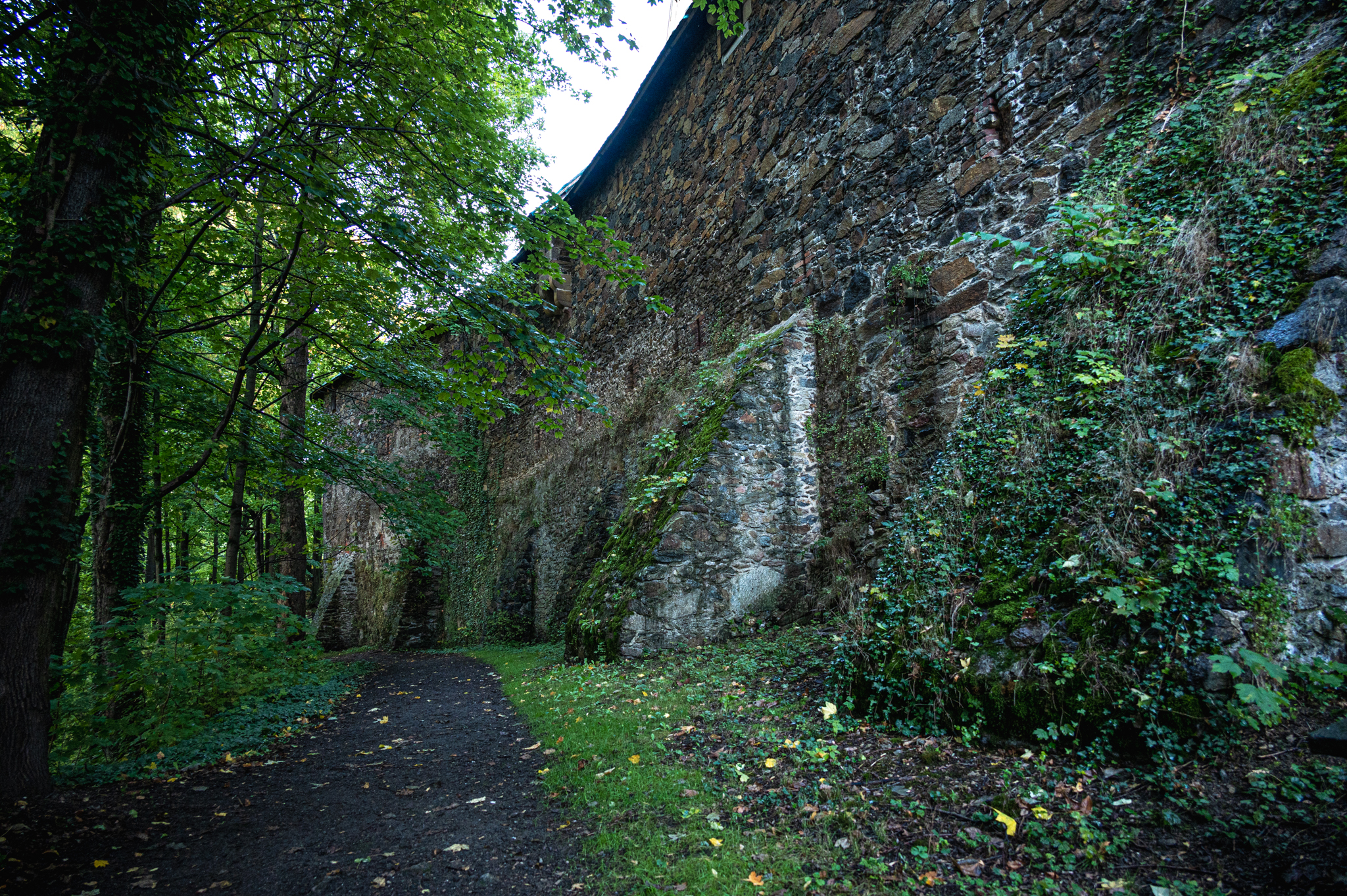
This 13th century castle was all I imagined it to be

We arrived around 5pm, were shown to our (shared) rooms and told to meet in the Knights’ Hall in ten minutes. My roomies (Kim and Claudia) and I chose beds, found a space for our bags, checked out the (huge) bathroom and headed back downstairs.

Claus, one of the conference directors, addressed us and said some pretty important things:

  1. ‘I gotta go’ – if anything became too much, we just had to say those three words and leave the session. No explanations, no judgement, no feeling bad about leaving.
  2. ‘Love of missing out’ – it’s much more usual to talk about a fear of missing out (more commonly known as FOMO), but in this instance there was so much going on we couldn’t do it all. We were encouraged to be comfortable knowing we would miss some things.
  3. ‘It is now 6:14. In 9 minutes you will be back here wearing shoes suited for outside and something to keep you warm […] It is now 6:42, and we are precisely on time’. Things would happen at precisely the right time.

There were elements of ceremony and ritual built into each experience. On that first evening when we had something warm on and shoes suited to the outside, we went through the courtyard, past one of the spirits who told us to be silent, through another door that felt more like a portal, to stand silently in a semi-circle in the forest, just outside the castle walls. It was a powerful moment – standing silently with a group of stangers, listening to the beat of a drum, the darkness closing in around us.

Elements of ritual and ceremony on our first night

The power of shared moments, combined with ritual and ceremony, continued across the next four days.


This ‘conference’, on experience design – attended by folk singers, magicians, escape room designers, CEOs, marketers, immersive theatre directors, actors, artists, experience designers, economists, food scenographers, lawyers, visual artists, academics, composers – was unlike anything I’d been to before. This one walked the talk. We didn’t learn ‘about’ experience design – we ‘experienced’ experience design.

We had the castle complex to ourselves, which meant we could go anywhere – from the torture chamber to the tower – and were free to explore the passages behind any number of bookshelves in the dining room and the library. We wore black robes (much like academic gowns), were sorted into houses according to the colour of the ribbon on our lanyard (no sorting hat!) and had house captains who were our ‘go-to’ people. I was in the purple house; Divine and Katya were my house captains. Spirits slipped amongst us whispering clues to puzzles or reminded us that there was fire twirling in the courtyard later that evening, or an event happening in the tavern. A team of chefs, fermenters and foragers had spent a month in the castle before our arrival sourcing and creating ingredients for all our meals. No meat products and no alcohol were allowed. Photographers, videographers, and visual artists roamed the castle capturing the experience in a variety of ways. Teams of others laid down clues to puzzles, treasure maps, potions, wisdom cards to be collected, reminders to check in with others, reflective tasks to complete. It was immersive, challenging, at times confronting, and I loved every minute of it.

The library was designated as a silent place to eat – no eye contact, no talking. On the third night it was also designated cutlery free. Acelyna made it look so elegant but with what was on the menu that night (noodles) I wasn’t about to try it. Eating in the dining room, on the other hand, was social and over the four days was the place for many rich and diverse conversations.

Each morning I’d get up early, trying not to wake my roommates, grab my camera and wander around the castle. The mornings were cool and crisp and it was a lovely way to start the day. I often felt like I had the whole place to myself.

If you get the opportunity to spend a week in a castle in Poland, I can highly recommend it.

Posted in Learning, Life, Teaching

Musing on infantalisation in higher ed

I was attending a conference on teaching and learning in higher education earlier in the month. I was only half listening because I was on my way out of the academy – one week away from my final day after my position was made redundant.

I am a dinosaur, an academic who clings to the idea that universities are places of learning. I don’t just mean the formal curriculum, but universities, no matter whether you’re a student or a researcher or an administrator or a teacher or a learning designer, are places that, to me, in my old-fashioned way of thinking, are places for exploring ideas … and to me, exploring ideas is learning.

Ideas can be extended upon, challenged, engaged with, debated, thought about, written about, performed, reflected on, explained, discussed, acted upon, reinforced, extended, justified. They can be tested – literally/actually/physically as well as intellectually. Ideas aren’t, in my old-fashioned way of thinking, things that are only ‘academic’ or ‘theoretical’ or ‘cerebral’ or ‘abstract’ – words often used perjoratively. They can be made concrete and real and are always worth our time and attention.

Exploring ideas can be tough – intellectually and emotionally.

It can be tough intellectually as it requires knowledge and thought and the capacity to see from a multitude of perspectives. It requires us to seek out more information, to analyse and synthesise, to create new ideas from existing ones. It requires the development of our capacity to explain the idea, to communicate it in ways that have meaning for others (verbally, spatially, graphically, amongst others).

It requires us to sit in ambiguity, to not know.

And the not knowing and the ambiguity can lead us to feelings of vulnerability, and that’s tough emotionally.

It’s tough emotionally, particularly when you’re in an environment in which your knowledge and your ideas are being tested or assessed. In which you feel that *you’re* being tested or assessed. Judged. Do you know enough? Do you know the right things? Can you communicate what you know in a way that aligns with the rubric? Can you justify your ideas and the outcomes/consequences/recommendations that result from those ideas?

Except …

I learnt in the higher ed conference I attended earlier in the month that ‘justify’ is a “triggering word for students”. That “while it’s a word academics like to use, students don’t like it”.

The academic, a unit chair in an allied health course, said that she’s changed the triggering word to ‘explain’ or ‘describe’. “It’s a change that’s been well-accepted by students”.

Students no longer have to justify the recommendations they make in relation to a client’s treatment, they just have to explain and describe them.


What are we doing in higher ed? Are we so concerned with student satisfaction that we infantalise them to the degree that rather than supporting them through the challenging aspects of their course, we instead remove any challenge?


I watched my six-year old granddaughter trying to do a headstand recently. She placed her hands carefully, ensured her head created the third point of the triangle, switched on her core, and pushed her feet off the floor. Something in her technique was wrong, and she did not manage to do a headstand. She tried again. And again. And again.

She cried in frustration because she could not do a headstand ‘properly’. Despite her tears, she kept practicing. I didn’t watch the whole session as I was on FaceTime but her mother told me later that she tried for three hours and cried each time she couldn’t do it. Finally, she was successful.


Learning is hard. I was once told I wasn’t allowed to say that to students as it’s a negative message. To me, it’s also a truth. Coming out of our comfort zone to sit in a space of not knowing, of being unsure, of reaching for understanding and not quite getting there (yet) is challenging.

It puts us in a place of vulnerability and that’s uncomfortable. But if we don’t move from our place of comfort, then we don’t grow or develop. We don’t learn.

Learning is hard. The teachers’ role is not to make it less hard, but to support students through the challenges.

We infantalise students when we remove the challenge rather than helping them overcome it.


Posted in Learning, Studying, Teaching

Musing on flexibility in teaching and learning

There’s a conference happening as I type. It’s a conference on teaching and learning in higher education … and a student’s comments bring to mind a snippet of everyday life I heard about many years ago.

Annie lives in a small country town. She is married, has three children under the age of 7, and does not work outside the home. The eldest child catches the bus to and from school.

The family has one car and as Annie’s husband works in the bigger town 30 minutes away, and there is no public transport (apart from the school bus), he drives most days. That leaves Annie without a car. There are no shops or parks within walking distance and the hills and narrow roads make taking a four-year old and a baby for a walk a challenge.

The four-year old has discovered she likes mangoes. The enchantment with mangoes extends beyond the mango-growing season, which she does not understand. She wants a mango. She lets Annie know she wants a mango. She lets the neighbours and the sheep in the front paddock know she wants a mango.

No amount of explaining that mangoes are not available will convince the child that she cannot have a mango. She argues that they could go to the shop to buy one. But even if there was a shop that sold mangoes, they don’t have the car that day and the shop isn’t within walking distance. This is something that is beyond her comprehension. She thinks of herself and not of the wider system of which she, and mangoes, are a part.

Annie takes some frozen mango from the freezer, but the child is adamant it isn’t real mango and so does not want it. She takes it outside to feed to the sheep in the front paddock.


I am reminded of this snippet of everyday life while listening to the conference presenter – a student who wants to attend classes on campus when “I feel like it” and to attend classes online when “I’m not able to attend in person”. She doesn’t want to have to tell her tutor when she’ll attend on-campus and when she’ll attend online or when she won’t attend at all.

The other adults in the conference agree that that’s a reasonable position to take. No one mentions the wider systems of which the student is a part but which are outside of her immediate attention.

Ignore, for now, the administrative processes and the technological systems at play here. Let’s focus on the student experience.


Louise is a student at a university in a major city in Australia. In Week 3 she decides to attend the weekly 2-hour tutorial on campus. The tutorials are recorded so that students who cannot attend synchronously can have access to the material covered and the questions and provocations explored in the tutorial.

They’re also live-streamed so that students who cannot attend on campus can attend synchronously from a place of their choosing (home, work, the train, a holiday house at the beach, a cafe, a hospital room …). The university is known for providing opportunities for students to learn at any time, from anywhere, and at any place.

Louise arrives to find the teacher and three other students in the classroom. The official enrolment for the tutorial is 25. The tutor has connected to the live-streaming software allowing all enrolled students who attend synchronously to interact if they choose. Those who attend synchronously online have indicated that they like to feel part of the class, even if they’re not there physically.

The tutor has planned an interactive session where students have opportunities to actively engage with the ideas being discussed and hear others’ views. She has planned for students to work in small groups and in that way learn with and from each other. They will share their ideas, take a variety of stakeholder perspectives, formulate solutions to problems they’ve identified and justify which of those possible solutions they would recommend if they were working in a professional setting.

Nine students have joined the live-stream. They don’t have their cameras on and so show up as black boxes or initials on the screen. The two cohorts do not interact with each other, as those online keep their microphones off and while they talk when put into breakout rooms, they don’t interact with the four students in the physical room.

Adapted from an image found at the-rampage.org

Louise finds the experience unsatisfying, personally, socially and intellectually. She had wanted to be part of a dynamic group of learners all seeking to explore this highly interesting and relevant area of the course. She wanted to share her ideas and was keen to hear others’ ideas. She had questions of a technical nature of the tutor but her voice sounded too loud in the near-empty room and so she kept quiet. Those who attended via the live stream interacted with each other but not with those in the physical room, and while those in the physical room contributed to the discussion and shared their ideas, the lack of a diversity of views, ideas, solutions and recommendations left her feeling flat.

The following week Louise finds she cannot attend the tutorial and listens to the recording. She finds the experience unsatisfying. She does not have the opportunity to share or discuss her ideas and is not able to hear others’ conversations as the recording cuts out when the students engage in small group conversations.

In Week 5, Louise attends via the live-stream. There are two other students attending in this mode, and two students in the physical classroom. When it comes time to join the breakout room, Louise logs off. It is an unsatisfying experience all round.

At the end of semester, she completes the unit evaluation and scores the tutor poorly. She did not have a good experience and wants the university, and her tutor, to know.


The situation is complex. Louise wants to be free to choose but is unaware, when making her choice, of some of the outcomes of that choice. She wants the choice to study when and where she wants and the capacity to make that decision on a weekly basis, unaware that choice has consequences for her experience.

There is nothing like a room full of students talking, discussing, playing around with ideas and of coming to better understand the skills and abilities they’ll need to be better financial advisers, or engaging and compassionate teachers, or architects who can play with shape and form and functionality. The feel in that room – whether it’s a virtual or physical room – can be energising and motivating.

When teachers create space for students to engage intellectually and socially and professionally, learning is enriched and empowering.

But those enriching and empowering learning experiences can’t happen in the absence of learners. Deciding not to attend has consequences that go beyond the individual.


I fear we’re headed towards an impoverished system of higher education that caters to an individualisation which sees decisions made on what individuals want (more flexibility to do things my way) without thinking about the wider consequences for learning and social and profesional interaction.

Flexibility has enormous benefits to students. It provides many with the only way of studying as they juggle the many other aspects of their lives. It is crucial for students to have options for when and how they study.

But, is there ever a point when we have to accept that just because we want a mango now, it doesn’t necessarily mean we can have one?

Is unbounded flexibility possible? And if it is, will it lead to the desired outcomes?

One final question, though perhaps for another time: Whatever happened to asynchronous learning?

Posted in Learning, Schools, Teaching

Musing on student-teacher relationships

I was one of those kids at school who teachers didn’t like very much. I’m not sure what it was, but I never endeared myself to my teachers.

Some of them hit me, some of them kicked me, some of them made me stand behind the classroom door, or sit under their desk, or leave the room. I can’t remember many of them being terribly nice to me.

I was a middling student who probably had a smarter mouth than brain and said more than I should have. I was clever, but not clever enough to keep my mouth shut or stop my eyes from rolling.

Being a middling student meant I didn’t have the educational needs some students had. I wasn’t gifted and so didn’t get any attention for being particularly good at anything; and I didn’t need remedial attention because I wasn’t really bad at anything. I didn’t have much potential for anything outstanding and so didn’t need encouragement or prompting … and let’s face it, if I was ‘prompted’ I would probably have said something that saw me sent behind the door or under a desk in no time flat.

I come from a family of middling students. None of us excelled academically. We did alright, but our place was firmly in the middle. We weren’t duxes, we didn’t win presitgious academic awards, we didn’t have ATAR scores in the 90s.

I was awarded a merit certificate in primary school one year.

It was for ‘uniform’. I felt it should have been awarded to my mother.

I don’t remember ever having positive relationships with my teachers though, although there was one female teacher in Grade 5 who was lovely.

These days, in teacher preparation programs all across the country (possibly all across the Western world), beginning teachers are taught that “strong teacher relationships are crucial because they:

  • Shape the way children think and act in school
  • Improve how well they do at school

When you have a good relationship with your students, they are more likely to feel positive about class and about school in general. They are also more willing to have a go at hard work, to risk making mistakes, and to ask for help when they need it” (Killian).

Holding high standards without providing a warm environment is merely harsh. A warm environment without high standards lacks backbone. But if you can create a combination of high standards with a warm and supportive environment it will benefit all students, not just the high achievers.

Lee Jussim

I wrote some time ago about punitive education and some of the lessons we learn from school and from the teachers who inhabit it/control it.

What might students learn from teachers who care about them (and let them know they care) and who have high expectations of them?

Why might we teach in any other way?


Posted in Family, Learning, Life

Mothers Day: Living the realities

I was scrolling through my Twitter feed this morning and came across a story on the ABC News site that caught my eye.

After the birth of her fifth child, Roseann Hall decided to do a photography project on the often ‘unseen’ side of parenting – the mess, the tantrums, the food smeared everywhere, the moments of stress and tension and of the ways new mothers coped with them.

After Roseann had her fifth child and again found herself scrolling through photos that didn’t reflect her experience, she decided to use her skills as a photographer to capture something more authentic.

ABC Radio Brisbane

Hall’s images instantly took me back to my early mothering days and I began to wonder if any of them would have been worth sharing on social media. I highly doubt it.

I have recollections of constant mess: of food-smeared surfaces, of unmade beds and unwashed washing, of piles of unironed clothes and of floors strewn with toys and clothes and the debris of life.

None of it was social media worthy. None of it was worth sharing to a wider audience. But for many of us with young children it was normal. It wasn’t pretty that’s for sure, and mothers and mothers-in-law and aunts and grandmothers would sometimes step in, a working bee would be organised and the house would shine.

For a day.

And then the inevitable inertia and overwhelm of being a mother would take over – the monotony, the everyday struggle, the sameness, the mundane decision-making (should I do the ironing first or the vacuuming?), the inevitability of mundanity. Nothing to look forward to but more mess, more washing, more cleaning, more ironing, more vacuuming, more dusting … the finger run along the mantlepiece when he came home for lunch to see if it was dust free.

It never was.

Mothering has been happening for thousands (and thousands) of years, and while, I imagine, no two mothers’ experiences have been the same across those years, how did we come to decide that ‘normal’ is a tiny box that only some people fit in? And who decides what’s in that box?

How have we come to the point of looking at others’ lives and deciding that their life is “normal” while ours isn’t? Or that their life is different and somehow that means better?

In the ABC article, Divna Haslam, a clinical psychologist and family researcher at the University of Queensland claimed that “we should all normalise all the aspects of parenting, not just the pretty ones.”

When did we stop normalising the unpretty aspects of parenting? Does any mother of young children imagine, when she sees images of others’ lives, that they don’t have unpretty moments as well? That their two-year old doesn’t have temper tantrums that can last for hours? That their toddler, being introduced to a new food, doesn’t spit it out or wipe it over every surface they can find? That their three year old hasn’t ever picked up a crayon and drawn all over the walls with it?

Have we really become that naive?

Maybe it isn’t about that. Maybe it’s not naivety at all. Maybe it’s the visuals and the access to other people’s lives we’ve only experienced in the last 10 years or so.

Social media, the thing that’s allowed us to connect in ways we’d never been able to before its invention, has maybe also caused us to unconnect from reality. We see others’ unreal images and imagine they determine the reality of someone’s life. The totality of their life.

But do we really think we’re the only ones with children who make unreasonable demands in the supermarket at the tops of their voices? That we’re the only ones with children who refuse to get into their car seat? That our newborn is the only one who doesn’t sleep through the night? That our two-year old is the only one to have a temper tantrum in the main street, requiring us to carry them – kicking and screaming up – under one arm while trying to wrangle their trike with the other? That our four-year old is the only one who swears like a trooper when Grandma walks through the door, that our eleven-year old is the only one who verbally baits his sister till she’s in a paroxym of frustration?

It’s sad if we have. But we don’t have to, and I know that may be easier said than done, particularly from my vantage point. We know – in the very core of our being – that the vast majority of little children will be unreasonable at least some time before they’re five. And while we might not want to post images of those moments on social media, let’s not forget what sits behind the cheery images of happy-looking kids and the ‘perfect’ settings in which they live.

If you’re looking at others’ lives on social media, imagine the corner of the room you can’t see, full of life’s debris – the clothes that moments earlier where all over the couch, the bowl from breakfast the child threw on the floor, the toys they’ve been told to put away a million times but never do.

Think of the “perfect” images that appear on social media as museum or gallery pieces. They might be tightly curated images of a life, but they don’t represent reality.

Posted in Learning, Life, Schools, Teaching

Punitive education

Late last year I spoke with about a dozen small groups of Year 9 students from a local high school. It was part of a program called Future Me; a program designed to help Year 9 students develop a range of ‘enterprise skills’, one of which is communication. In groups of 4 or 5, students spoke with a range of university staff, asking the staff questions about their schooling, their jobs, their career pathways.

A few of the groups asked me what had been my favourite subject at school. That really made me stop and think.

I ended up being honest with them and told them that I hadn’t liked high school much and I didn’t have a favourite subject. They were surprised that someone teaching at university didn’t like high school; hopefully it helped them realise that high school experiences don’t necessarily define your whole life – although in Year 9 it sure feels like they do.

If I’d thought about it some more, I may have said that English was one of my favourite subjects. The problem with it wasn’t the subject, but the teacher. I didn’t like my English teacher. He was punitive and I didn’t like his attitude. For the record, he didn’t like mine either.

Art was good because we sometimes got the opportunity to travel to Sydney to the Art Gallery of NSW – as well as other places – and I enjoyed that. But I didn’t like my Art teacher. She was punitive and I didn’t like her attitude. She really really didn’t like mine!

One of the times I was thrown out of Art class, I saw a boy being caned by a punitive woodwork teacher.

We had weekly assemblies and one of the teachers would patrol around the assembled students checking to see if the boys were wearing the right sort of socks. There were consequences for those who weren’t. Punitive ones.

It was the 1970s and I guess punitive was an educational fad back then. I like to think it isn’t one anymore …

It’s easy to be punitive though, and some still think it’s better for children and young people if their teachers are punitive, if they rule through fear. I read a comment on a ‘tell us about your favourite teacher’ blog from a man who said that getting the cane ‘certainly kept us focussed on doing the right thing’. I wonder if it helped with his learning?

Even back then schools weren’t only about learning – well, not in the academic sense. We sure learnt stuff, but lots of it wasn’t part of the official curriculum. Boys learnt to wear the ‘right’ socks, girls learnt that to get ahead they had to be ‘nice’, ‘polite’, ‘compliant’. Boys learnt not to cry; in fact, many boys learnt not to have emotions at all, or that some emotions were bad and therefore shouldn’t be part of their repertoire. Happy was a legitimate emotion as long we you didn’t have too much of it, and if you were tall and good looking and a favourite with the teachers, you could have pride and conceit in your bag of emotions as well, but others, like sadness or disappointment, were to be internalised or just avoided altogether.

Boys learnt that if you did the wrong thing, you were hit by an adult weilding a stick – and your parents generally thought that was an okay thing to do too. Girls learnt that if you spoke up about things that didn’t feel right – like boys being hit by stick-weilding adults – they were sent out of the room, or to that space behind the classroom door where your only companions were spiderwebs and dust.

Anyone? No?

I would have thought that these days punitive was gone from schools – but it seems to be alive and well. My 13-year old grandson said ‘hello mate’ to the school principal through the year and was then forced to sit outside said principal’s office for almost 2 hours. I’m not suggesting that saying ‘hello mate’ to the school principal is the correct way to address the principal, but sitting outside his office for almost 2 hours didn’t teach Ronan a more appropriate greeting. What a great lesson he could have had in levels of formality and when it’s appropriate to refer to someone as ‘mate’ and when it isn’t. Instead, Ronan felt aggrieved and angry and now feels more negative towards the principal than he otherwise might.

We know that learning in schools is, in large part, about relationships. Being punitive doesn’t help build good ones.

What other lessons might we teach if we stop being punitive?

8B66C9F0-8113-41C8-A53E-F08D220B7799
Ronan (13) ready for life’s lessons

Posted in Learning, Life, Studying

Chapters

A number of years ago I was feeling stuck in my academic work. It seemed there was no end to what I was doing and no capacity for change on the horizon. As often seems to happen, I stumbled across a journal article that expressed exactly what I was feeling and also presented a way of thinking I hadn’t thought of for myself. That’s one thing I love about reading – you learn of other ways to think, other mindsets, other perspectives.

This particular author suggested that one way to look at the situation was to think about chapters – this is the teaching chapter of your academic life and the next chapter might be the research chapter or the leadership chapter or the something entirely different chapter. It helped me realise that my situation wasn’t going to continue in the same way for the rest of time. And sure enough, over time, the teaching chapter finished and I was able to start a new chapter.

I like metaphors and their capacity to explain a concept, though of course there’s the danger of pushing a metaphor too far. Any good author will know that there are other ways to structure a narrative than in a straight line. It’s the same with our lives, which is, in some ways, a different form of authoring. Our lives don’t travel in straight lines despite the chronology that suggests we take a straight line from one point to another.

We are born, get to be five, head to school, emerge more or less damaged by that experience some years later, and tumble into adult life. We work, we get married, we have children and so on and so forth. Or so the story goes.

But some of us combine highschool with motherhood, either as a teenager or an adult or both. Some of us don’t move through the ‘stages’, the ‘chapters’, of our lives in the right order. We have a baby and then some months later, get married. We have another baby and then finish high school. Some of us don’t do things at the ‘right’ age, and by ‘right’ I mean ‘standard’, ‘accepted’, ‘proper’, but we do them anyway.

We don’t live linear lives.

Our stories get woven around other stories, stories that have already happened, stories we thought we’d shed the skin of, stories that get tangled in our memories and in our retellings. Parts of our lives connect with other parts in ways we don’t necessarily expect; some things we thought we’d finished with re-emerge and take up space again. The re-emergences push us in directions we hadn’t ever expected and we circle back and find we’ve picked up threads of an older story and the newer threads give it added depth.

We change and develop and grow through the chapters of our lives. We cook and clean and harangue and clean and cook and nothing changes. Is it always going to be like this? A sense of hopelessness. Going through the motions. But deep within, a reluctance to accept that this is all there is. Change. Unsettling. Upsetting. Challenging. Difficult. The transition from one thing to another, from one chapter to another.

And then another.

We teach – about language and tone and purpose and audience. About human emotion expressed through movement and words and no words and space and silence. We study and learn and develop, and another new chapter starts, full of more learning and challenge and motivation and no motivation. And struggle. Personally and professionally and we feel stuck. Is it always going to be like this?

With each transition from one chapter to another, we build up who we are. In one chapter we’re a teacher, in the next we’re a teacher-educator, but then there’s the chapter that weaves research with teaching and the two parts sit uncomfortably with each other. There’s no time to do both properly and compromise is unsettling. And then the next chapter adds leadership and it’s difficult, challenging, upsetting. We feel stuck in our academic work. Is it always going to be like this?

Some chapters  are so long we can’t see the end of them. The PhD chapter of our lives can be like that .. it goes on and on and on. Our energy flags, we can’t see a way through; there’s work and kids and your supervisor saying ‘just get it done’. If only it was that easy. It drags. It’s intellectually tortuous. It’s mentally draining. There’s no ounce of motivation left. It becomes a grind. Will it always be like this?


Robyn, one of my PhD candidates, was at that point this time last year. It was intellectually tortuous, mentally draining. It was a grind. Scraps of motivation lay on the ground at her feet. “Sharon, will it ever end?”.

It ended. Robyn submitted her thesis, it was examined, accepted and just last week, Robyn’s doctorate was conferred. All those years. All that work. And now she’s a doctor, by virtue of having a doctorate.

Will she use her title in the next chapter of her life?

You bet she will, kiddo.

PhD bonnet
This makes it all worthwhile! Well, almost.

Posted in Learning, Studying, Teaching

Idealism and education

I am an idealist.

That might not come as much of a surprise to those who know me well, but it comes as a surprise to me.

It remains a surprise, given that the realisation hits me every ten years or so. In the intervening times I simply forget.

Do you do that? Flashes of realisation about yourself, then forget, only to be reminded a year, or ten, later that, oh yes, that’s right. I forgot. I’m an idealist.

My latest revelation came after dinner at my sister’s place a year or so ago*. We got to talking about schooling and after chewing over certain parts of the conversation over the next few days, I had my flash of self-awareness.

I can’t think of any other way to say this than: for me, education (formal education) is about learning.

There. I’ve said it. That’s what it means to me.

And I’ve realised that that’s an idealistic way of thinking about formal education.

To me formal education is not primarily about:

  • a score on a NAPLAN test
  • a grade on the end of year exam
  • marks, and whether you get enough of them to get into university
  • whether you pass or fail an assignment, or a unit, or a course
  • a qualification.

To my way of thinking, formal education – whether you’re in Prep, or Grade 3, or Grade 11, or first year university – is primarily about learning.

Not grades, not marks, not passing tests, not learning enough to do well in spelling bees or at trivia nights at the local club.

Learning is challenging and requires thinking and changes of perspective and knowledge and understanding and questions: posing them as well as answering them. It requires reflection and resilience and determination and discipline.

And the bonus? Learning leads to test passing and success in spelling bees and impressing your mates at the local pub trivia. And a host of other, much more important things besides.

But it seems that schools and universities are not in the business of learning.

They are simply in business.

That’s how the education system seems to see it – and the politicians who enact educational policy. The education system is about students getting a good score in NAPLAN so that we (the rest of us outside of the education system) can hold teachers to account, so that we can hold schools to account; so that students – education’s ‘customers’ can move from high school to university, and from university into the workforce for the purpose of ensuring Australia is  “internationally competitive”, economically strong, part of a culture built on consumption. That’s where growth comes from – from more of us consuming more.

There are implications of this thought process for what is taught, how it’s taught, who is taught and who does the teaching. It has implications for the kinds of expectations educators have of students and the level of responsibility given to students for their own learning.

And in this blighted landscape of education as business, education is something that is consumed. It’s a product we purchase. Universities don’t have students anymore; they have customers. And customers demand satisfaction for the goods they purchase. And customers’ purchasing should require as little effort as possible.

Customers don’t want to work for the goods they purchase. I mean, when was the last time you paid for a lipstick you had to then build from ingredients you had to source yourself, or even ones that were given to you? When was the last time you had to fry the chips you’d just paid for at the fish ‘n chippy, before taking them home to lavish with tomato sauce and consume?

Mall University

Many customers of universities don’t want to have new ideas or perspectives to consider or to experience the discomfort of cognitive dissonance. They don’t want the pain of not doing well, of being uncertain, of not knowing. Some of them don’t even want the fuss of having to craft their own assignments.

Education is a business with customers to satisfy and a national economy to help grow.

It’s idealistic to cling to the idea that it’s about learning, and all learning’s attendent benefits.

And yet, I find the older I get and the more experience I have in formal education, the more I cling.

Perhaps I’ve turned into an anachronism … if I have, at least I’m an idealistic one!

Love learning

* I came to my blog to write about something else entirely, and found much of this in the ‘drafts’ folder. I had the ‘I’m an idealist’ revelation again, finished the post and thought I may as well publish it.