Posted in Photography

Icons of Melbourne #2

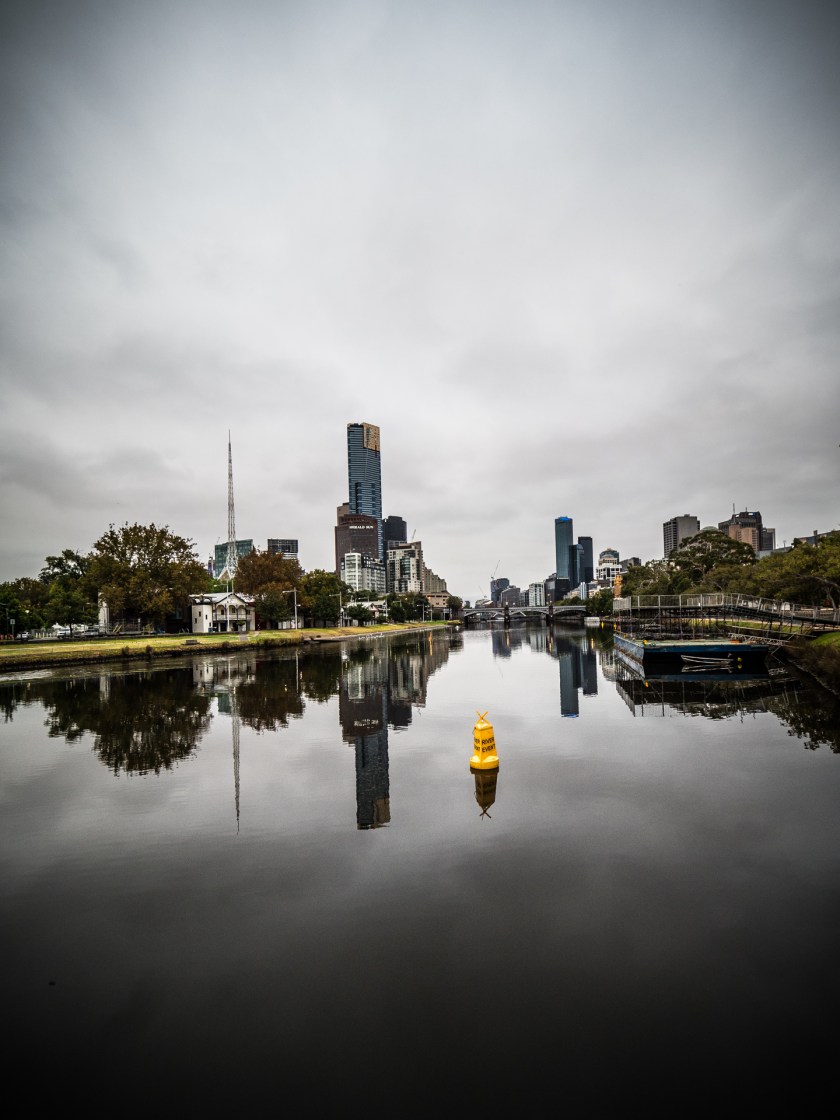
We happened to be wandering around the city just after sunrise this morning.

Not that we could tell the sun had risen; it was one of those squidgy kind of sunrises where the day doesn’t get any brighter in a hurry.

There were no sunbeams to bounce off the Eureka Tower, no glints of sunshine to lighten the mood … but there was also no breeze to touch the surface of the river.

All was calm.

This is my interpretation of today’s theme of ‘the river’. Tim’s interpretation is here.

P3060011
The Yarra River


Posted in Learning

Icons of Melbourne

My husband Tim has been engaged in a 365 (or is it 366 because of the leap year?) photographic project for almost … well, almost 365 days now.

Tim has invited me to end this project with him, and so I will be uploading an iconic image as I see it: two views of the same icon.

Our perspectives are quite different: I tend to be more literal, where Tim often tends towards the abstract. As in many things, we complement each other.

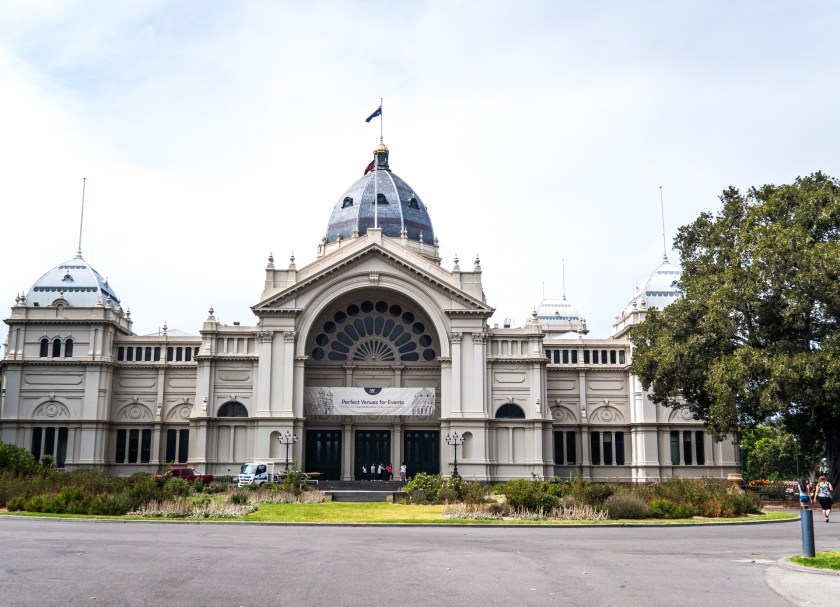
Below is my take on the Royal Exhibition Building; here is Tim’s.

P3050026
Royal Exhibition Building
Posted in Learning, Life, Teaching, Writing

I got back on the horse …

Metaphorically speaking, that is; there was no harm to a literal horse in my ‘getting back on’.

Okay, I’ll be clear. I know some of you don’t work well with metaphors, so I’ll be like, ‘literally’ all over this blog.

I haven’t taught on-campus (as in students in the same room as me) since semester 1, 2014.

Yes, that was two years ago. And yesterday I did it again.

And you know what? It felt good.

I was prepared, planned, organised, ready … I had even practiced smiling (although when I practiced in front of the mirror I scared myself, so I determined to only smile when absolutely necessary).

The students were lovely; responsive and mature in their attitude, willing to share their ideas and discuss meaty concepts.

After 18 months in the professional wilderness, of trying to determine who I am professionally, it felt good to be able to think of myself as a teacher again. To act as a teacher again; to be a teacher.

And the best thing? I get to do it all again next week.

Oh, and one other thing … by the end of class my face hurt.

I think I overdid the smiling.


Posted in Festival, Life

TumbaFest 2016

Tumbarumba is a little town, just off the Hume Highway, half way between Sydney and Melbourne. On the final weekend of February each year, locals and visitors gather on the banks of the creek to chat, soak up the sun, drink local wine, and eat locally produced food.

This is only my second TumbaFest; we came for the first time last year and enjoyed the relaxed nature of the day so much that we decided to come back this year. It helps that my sister and brother-in-law live here and so it’s also a great excuse to catch up with family.

The thing I like most about TumbaFest is the music. What better way to spend a sunny Saturday than sitting on the grass listening to great music? And dancing, should you be so inclined.

Here are some of my pics from TumbaFest. If you’re in the area on the final weekend of February next year, pop in. You’ll be glad you did.


Posted in Learning, Schools, Studying, Teaching

What future for education

A week or so ago I decided to sign up to do a course called ‘What future for education’.

It was the title of the course that caught my eye as I am working through a period of deep ambivalence about education and thought this might provide me with some answers, or at the very least give me something else to think about. You know how I like to think!

It is an online course like many others: there are lectures (and in this instance, they are brave enough to call them lectures – I like that), there are readings, there are discussions to be had, activities to complete (an entry on a Padlet wall – some of you may remember adding to a Wall Wisher Wall in your own studies … it’s now called Padlet), and a tweet or two.

And a blog post. Hence my presence here today.

I could have started another blog and used that just for the course, but decided against that. Mostly for pragmatic reasons; I have a collection of applications that I’ve signed up for because of various studies I’ve undertaken and many of them I don’t use once the study is finished. Or once I decide to stop studying. And so I thought I’d write my blog posts here and you can be be amazed that I still haven’t learnt to read the unit outline and take any notice of deadlines. This blog post was supposed to be in yesterday, for instance.

But I’m supposed to write a 200-word blog post on: Based on your experience as a learner, what do you think you will be able to get out of this course? And what ideas do you already have about the future of education? So here goes.

What I will get out of this course … that’s an interesting way to phrase this question. Does that mean the same thing as ‘what will I learn from this course’? I’m going to say yes, and so will reword the question and write about what I expect to learn by completing this course.

I expect to learn about a range of perspectives on education – what education might look like in the future; how we might shape education; what education is for; why we educate. I want to learn what others have to say about education, others who aren’t politicians, others who know something about education and have ideas about it. I expect to learn how education can move away from the abyss of commodification and towards a focus on learning.

What ideas do I already have about education? I’m going to imagine that the term ‘education’ here is used to mean ‘formal education’ whether that’s in a school or university.

  • I see a distinct shift towards education being a commodity that is bought and sold, with as little effort made by the ‘consumer’ as that required to buy a lipstick.
  • Education has less to do with learning and more to do with a qualification or a result that allows the student access into other areas of education (from Year 6 to secondary school; from Year 12 to university), and then into the ‘real’ world.
  • Education has become enfeebled by a narrow focus on literacy and numeracy to the detriment of developing learners (people) who can engage in creative, critical, and ethical thought (and action).
  • Teachers (including university academics who teach) are increasingly stymied in their efforts to encourage learning, instead being forced to focus on assessing (there’s much more weighing than there is nourishing).
  • School teachers are little more than automatons – delivering a curriculum that is divorced from their students and developed by outsiders who have political points to make; being handed scripted lessons to deliver; having very little say in what is taught and how it’s taught.
  • The future of education is bleak.


So, for what it’s worth, that’s my less than cheery summation of the future of education.

Posted in Life

Ordinary stories

The road twists and turns around gently wooded slopes that rise up to form part of the caldera. We travel through farmland where lumpy cattle graze between old-fashioned fences, and then through bushland with shards of red and a thousand different greens. Tufts of grass draw a seam down the centre of the narrow potholed road whose edges are battered by heat and too many vehicles. An occasional house, a school, a rash of letterboxes: signs of human occupation, but you’d be excused for thinking that you’d travelled to a different time. It’s hard to believe that the shiny brashness of the Gold Coast is less than an hour away.

We turn left at Chillingham towards Tyalgum and I ask if Nan and Pop had ever lived here. No, they lived at Limpinwood, 15 minutes away (although possibly longer then), in a hut on the farm where Pop worked. And Nan worked there too: she cleaned ‘the house’. The hut Nan and Pop lived in had a dirt floor and my Dad, a baby at the time, slept in a box. Or so he tells us. The owner of the farm was ‘mean’ – but my mother isn’t sure what Nan meant by that.

I realise that while I have my own memories of Nan and Pop, I don’t know their stories. I am fascinated by my grandmother’s life because it’s so removed from my own. But I won’t ever know much of that life because the stories of ordinary life and ordinary lives get locked away; they remain untold. Not deliberately untold, but they seem not worth telling, unremarkable, just ‘how life was’. We lived here, we worked there, we drank tea, cooked meals, danced, laughed, cried. Ordinary things done by ordinary people.

And still I’m fascinated. And not just by Nan’s story but of other stories I hadn’t considered before.

I hadn’t ever thought to ask before how my sister came to be born in Murwillumbah when my parents lived in Sydney. It turns out that it was something Dad wanted. My mother, living alone while Dad was at sea in the Navy, lived in Sydney – the same city in which her parents, brother and sister lived. My father’s parents lived in Murwillumbah, with Dad’s two younger sisters and his (much) younger brother.

As Mum answered my questions, I started to think about how each family member’s story was different and unknown – at least to me. How did Nan react when Dad told her that her daughter-in-law would be moving in so that the baby could be born in Murwillumbah?

How did my mother react when she was told that she’d be having her first baby a thousand miles from home?

How did Dad’s teenage sisters and 7-year-old brother Robert react to the reality of a new ‘big sister’ living with them for an indefinite amount of time?

How did Mum’s mother react knowing that her first grandchild was going to be born in a little country town so far away?

How did either Pop react?

I have a thousand other questions. What drove the decision to move from a dirt-floored hut in Limpinwood to a room in a cottage in Byangum Rd Murwillumbah in 1938? Who was the decision-maker? What conversations went on between my grandparents to initiate the move? Who was the decisive one? Was ambition a part of the decision? Did my grandmother insist, or was my grandfather the decision-maker, as my father had been in the decision about where his eldest child would be born?

***

Dad and I went to the Tweed River Regional Museum in Murwillumbah through the week and read stories of the prominent people of the area: pioneers, entrepreneurs, business leaders. Mostly men, but stories of women too; people who nurtured the town into existence.

I sit at the kitchen table that has been part of my life since I was a teenager and think about all the generations who have come before me, nurturing the families of which I’m a part into existence.

In the centre of the table is a fruit bowl that is part of a set that was given to my great-aunt as a wedding present in 1934.

There are many such things tucked away in this house. Bowls that Dad brought back from an overseas trip in 1959 not long after he joined the Navy, the wooden tongs hanging in the laundry that Mum used when she washed clothes in the copper in the early 60s, the drawers that used to be in the bedroom I shared with my sister in the 70s.

Ordinary things that have stories wrapped around them. Things that have been, and will be again, passed down to those in the next generation – or the one after that.

What stories there are in the midst of the ordinariness of family life.

Which ones will be passed on?

Which ones will stay locked away?


Posted in Life, Travel

An interlude

A few weekends ago we had an ‘interlude’.

It was gentle, cosy, inherently interesting, and relaxing as all interludes should be. Let me tell you about it.

We found our way to Platform 1, where the train was waiting. Tim said, “Three minutes to go”, to which I replied “Three minutes to adventure”. It really did feel like we were going an an adventure.

We’d packed our bags with as much electronic gadgetry as we could fit: iPads, iPhones, Kindles, laptops, and headphones. It meant we could play games, read, listen to music, write notes/emails/blog posts/discussion board posts/feedback on student assignments.

We could also just sit and gaze across the countryside flashing past. Or talk to each other. We had the possibilities covered.

I took a photo after we settled in.

That gave me an idea and every hour of the trip I took another photo to mark the time, but also to capture the countryside we were travelling across. My hypothesis was that it wouldn’t change much in the 11 hours we travelled. I didn’t take into account that it would get dark so early and so for the final hours of the trip the windows only reflected myself looking out.

Tim in our cosy cabin
Tim in our cosy cabin 8:58am


Broadford 9:41am
Broadford (VIC) 9:41am
Glenrowan 10:58
Glenrowan (VIC) 10:58


Wangaratta 11:09
Wangaratta (VIC) 11:09
Jindera 12:03
Jindera (NSW) 12:03


The Rock 1:02pm
The Rock (NSW) 1:02pm
Junee Reefs 2:02 pm
Junee Reefs (NSW) 2:02 pm


Harden (NSW) 3:07 pm
Yass Junction (NSW) 4:02 pm


Goulburn (NSW) 5:11 pm
Moss Vale (NSW) 6:04 pm


Campbelltown (NSW) 7:09 pm
Central Station (Sydney) 8:02 pm


We had left Melbourne on one of the very few cloudless days that city seems to enjoy each year and travelled under clear skies for most of the trip. I stepped off the train at Goulburn station and felt the chill in the air. Weatherzone said it was 6C there. Brrr.

We arrived in Sydney in the midst of a cold snap. Well, not cold so much as arctic. And raining. Our hotel was only a ten minute walk away, we dumped our bags, grabbed our cameras and headed out to see the lights of Vivid.


Sunday morning. Up at 5:30, shower, breakfast, quick walk to Central Station. Train.

Again, I took a photo every hour (or so) of our return journey.

Central Station (Sydney) 7:35am
Tahmoor (NSW) 8:46am
Penrose (NSW) 9:40am


Tirrannaville (NSW) 10:31
Yarra (NSW) 10:32am
Yarra (NSW) 10:32am


Cullerin (NSW) 11:47am
Cootamundra (NSW) 12:43


Somewhere (NSW)  1:35
Somewhere (NSW) 1:35
Culcairn (NSW) 2:44
Culcairn (NSW) 2:44


North Albury (NSW) 3:38
Somewhere (VIC) 4:36


Oh my gosh! (VIC) 5:34
Flinders St (Melbourne) 6:48


At some point in the afternoon I said to Tim “It’s Sunday” and that word felt strange in my mouth.

It didn’t feel like any day. I felt outside of time, even though I marked time by taking a photo every hour.

It felt – it was – an interlude. A period of time outside of the norm, the regular, the usual. It was no day. It just was.

The bigness of the landscape – the far away horizon, the expanse of sky – was perfectly accompanied by Ludovico Einaudi’s Time Lapse in my headphones. If you haven’t listened to it while travelling across the landscape, I highly recommend it.

We chatted; I marked assignments; I gazed out of the window feeling the beautiful music wrap around me … and then I read the book Tim had bought a few days before (A monster calls) and when it ended I sat and cried.

And cried.


It was a long way to travel for just over 24 hours in Sydney – and though this is as cliched as ever I hope to get – it wasn’t about the destination.

It was about the getting there and the getting home. Yes … the journey. Or as I prefer to call it … the interlude.

One of my very favourite weekends.

In response to The Daily Post’s writing prompt: “A Mystery Wrapped in an Enigma.”

My sister, as part of her blogging, often responds to the Daily Post’s writing prompt. I read her most recent post this morning and am taken back to that time, although not to the same place Deb was, as I didn’t study French and so wasn’t on the trip. I do remember our own trip though – Dad driving like a maniac to Sydney to pick Deb up after it happened. I didn’t know that Deb bought her wedding dress that day though, so you really do learn things through reading others’ blogs.

I don’t have any bravery awards to write about, but I do do something that you possibly don’t know about.

I walk to work (and catch two trains in between the walking).

No, let me finish, that isn’t it.

I walk to work and I know it’s almost time for me to start blogging again when I start narrating my walk.

Not out loud you understand, but inside, in the private space of my mind.

It started again one day last week when I came across a tree full of buds … and one leaf that lingered on the branch. Clinging on for dear life, not wanting to give in the inevitability of winter.

It was at that point my narration started. I started composing (not a story – just a narration) of the leaf. I played alliteratively with language, and then my attention was caught by other things: two crows on the lid of a wheelie bin, their beaks tearing into the plastic bag poking out from the top, the old lady bent almost double struggling with her gate “here, let me get that for you”, the L-plater on his motorbike wobbling to a stop, the young bloke in the furniture van being told off for going into the wrong gate, the baby’s feet sticking out from under the blanket that’s covering the rest of her in the pram, the number of coffee drinkers waiting edgily outside Egyptian Al’s coffee place.

As my eyes take in the world around me, my mind narrates snatches of story, descriptions, dialogue, explanations, silences, musings …

I walk to work and narrate my world.

And then some days later I consider writing a blog post.

I most often don’t make it that far though.


This post is written in response to the Daily Prompt from May 28.

Daily prompt post: A mystery wrapped in an enigma

Posted in Life, Writing

Spreading the (belated) love

My sister is a blogger (amongst many other things) and she’s taken to blogging like the proverbial duck to water. Deb is a community minded person; she loves to be part of things, to join in, to interact.

What that means for her blogging is that she gets involved in events and challenges and she responds to people and they respond back.

What it also means is that Deb gets nominated for blogging awards and to join in blogging challenges. One of these was to ‘spread the love‘.

These challenges/events have ‘rules’ which in this case were:

RULES

  1. Write ten four word sentences about what love means to you.
  2. Share your favourite quote on love.
  3. Nominate ten other bloggers for the same.

I was reading Wide in Tights’ blog just now and saw that Jen responded to Deb’s challenge, and so I thought I’d give it a go too. Plus, Deb had nominated me to participate in the event.

It’s not something I often (ever) do because I have a really hard time thinking about what to write when I’m given a topic to write on. But I’m going to give this a go. Except, I don’t know 10 bloggers so I’ll conveniently forget about that particular ‘rule’.

So here are my ten four word sentences:

1. Knowing Tim’s always there.

2. His warm, warm hands.

3. All of my children.

4. All of my grandchildren.

5. Spending time with family.

6. Summer warmth after winter.

7. Christmas at the beach.

8. Road trip to anywhere.

9. Being connected to others.

10. Dancing on the inside.

The challenge also called for a favourite quote on love … to be quite honest, I don’t have one, but I do like that Oscar Wilde said: “Never love anyone who treats you like you’re ordinary”.

It possibly doesn’t fit with the spirit of ‘spreading the love’ but it speaks to me and so I thought I’d share it.

****

There you go … my first blogging event/challenge.