Posted in Life, Writing

Protect your highlights

Eleanor rehearses the line in her head while she waits.

My default thinking is that no one likes me.

It sounds both dramatic and true, overly self-indulgent and that annoys her. She considers softening it – I sometimes feel people don’t like me – but that sounds evasive. She wants to be honest.

Across the waiting room, a framed print of a misty forest hangs slightly crooked. She wants to straighten it, but tells herself to sit still. There’s a low table stacked with mindfulness magazines she has no inclination to flick through and a box of tissues that looks too deliberately placed. On the door opposite her chair, neat lettering reads: Dr Miriam Clarke, Psychologist.

Eleanor wonders if it’s called an office. It feels too intimate to be a room, too small to be a practice. Office sounds right, though sterile. Her thoughts drift – as they do – and she has to remind herself why she’s here. Then, because she can’t help herself, she wonders why am I here?

Before she can answer herself, the door opens.

‘Eleanor?’

She stands, grabs her bag, and out pops the line she’s been practising.

‘My default thinking is that no one likes me.’ Her heart double beats as the words leave her mouth. She stops abruptly. Too soon! At least get into her office first. Absurd and self-indulgent is not the look she was going for. She wonders if her face has already frozen into permanent cringe. Should she tilt her head slightly? Smile? Nod like a normal human?

Dr Miriam Clarke, a woman in her early 40s with silver-rimmed glasses and a calm voice that Eleanor suspects is not the one she uses with her children, gestures toward the chair. Eleanor tells herself it’s fine, though her mind argues otherwise. Maybe I should have started with something neutral. Weather. Shoes. Hers are nice. Mine look a bit worn. She puts her bag down, sighs, and sits.

‘What makes you think that?’ Miriam asks, calm and measured.

Good question, though not one I was expecting. She realises she’s talking internally, and Miriam’s slightly raised left eyebrow suggests that’s not useful. Eleanor flattens a crease in her pants and says out loud, ‘I’m too blunt, or too much, or not enough, or something … I don’t know. I ask questions that aren’t polite, say things that don’t sound as gentle as I mean them. I think I’m being honest, but apparently honesty needs padding. I never did learn how to pad.’ She stops abruplty, embarrassed by her burbling.

Outside the window, a bird lands on the railing and gives itself a shake. Eleanor focuses on its movements, letting the silence lengthen. The city noise is faint beyond the glass – traffic, sirens, the mechanical sigh of a bus pulling in to the stop a floor below.

When she’d first arrived in the city, she’d taken a long time to settle in. The city disoriented her – it was too loud, too fast, too much. It hadn’t helped that she’d spent too long finding a proper place to live. She’d spent months house sitting, staying with friends of people she knew, renting a room above a garage that had a bathroom but no kitchen. She felt disconnected and she so desperately wanted to connect.

She’d gone to a women’s book group in Toorak for a few months. Nice enough women, though she sometimes wondered if any of them actually liked to read. They talked more about retreats in Provence, how the Amalfi coast ‘just isn’t the same these days’, about having to ski in Denver this year because they just couldn’t make Switzerland work. Eleanor had wanted to talk about books – not the cover art or the author’s holiday house, but the writing itself: how they were written, what made them work or fall apart, the sentences that stayed with you for weeks, and the ones that stopped you in your tracks.

Then there was the writer’s group, which had a meet-up one Sunday a month in a pub in Fitzroy. She was determined to go, to meet people, to talk writing, to hear about what others were writing, to share stories of the struggle of writing good sentences, to learn how others cope with rejection. Outside the pub door, she felt the familiar flutter – the one that comes before entering a room full of people who could dislike you. She’d pushed through the door anyway, spotted twenty people talking in tight little circles, walked closer and waited for someone to notice her. She’d stood there for what felt like ten full minutes, waiting for just one person to look up … no one did.

‘I thought it best to just leave,’ she tells Miriam, and instantly recognises how it wasn’t best to just leave.

Miriam says something measured about connection taking time, about shared interests and patience, but Eleanor is lost in her thoughts and only half hears her.

Later that afternoon, at home, she makes tea and sits at her kitchen table. A shaft of light catches the rim of her mug, turning the steam gold. She’s been trying to photograph light again – the way it illuminates the flowers she’s stuck in a vase, how it changes what you see – and grabs her camera. The light is still strong, creating bright edges that lose all detail.

It made her think of a photographer she follows on Instagram who once said something about “protecting your highlights.” She searches his YouTube channel till she finds the video and watches it again. He means it technically – exposing correctly so the brightest parts of the image don’t blow out – but then he gets philosophical. Protect your highlights in life too, he says. Those moments of brightness that remind you who you are.

‘Interesting’, she says aloud.

On a whim, she goes into her room and pulls a box down from the top of the wardrobe. Inside are things she’s kept without understanding why, things she hasn’t looked at in years: scrawled feedback on an old piece of writing: Your analysis is thoughtful and original. Beautifully expressed. A card from a former student: Thank you for helping me see what I could do. A note from a friend on her 50th birthday: Visiting you today was more like visiting a sister. A reference she’d kept from her first workplace, the paper yellowed at the edges, the letters slightly uneven, unmistakably typewritten: Miss Eleanor Hardy is a highly competent and diligent employee. She approaches her duties with professionalism and care, and would be an asset to any organisation.

She lays them all out on the bed, one by one. Evidence, small, steady reminders of her highlights.

It is clear, not everyone has disliked her. Some people, it seems, have clearly liked her.

Eleanor goes back to the table, and writes herself a note:

Protect your highlights.

She props it against the vase of mini gerberas she’d been photographing earlier.

The following week, Eleanor is back in the psychologist’s office, still unsure about her motivation for being there.

Same chair, same muted city noise beyond the window. She flattens the same crease in her pants, then looks up.

“I’ve had a thought,” she says slowly, pleased with herself for waiting till she’d sat down before speaking. “Maybe the problem isn’t that people don’t like me. Maybe it’s that I don’t believe them when they do”

Miriam’s left eyebrow lifts slightly. “That’s a powerful thought.”

That afternoon, at home, Eleanor takes another photograph of the late light spilling across the table. This time, she adjusts the exposure, careful not to lose the detail in the bright edge of the mug.

She saves the image to a new folder: Highlights.

Posted in Life, Photography

Faces of Breakfast

Eleanor is plagued by a dream of herself that she has not yet managed to actualise.

It visits her most mornings, while the kettle boils, the version of herself she keeps coming back to, the one who moves through the streets with a camera at the ready, collecting quiet moments. That woman is captivated by the way light touches faces and the stories a face tells. She lives in a house smelling faintly of cedar and tea, with shelves of photography books she browses intermittently. Her portraits don’t hang on her own walls, but they do hang on other people’s – portraits others have described as intimate and assured and quietly transcendant.

Eleanor, on the other hand, mostly photographs flowers these days though she’s not exactly sure why. She thinks it’s something to do with their fragility, their complexity – how each flower seems to have a personality of its own. Photographing them feels like a small experiment in seeing differently: shifting focus, playing with light, adjusting angles until some kind of story emerges. At home, she works deliberately, arranging light and background, the process almost meditative. In gardens, she responds to what’s there – wind, shadow, a sudden burst of colour. She’s exhibited her work a few times – small shows where people have bought pieces and said kind things – and members of her U3A photography group often tell her she has a real eye. She thanks them, smiles, but inside she thinks they’re just being kind … or polite … or wrong.

She finds, in a box of prints tucked under the bed, photographs she took six years ago while she was going through cancer treatment. That time still lives in her skin, the memory of so many hands touching her, adjusting her, ensuring her position is just right. It had made her uneasy, and that unease became the focus of a project – hands as both comfort and intrusion. In one image, Sonia, the model, stands in a shaft of late afternoon light, her body half-covered by her own hands, the gesture both protective and exposing. Eleanor studies the image for a long time – the narrow beam of light, the rawness in the posture, the quiet, potent vulnerability of it. This, she thinks, is the kind of work she wants to return to.

She reaches for the book of portraits she printed when she’d finished her Faces of Melbourne project and flicks through it. She remembers where each shot was taken, her subjects’ names, and the stories the older women told as she photographed them. She was deliberate about her practice – the light, the framing, the angle – she’d known what she was doing. Looking through those pages again, she feels the quiet certainty of that work, the joy it gave her, yet something in her still resists believing it was assured.

Eleanor hears the scrape of a chair behind her and looks up. Her grandson has wandered in from the garden, a piece of toast in one hand, his current favourite dinosaur in the other.

‘Who’s that?’ he asks, pointing to a photo in the open book.

‘That’s Josette,’ Eleanor says. ‘She was walking through Myer when I saw her.’

‘Did she tell you stories?’

‘She sure did,’ she says. ‘Stories about her son who grew up and got married – and she showed me pictures of him too.’

He studies the page, eyes wide. ‘Who’s that? I think she’s pretty.’

‘That’s Bella. Her name means beautiful. And that’s Brabh. He was my first face of Melbourne. I was standing at the traffic lights and I saw him across the road. His face was so interesting I just had to take his photo.’

He looks up at her. ‘You should take my photo too. Every morning when I come here. You could make a book about me – Garry’s Faces of Breakfast.’

She laughs, surprised by the small flicker of excitement that rises in her chest. ‘Maybe I could,’ she says.

At 7:10 the next morning, Garry arrives, sleep still in his eyes, hair sticking up, a dinosaur in each hand. She gets him a bowl of Coco Pops and sits with him at the table. The light from the window falls across his face. Eleanor lifts her camera, adjusts the focus, and presses the shutter.

The image on the camera screen is a little soft, a little crooked. His spoon is halfway to his mouth, milk dripping onto the table.

She makes tea, sits across from him, and listens to a story about a dinosaur that can fly and also do karate. She nods solemnly. “Sounds plausible.”

Later, she opens her laptop and creates a folder: Breakfasts with Garry. She’ll add one photo a day until he gets bored, or until she does.

While she doesn’t feel actualised … or even assured … she does feel like someone who knows how to begin.

And that, frankly, is more than she expected.


I have used the same first line as my previous story While the kettle boils. I wanted to see if I could take it in a different direction.

Posted in Life

The art of deciding – or not

Emma and I set out this morning to choose tapware, tiles, and a vanity/sink combo for the ensuite renovation. A simple task, you might think. Just a few decisions, a bit of browsing, perhaps a cup of tea afterwards. We had decided on the paint colour for the walls before we left the house so we felt we had a strong starting point. How hard could it be to pick taps and tiles to match my style?

“What style would that be Sharon?”

Yeah, not sure.

At the tile shop, the sales assistant showed us around and eventually led us to the back of the store where the wall tiles were. We figured we may as well start there. One tile jumped out at us immediately. Pistachio in colour, glossy, square. Gorgeous. We didn’t bother looking at others. We liked them … decision made. Plus the grandkids were with us and, at four minutes in, were already beginning to show signs that this wasn’t their idea of a good time.

But we’d made a decisive start. It boded well for the next half hour of decision-making.

Okay … two hours.

With the wall tiles sorted, we made our way, via the vanities, to tapware.

“Do you want a mixer or quarter turn?” Emma asked, standing in front of a wall of options.

“I just want enough water to come out of it to rinse the shampoo out of my hair,” I said.

“Not helpful, Sharon.”

The sales assistant approached, all optimism and obsequiousness. “What style are you going for?”

We looked at each other, knowing she meant overall style, but as we hadn’t yet decided on an overall style, we answered a slightly different question.

“Not black,” I said.

“Not matte,” said Emma.

“Not too shiny.”

“Warm but not formal.”

“Modern but not cold.”

“Classic but not old-fashioned.”

The sales assistant nodded once, sighed, and went back to her desk.

We did our best to meet somewhere between “that’ll do” and “actually, I quite like that one” … and ended up with matte black.

Every choice – sink, vanity, hooks, style of tap, towel rail – seemed certain for about three minutes. We’d decide on something, think we were done, then spot another option that made us question our decision.

In the end, I think we’ve landed on glossy pistachio shower tiles, dark grey floor, a Tasmanian oak vanity, and matte black tapware.

Our only firm decision – the paint colour – is now not at all firm. And, in fact, the gorgeous pistachio tiles might also be a tad tentative. At lunch we looked them up and discovered they’re three times over our allocated tile budget.

Ouch.

Ah, what the heck. I think I might get them anyway.

Posted in Life, Writing

While the kettle boils

Eleanor is plagued by a dream of herself that she has not yet managed to actualise.

It visits her most mornings, while the kettle boils, the version of herself she keeps coming back to, the one who writes before dawn, sitting at a wooden desk while a mug of tea cools beside her and words spread across the page. That woman lives in a house smelling faintly of cedar and old books, where quiet work happens. Her own novels fill a shelf – novels the reviewers call assured and luminous.

Eleanor, on the other hand, lives in a house that smells of toast and tea, where crumbs, spilled juice, and scattered blocks demand her attention. Her desk is the kitchen table, her laptop fighting for space amongst the mail, the Aldi catalogues, and her grandson’s Elsa costume. Drafts are stacked in manila folders, marked up by people who, she has to believe, mean well in their critique. Lovely imagery. This doesn’t work. Show, don’t tell. You don’t need this section. Two pats, then the slaps. Or more often, multiple slaps with few pats. 

The stings linger.

Her agent says the publishers see “promise”, but not enough to take a risk on her. The competitions reply with polite variations on no: “You have a distinct voice … there are moments of real beauty here … we received many excellent entries, unfortunately your submission did not stand out in the current field … we wish you success placing it elsewhere … we hope you’ll consider submitting again next year.” Eleanor is familiar with the rhythm of rejection, the preamble as softener, then the stinging dismissal. She imagines the editors, judges, unseen decision-makers standing behind an iron gate, steadfastly refusing to hand over their giant key. Instead, she pushes her work through the bars and listens intently for the sound of approval.

Silence.

Yesterday, she found a story she wrote when she was twenty-three, tucked deep into one of the folders. She read it and winced, then told herself to be kind – it was from forty years ago, after all. She’d lived a life since then, worked, raised children, lost people she loved. She’d written through work and play dates and trips to the beach, through illness and recovery, through poor decisions, through countless rejections.

She thinks of that thing Sylvia Plath said: I love my rejection slips. They show me I try and recognises the rawness of that statement. Feels the strength of it. Sits up a little straighter.

She looks outside, to her grandson building a house near the garden beds she’s been developing. He’s starting simple, laying one block carefully next to the other. She sees the clear line from front to back, a foundation solid enough to hold the next storey. She watches him for a long moment. 

When the kettle clicks off, Eleanor makes tea, and thinks about foundations, clear lines from start to finish, starting simple.

She settles back at the table, picks up her pen – and hears a yell from the garden.

A catastrophe, by the sound of it. Possibly involving Lego.

Eleanor takes a sip of tea, then pushes herself up.

The quiet work will have to wait.


While the first line of this story came from a text message I received from a friend recently, this is a work of fiction. I felt it was such a strong line that I wanted to see if I could write a story around it.

Posted in Mid-life blogger, Writing

Tea, music and memory

She gets home from the gym, showers, has breakfast, makes tea.

Remembers, just as the kettle clicks off, that she hasn’t written in her journal for a few days. Three, maybe four? Not that she’s keeping score, but she promised herself that in these early days of retirement she would keep at it – not for productivity, or for output, but for the structure it gives her thoughts. And her days.

So she grabs her iPad, opens the journaling app, and sits at the kitchen table. The tea, hot, not too milky, not at all sweet, sits just to her right.

In the background, breathe. plays – a band she stumbled across a few weeks ago and was instantly addicted to. Two musicians from Sydney, and a variety of vocalists, creators of something described as ‘music for your darkest days’. As ‘late night emotion’. As ‘a mix of soul and electronic’. Whatever the label, it’s perfect for late nights, and, she’s found, for all day.

Their sound spills into the room, occasionally breaking into her awareness. When it does, she catches herself smiling. The music feels like a hug – warm, quiet, exultant.

She writes slowly, not really sure what she wants to say. She starts by recounting her morning: gym was good, though her knees are sore and her shoulders stiff. And then an image from the morning pushes forward. A woman she saw at the gym, older, in an old t-shirt and shorts, stretching by the wall with a kind of quiet grace. 

She writes about that.

Then, somehow, she’s writing about the cool laundry under her grandmother’s high-set house up north. The old wringer-washer, enamel chipped, in the corner, edged on two sides by concrete wash tubs. Her grandmother’s hands, with their soft, paper-thin skin, feeding wet clothes through the rollers, careful not to catch a finger.

She writes about the smell of Sunlight soap flakes and wet fabric. About the way her grandmother would tell stories, and the comfort of her silences. Not  heavy or cold, but the kind that said, you’re safe here.

She likes the way memory loops like this – from a stranger’s gesture to forgotten wash days in the heat of a northern summer.

Outside, the shadows have shifted across the garden. Inside, her tea has gone cold. Completely untouched.

She notices it only when she lifts the mug and realises it’s room temperature. 

The music is warm and deliciously comforting. Unlike her tea.

She sighs and gets up to make a fresh pot.

Posted in Flowers, Photography

Photos from the week

Most of my photos this week are of flowers. I’ve been photographing flowers since I was first given a digital camera for Christmas in 2007. Until this very moment, I’ve never stopped to think about why. What drew me to flowers in the first place? What keeps drawing me back?

I tend to photograph single flowers – one type rather than bouquets. Have you noticed that? More often than not, it’s one bloom, or several of the same kind. That’s something I’ve never really thought about either.

So I just set myself a small thinking challenge: why do I love to photograph flowers?

Partly it’s their fragility, and also their complexity, their personality, and their vibrancy, allowing for endless possibilities.

Partly it’s the challenge they offer. How can I be intentional with something so fragile and complex? What am I trying to say when I photograph this flower, this time?

Each photo becomes an experiment in seeing differently. How can I play with light, location, composition, depth of field? What happens if I shift my focus – literally or figuratively?

And flowers are everywhere, especially at this time of year. They don’t need bookings or studios or expensive gear. They don’t require complicated set-ups, though there’s no shortage of creative problem-solving along the way. Do I show the vase, and if so, how much of it? How close/far-away from the lens do I want the flowers to be? Do I want all of the flower lit or will there be shadows – and if so, which bits will be in shadow? Which parts do I want in focus – the middle, the edges of the petals, all of it? Do I want them to bend in a particular way? How will I hold them still/in position?

So many decisions!

Photographing flowers gives me space to develop technically and creatively. It’s a way to find my sense of what feels like me. I love the clean precision of a focus-stacked image where every petal is sharp – well, I do when other people create those sorts of images – but I also love the dreamy, soft-edged, not everything’s in focus look.

I’ve also noticed that the flowers I photograph at home have a different intentionality, process, and style than the flowers I shoot in a garden. At home, I can control light, composition, and background – it’s quieter, more deliberate, almost meditative. In a garden, there’s a sense of discovery and spontaneity: the light changes constantly, a breeze spings up just as I press the shutter button, I’m always tucking other plants/leaves/buds out of the way. The process is more about responding than arranging. They each have their own rhythm, and their own way of reflecting how I see the world.

Anyway, here are some of my flower photos from this week.


Tulips (Forest Glade Garden, Mt Macedon)


Daffodils (Forest Glade)


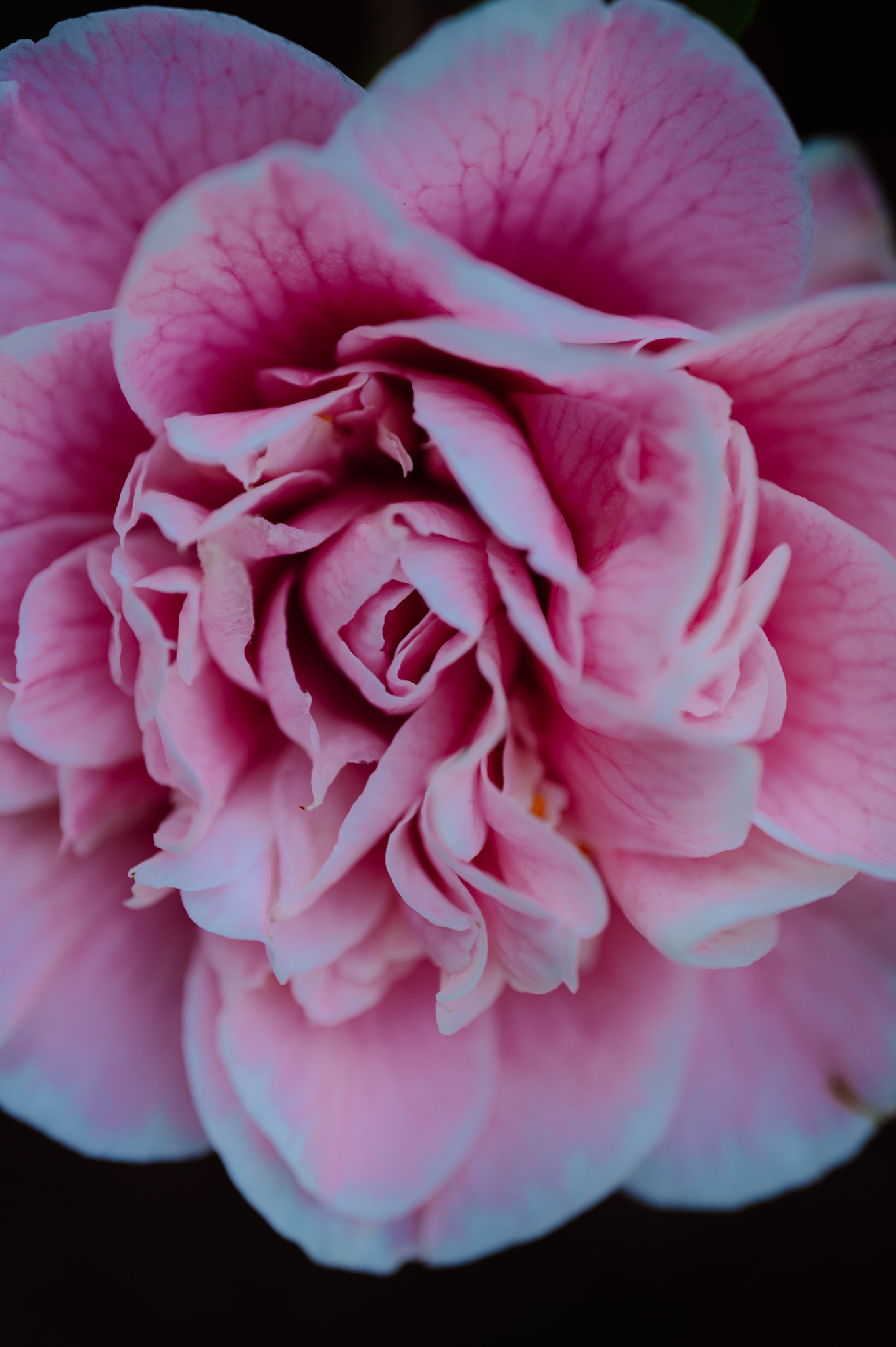
Getting up close (Forest Glade)


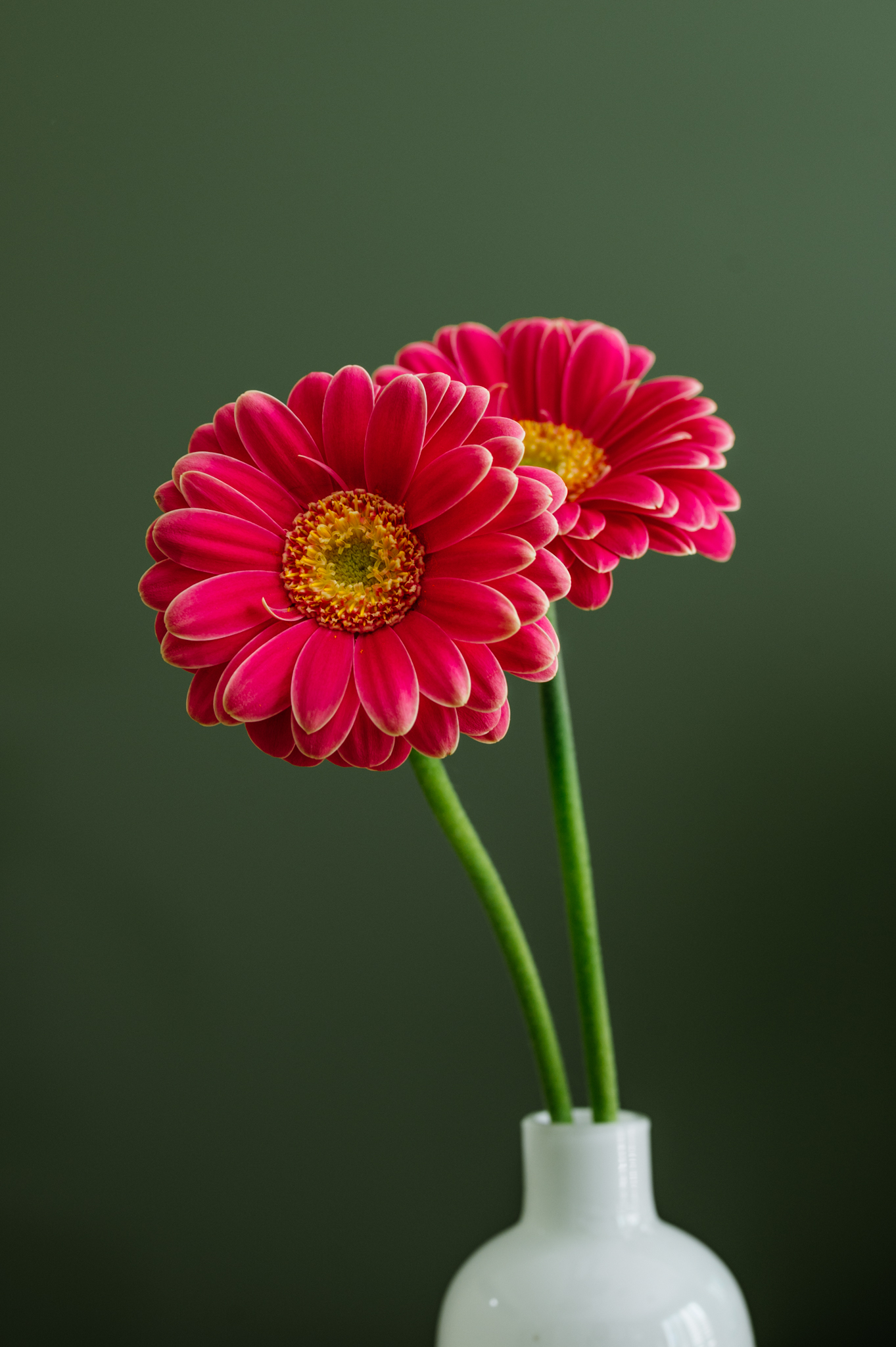
Mini gerberas at home

Posted in Photography

An adventure in three photos

I arrived in Halls Gap yesterday. Never been here before – never really stayed near the Grampians. Not sure what people do here – apart from walks. That’s all the brochures seem to mention.

Michelle said, “let’s go for a walk. It’s only a 4km round trip”. Sure, I said, that’s doable.

So we headed out after lunch – Michelle, her husband Al, and me. I put my walking shoes on – the ones Tim had asked about when I put them in the car, ‘aren’t they the ones that give you blisters?’

Not sure, I said, but put in some thicker socks to be prepared.

I also packed my rain jacket – and two rain ponchos. And a water bottle.

We drove to the starting point in Michelle’s car. My water bottle and the rain ponchos were in my car.

It was sunny.

I had my rain jacket with me, and decided to leave it in Michelle’s car.

I didn’t even think about the thicker socks.

Or a hat.

We started out okay. Walking poles helped us up over the bigger rock steps. Stopped me slipping down some of the slippery rock steps. Shoulders and hands were shared around for support.

Markers were scarce, it has to be said.

We asked someone coming towards us if it was challenging up ahead. She looked to be 15. Nope, she said. Her parents coming through some time after, said ‘just go slow, you’ll be fine.’ The man with them said, ‘it gets tougher’.

We soldiered on. Slowly.

Eventually we could see The Pinnacle. It was about 200 metres away.

And then it rained.

And then it hailed.

Here are the three photos that describes what happened next – actually, one’s a video.

It hailed!
Michelle and I sheltered under a nearby rock ledge

We didn’t make it to The Pinnacle … but we saw The Pinnacle … and that was good enough for us.

Al made it … and this is what he saw.

View from The Pinnacle

Note: my blisters are the size of elephants feet. And man, did they sting when the shower hit them!